

Nutri grain framboises
Labels
 Bad nutritional quality
 Ultra-processed food and drink products
 Not computed
Health
Nutrition
Label
Bad nutritional qualityNutrient levels
Fat in moderate quantity (9.46%)
Saturated fat in low quantity (1.35%)
Sugars in high quantity (37.8%)
Salt in moderate quantity (0.642%)
Nutrition label
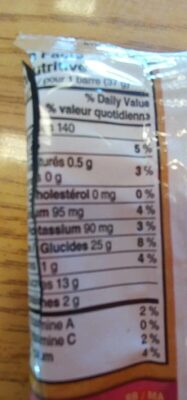
Nutrition facts
| Nutrition facts | As sold for 100 g / 100 ml |
|---|---|
| Energy | ~ 1,612.14 kJ (351 kcal) |
| FAT | 9.46 g |
| Saturated fat | 1.35 g |
| Carbohydrates | 67.57 g |
| Sugars | 37.84 g |
| Added sugars | 0 g |
| Starch | 0 g |
| Dietary fiber | 2.7 g |
| Proteins | 5.4 g |
| Salt | 0.64 g |
| Sodium | 0.26 g |
| Vitamins | |
| Vitamin A | 0 g |
| Vitamin E | 0 g |
| Vitamin K | 0 g |
| Vitamin C | 0 g |
| Minerals | |
| Potassium | 0.24 g |
| Calcium | 0.05 g |
| Phosphorus | 0 g |
| Iron | 0.01 g |
| Magnesium | 0 g |
| Zinc | 0 g |
| Copper | 0 g |
| Manganese | 0 g |
| Selenium | 0 g |
| Caffeine | 0 g |
| Fruits, vegetables and legumes | ~ 1.29 % |
| Choline | 0 g |
Nutrition facts (Detailed data)
| Nutrition facts | As sold for 100 g / 100 ml | As sold Per serving (37 g) (packaging) | As sold Per 100 g (estimate) |
|---|---|---|---|
| Energy | ~ 1,612.14 kJ (351 kcal) | ? (130 kcal) | ~ 652.62 kJ (154 kcal) |
| FAT | 9.46 g | 3.5 g | ~ 3.99 g |
| Saturated fat | 1.35 g | 0.5 g | ~ 0.08 g |
| Cholesterol | ~ 0 g | ? | ~ 0 g |
| Carbohydrates | 67.57 g | 25 g | ~ 63.54 g |
| Sugars | 37.84 g | 14 g | ~ 12.15 g |
| Added sugars | 0 g | 0 g | ~ 14.65 g |
| Sucrose | ~ 7.8 g | ? | ~ 7.8 g |
| Glucose | ~ 0.05 g | ? | ~ 0.05 g |
| Fructose | ~ 6.69 g | ? | ~ 6.69 g |
| Galactose | ~ 0 g | ? | ~ 0 g |
| Lactose | ~ 0.05 g | ? | ~ 0.05 g |
| Maltose | ~ 0.31 g | ? | ~ 0.31 g |
| Starch | 0 g | 0 g | ~ 44.53 g |
| Polyols | ~ 3.61 g | ? | ~ 3.61 g |
| Dietary fiber | 2.7 g | 1 g | ~ 7.53 g |
| Proteins | 5.4 g | 2 g | ~ 11.56 g |
| Salt | 0.64 g | 0.24 g | ~ 0.1 g |
| Sodium | 0.26 g | 0.1 g | ~ 0.03 g |
| Alcohol | ~ 0 % vol | ? | ~ 0 % vol |
| Vitamins | |||
| Vitamin A | 0 g | 0 g | ~ 0 g |
| Beta-carotene | ~ 0 g | ? | ~ 0 g |
| Vitamin D | ~ 0 g | ? | ~ 0 g |
| Vitamin E | 0 g | 0 g | ~ 0 g |
| Vitamin K | 0 g | 0 g | ? |
| Vitamin C | 0 g | 0 g | ~ 0 g |
| Vitamin B1 | ~ 0 g | ? | ~ 0 g |
| Vitamin B2 | ~ 0 g | ? | ~ 0 g |
| Vitamin PP | ~ 0 g | ? | ~ 0 g |
| Vitamin B6 | ~ 0 g | ? | ~ 0 g |
| Vitamin B9 | ~ 0 g | ? | ~ 0 g |
| Vitamin B12 | ~ 0 g | ? | ~ 0 g |
| Pantothenic acid | ~ 0 g | ? | ~ 0 g |
| Minerals | |||
| Potassium | 0.24 g | 0.09 g | ~ 0.31 g |
| Chloride | ~ 0.04 g | ? | ~ 0.04 g |
| Calcium | 0.05 g | 0.02 g | ~ 0.04 g |
| Phosphorus | 0 g | 0 g | ~ 0.34 g |
| Iron | 0.01 g | 0 g | ~ 0 g |
| Magnesium | 0 g | 0 g | ~ 0.11 g |
| Zinc | 0 g | 0 g | ~ 0 g |
| Copper | 0 g | 0 g | ~ 0 g |
| Manganese | 0 g | 0 g | ~ 0 g |
| Selenium | 0 g | 0 g | ~ 0 g |
| Iodine | ~ 0 g | ? | ~ 0 g |
| Caffeine | 0 g | 0 g | ? |
| Fruits, vegetables and legumes | ~ 1.29 % | ? | ~ 1.29 % |
| Choline | 0 g | 0 g | ? |
| Phylloquinone | ~ 0 g | ? | ~ 0 g |
| Water | ~ 9.43 g | ? | ~ 9.43 g |
Serving size
Estimated Activity Time
Approximate time needed to burn the energy in 100 g / 100 ml: 1,612 kJ. Reference adult weight: 70 kg. Energy density: Moderate.
Ingredients
Ingredients image
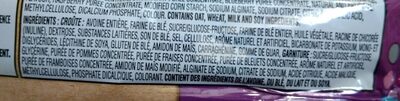
Ingredients list
Ingredient information
Allergens
Traces
Ingredients analysis
Palm oil content unknown
Contains non-vegan ingredients.
Unrecognized: fr:ceļlulose, fr:mono-et-diglycerides, fr:carragheniņe, fr:sucreglucose-fructose, fr:ent, fr:pure-de-framboises-concentree, fr:contient-des-ingredients-de-l-avoine, en:soy-milk
Vegetarian status unknown
Unrecognized: fr:ceļlulose, fr:mono-et-diglycerides, fr:carragheniņe, fr:sucreglucose-fructose, fr:ent, fr:pure-de-framboises-concentree, fr:contient-des-ingredients-de-l-avoine, en:soy-milk
Food Processing
NOVA group
Ultra-processed food and drink productsElements that indicate the product is in NOVA group 4
How NOVA works
Additives
E296 - Malic acid
MALIC ACID is an organic compound with the molecular formula C4H6O5. Malic acid has two stereoisomeric forms (L- and D-enantiomers), though only the L-isomer exists naturally.
E322 - LecithinsAntioxidantEmulsifier
Lecithins are natural compounds commonly used in the food industry as emulsifiers and stabilizers.
Extracted from sources like soybeans and eggs, lecithins consist of phospholipids that enhance the mixing of oil and water, ensuring smooth textures in various products like chocolates, dressings, and baked goods.
They do not present any known health risks.
E322i - LecithinAntioxidantEmulsifier
Lecithins are natural compounds commonly used in the food industry as emulsifiers and stabilizers.
Extracted from sources like soybeans and eggs, lecithins consist of phospholipids that enhance the mixing of oil and water, ensuring smooth textures in various products like chocolates, dressings, and baked goods.
They do not present any known health risks.
E330 - Citric acidAntioxidantSequestrant
Citric acid is a natural organic acid found in citrus fruits such as lemons, oranges, and limes.
It is widely used in the food industry as a flavor enhancer, acidulant, and preservative due to its tart and refreshing taste.
Citric acid is safe for consumption when used in moderation and is considered a generally recognized as safe (GRAS) food additive by regulatory agencies worldwide.
E331 - Sodium citratesEmulsifierSequestrantStabiliser
DISODIUM CITRATE, more properly, disodium hydrogen citrate, is an acid salt of citric acid with the chemical formula Na2C6H6O7. It is used as an antioxidant in food and to improve the effects of other antioxidants. It is also used as an acidity regulator and sequestrant. Typical products include gelatin, jam, sweets, ice cream, carbonated beverages, milk powder, wine, and processed cheeses.
E341 - Calcium phosphatesEmulsifierHumectantSequestrantStabiliserThickener
Calcium phosphate is a family of materials and minerals containing calcium ions (Ca2+) together with inorganic phosphate anions. Some so-called calcium phosphates contain oxide and hydroxide as well. They are white solids of nutritious value.
E341ii - Dicalcium phosphateEmulsifierHumectantSequestrantStabiliserThickener
No additive description is available yet.
E401 - sodium alginateCarrierEmulsifierHumectantSequestrantStabiliserThickener
No additive description is available yet.
E412 - Guar gumEmulsifierStabiliserThickener
Guar gum (E412) is a natural food additive derived from guar beans.
This white, odorless powder is valued for its remarkable thickening and stabilizing properties, making it a common ingredient in various food products, including sauces, dressings, and ice creams.
When used in moderation, guar gum is considered safe for consumption, with no known adverse health effects.
E422 - GlycerolHumectantThickener
Glycerol (; also called glycerine or glycerin; see spelling differences) is a simple polyol compound. It is a colorless, odorless, viscous liquid that is sweet-tasting and non-toxic. The glycerol backbone is found in all lipids known as triglycerides. It is widely used in the food industry as a sweetener and humectant and in pharmaceutical formulations. Glycerol has three hydroxyl groups that are responsible for its solubility in water and its hygroscopic nature.
E461 - methyl celluloseEmulsifierStabiliserThickener
METHYL CELLULOSE is a chemical compound derived from cellulose. Methyl cellulose is added to food products, to generate their characteristic thick consistency, for example ice cream or croquette.
E501 - Potassium carbonatesStabiliser
Potassium carbonate (K2CO3) is a white salt, which is soluble in water (insoluble in ethanol) and forms a strongly alkaline solution. It can be made as the product of potassium hydroxide's absorbent reaction with carbon dioxide. It is deliquescent, often appearing a damp or wet solid. Potassium carbonate is used in the production of soap and glass.
E501ii - Potassium hydrogen carbonateStabiliser
No additive description is available yet.
Environment
Packaging
Packaging details
Threatened species
Data Source
Data presented on this page is sourced from the Open Food Facts database. This platform does not alter the original dataset; its purpose is solely to enhance data visualization and user accessibility.
Product added on August 26, 2018 at 7:28:23 PM UTC by kiliweb .
Last edit on March 17, 2026 at 12:27:54 PM UTC by new-nutrition-bot .
Product page also edited by autorotate-bot, elo94, foodless, kiliweb, macrofactor, municorn-calorie-counter-app, new-nutrition-bot, openfoodfacts-contributors, packbot, yuka.L5RJLOKtJs17FceJyqUU3miFM8flXK9eIUZWog, yuka.WjQ4SlRyOWMrK2xYZ01BZDRFL3UxZmhWNjVtWWJIS1BldU1ESWc9PQ, yuka.WktzNlFZYytsOWxTdnRoaTkwaUs2UE1yNFpxRFYyYTZKK2dKSVE9PQ, yuka.sY2b0xO6T85zoF3NwEKvlk95YffMjjToFAXkgk6KmNqQFpXzYOlswrHKKqg.