

Creamy Caesar
Health
Nutrition
Nutri-Score
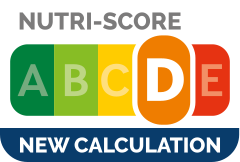 Lower nutritional quality
Nutri-Score data warning
Nutrient levels
Fat in high quantity (54.3%)
Saturated fat in high quantity (8.74%)
Sugars in low quantity (0.374%)
Salt in moderate quantity (0.363%)
Nutrition label

Nutrition facts
| Nutrition facts | As sold for 100 g / 100 ml | Compared to: Caesar salad dressings |
|---|---|---|
| Energy | ~ 2062.76644723826 kJ (586 kcal) | 1,454.552 kJ (352 kcal) (+42%) |
| Energy from fat | 2306.89655172414 g | ? |
| Fat | ~ 54.3159734723321 g | 35.344 g (+54%) |
| Saturated fat | ~ 8.74476653137207 g | 3.963 g (+121%) |
| Cholesterol | ~ 0.0607829937112743 g | 28.53 mg (+113%) |
| Carbohydrates | ~ 0.543502540325293 g | 5.347 g (-90%) |
| Sugars | ~ 0.373582776299835 g | 3.084 g (-88%) |
| Added sugars | ~ 0.317551185344826 g | 2.274 g (-86%) |
| Starch | ~ 0.000886287294585119 g | 0.842 g (-100%) |
| Dietary fiber | ~ 0.021593954152074 g | ? |
| Proteins | ~ 1.93750859753839 g | 2.007 g (-3%) |
| Salt | ~ 0.363059907163423 g | 1.696 g (-79%) |
| Sodium | ~ 0.145277021962133 g | 0.679 g (-79%) |
| Vitamin A | ~ 0.000030922208646577 g | 17.592 µg (+76%) |
| Vitamin E | ~ 0.00340016431242844 g | 9.712 mg (-65%) |
| Vitamin K | 0 g | ? |
| Phosphorus | ~ 0.0309555006356075 g | 34.719 mg (-11%) |
| Iron | ~ 0.000127766378439015 g | 0.206 mg (-38%) |
| Magnesium | ~ 0.00395585174034382 g | 5.792 mg (-32%) |
| Zinc | ~ 0.000251740179653826 g | 0.22 mg (+14%) |
| Copper | ~ 0.0000328338465618265 g | 0.035 mg (-6%) |
| Manganese | ~ 0.0000299437748560412 g | 0.093 mg (-68%) |
| Selenium | ~ 0.00000842642688514447 g | 5.592 µg (+51%) |
| Caffeine | 0 g | ? |
| Fruits, vegetables and legumes | ~ 0.754594474003227 % | ? |
| Choline | 0 g | ? |
Nutrition facts (Detailed data)
| Nutrition facts | As sold for 100 g / 100 ml | As sold Per 100 g (packaging) | As sold Per 100 g (estimate) | As sold Per serving (29 g) (packaging) |
|---|---|---|---|---|
| Energy | ~ 2062.76644723826 kJ (586 kcal) | ? (586 kcal) | ~ 2062.76644723826 kJ (501 kcal) | ? (170 kcal) |
| Energy from fat | 2306.89655172414 g | ? | ? | 669 g |
| Fat | ~ 54.3159734723321 g | ? | ~ 54.3159734723321 g | 18 g |
| Saturated fat | ~ 8.74476653137207 g | ? | ~ 8.74476653137207 g | 3 g |
| Cholesterol | ~ 0.0607829937112743 g | ? | ~ 0.0607829937112743 g | 0.015 g |
| Carbohydrates | ~ 0.543502540325293 g | ? | ~ 0.543502540325293 g | 1 g |
| Sugars | ~ 0.373582776299835 g | ? | ~ 0.373582776299835 g | ? |
| Added sugars | ~ 0.317551185344826 g | ? | ~ 0.317551185344826 g | 0 g |
| Starch | ~ 0.000886287294585119 g | ? | ~ 0.000886287294585119 g | 0 g |
| Dietary fiber | ~ 0.021593954152074 g | ? | ~ 0.021593954152074 g | ? |
| Proteins | ~ 1.93750859753839 g | ? | ~ 1.93750859753839 g | 1 g |
| Salt | ~ 0.363059907163423 g | ? | ~ 0.363059907163423 g | 0.625 g |
| Sodium | ~ 0.145277021962133 g | ? | ~ 0.145277021962133 g | 0.25 g |
| Vitamin A | ~ 0.000030922208646577 g | ? | ~ 0.000030922208646577 g | 0 g |
| Vitamin E | ~ 0.00340016431242844 g | ? | ~ 0.00340016431242844 g | 0 g |
| Vitamin K | 0 g | ? | ? | 0 g |
| Phosphorus | ~ 0.0309555006356075 g | ? | ~ 0.0309555006356075 g | 0 g |
| Iron | ~ 0.000127766378439015 g | ? | ~ 0.000127766378439015 g | 0 g |
| Magnesium | ~ 0.00395585174034382 g | ? | ~ 0.00395585174034382 g | 0 g |
| Zinc | ~ 0.000251740179653826 g | ? | ~ 0.000251740179653826 g | 0 g |
| Copper | ~ 0.0000328338465618265 g | ? | ~ 0.0000328338465618265 g | 0 g |
| Manganese | ~ 0.0000299437748560412 g | ? | ~ 0.0000299437748560412 g | 0 g |
| Selenium | ~ 0.00000842642688514447 g | ? | ~ 0.00000842642688514447 g | 0 g |
| Caffeine | 0 g | ? | ? | 0 g |
| Fruits, vegetables and legumes | ~ 0.754594474003227 % | ? | ~ 0.754594474003227 % | ? |
| Choline | 0 g | ? | ? | 0 g |
Serving size
Ingredients
Ingredients image

Ingredients list
Ingredient information
Added sugars
Allergens
Ingredients analysis
No ingredients containing palm oil.
Contains non-vegan ingredients.
Unrecognized: en:contains-less-than-2-of-olive-oil
Contains non-vegetarian ingredients.
Unrecognized: en:contains-less-than-2-of-olive-oil
Food Processing
NOVA group
 Ultra-processed food and drink products
Elements that indicate the product is in NOVA group 4
How NOVA works
Additives
E150c - Ammonia caramel EFSA overexposure risk: moderateColour
No additive description is available yet.
E171 - Titanium dioxideColour
Titanium dioxide, also known as titanium(IV) oxide or titania, is the naturally occurring oxide of titanium, chemical formula TiO2. When used as a pigment, it is called titanium white, Pigment White 6 (PW6), or CI 77891. Generally, it is sourced from ilmenite, rutile and anatase. It has a wide range of applications, including paint, sunscreen and food coloring. When used as a food coloring, it has E number E171. World production in 2014 exceeded 9 million metric tons. It has been estimated that titanium dioxide is used in two-thirds of all pigments, and the oxide has been valued at $13.2 billion.
E202 - Potassium sorbate EFSA overexposure risk: highPreservative
Potassium sorbate (E202) is a synthetic food preservative commonly used to extend the shelf life of various food products.
It works by inhibiting the growth of molds, yeast, and some bacteria, preventing spoilage. When added to foods, it helps maintain their freshness and quality.
Some studies have shown that when combined with nitrites, potassium sorbate have genotoxic activity in vitro. However, potassium sorbate is generally recognized as safe (GRAS) by regulatory authorities.
E211 - Sodium benzoate EFSA overexposure risk: highPreservative
SODIUM BENZOATE is a substance which has the chemical formula NaC7H5O2
E270 - Lactic acid
LACTIC ACID is an organic compound with the formula CH3CH(OH)CO2H. In the form of its conjugate base called lactate (this is thus different and kept as a separate ingredient). Lactic acid is chiral, consisting of two optical isomers. One is known as L-(+)-lactic acid or (S)-lactic acid and the other, its mirror image, is D-(−)-lactic acid or (R)-lactic acid in food the L-variant is used
E385 - Calcium disodium ethylenediaminetetraacetateAntioxidantPreservativeSequestrant
No additive description is available yet.
E405 - Propane-1‚2-diol alginateCarrierEmulsifierStabiliserThickener
Propylene glycol alginate (PGA) is an emulsifier, stabilizer, and thickener used in food products. It is a food additive with E number E405. Chemically, propylene glycol alginate is an ester of alginic acid, which is derived from kelp. Some of the carboxyl groups are esterified with propylene glycol, some are neutralized with an appropriate alkali, and some remain free.
E415 - Xanthan gumEmulsifierStabiliserThickener
Xanthan gum (E415) is a natural polysaccharide derived from fermented sugars, often used in the food industry as a thickening and stabilizing agent.
This versatile food additive enhances texture and prevents ingredient separation in a wide range of products, including salad dressings, sauces, and gluten-free baked goods.
It is considered safe for consumption even at high intake amounts.
Environment
Green-Score, origins bonus, and transportation impact are shown for Worldwide .
Green Score
Overall grade
 High environmental impact
About Green-Score
Current scope
Life cycle analysis
Average impact of the category
 Salad dressing, prepacked • Score: 58/100
Life-cycle reference
Overall environmental impact by stage (PEF)
The overall environmental impact figure (PEF) comes from ADEME's Agribalyse database, for the category: Salad dressing, prepacked. Source: ADEME Agribalyse Database.
| Stage | Impact |
|---|---|
| Agriculture | 68.6 % |
| Processing | 11.3 % |
| Packaging | 11.6 % |
| Transportation | 5.8 % |
| Distribution | 2.3 % |
| Consumption | 0.6 % |
Bonuses and maluses
Declared origins
Packaging impact
Green-Score for this product
Green-Score for this product
Final score: 38/100Final score breakdown
Carbon footprint
Carbon footprint
Climate impact by stage (CO2e)
The carbon emission figure comes from ADEME's Agribalyse database, for the category: Salad dressing, prepacked. Source: ADEME Agribalyse Database.
| Stage | Impact |
|---|---|
| Agriculture | 59.7 % |
| Processing | 12.1 % |
| Packaging | 13.7 % |
| Transportation | 12.4 % |
| Distribution | 1.8 % |
| Consumption | 0.3 % |
Packaging
Packaging impact
Data precision
Transportation
Declared origins
Forest footprint
Forest footprint
Ingredients linked to forest pressure
| Ingredient | Type | Percent in product | Forest footprint |
|---|---|---|---|
| EGG Yolk | Oeufs Importés | 6.03 % | 0.00 |
| EGG | Oeufs Importés | 0.31 % | 0.00 |
Data Source
Product data comes from Open Food Facts. Food Benchmark also adds translations, category comparisons and explanatory calculations.
The database is licensed under ODbL 1.0, individual contents under DbCL 1.0, and product photos under CC BY-SA 3.0.
Product added on September 15, 2015 at 12:27:46 PM UTC by stephane .
Last edit on February 27, 2026 at 12:04:30 AM UTC by municorn-calorie-counter-app .
Product page also edited by boudeffa, erikperezpro, inf, macrofactor, municorn-calorie-counter-app, org-database-usda, roboto-app, stephane, tacite, teolemon.
Source List
- database-usda