

Assortiment trofi'mix x 10
Health
Nutrition
Nutri-Score
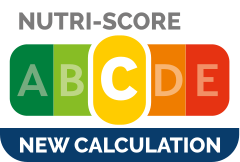 Average nutritional quality
Nutrient levels
Fat in low quantity (2.7%)
Saturated fat in high quantity (5.3%)
Sugars in high quantity (24%)
Salt in low quantity (0.1%)
Nutrition label

Nutrition facts
| Nutrition facts | As sold for 100 ml | Compared to: Ice creams and sorbets |
|---|---|---|
| Energy | 323 kJ (130 kcal) | 894.425 kJ (214 kcal) (-64%) |
| Fat | 2.7 g | 9.714 g (-72%) |
| Saturated fat | 5.3 g | 6.401 g (-17%) |
| Carbohydrates | 25 g | 27.821 g (-10%) |
| Sugars | 24 g | 23.025 g (+4%) |
| Dietary fiber | 2.1 g | ? |
| Proteins | 0.4 g | 2.811 g (-86%) |
| Salt | 0.1 g | 0.135 g (-26%) |
| Sodium | 0.04 g | 0.054 g (-26%) |
| Fruits, vegetables and legumes | ~ 97.9 % | ? |
Nutrition facts (Detailed data)
| Nutrition facts | As sold for 100 ml | As sold Per 100 ml (packaging) | As sold Per 100 g (estimate) |
|---|---|---|---|
| Energy | 323 kJ (130 kcal) | 323 kJ (77 kcal) | ? |
| Fat | 2.7 g | 2.7 g | ? |
| Saturated fat | 5.3 g | 5.3 g | ? |
| Carbohydrates | 25 g | 25 g | ? |
| Sugars | 24 g | 24 g | ? |
| Dietary fiber | 2.1 g | 2.1 g | ? |
| Proteins | 0.4 g | 0.4 g | ? |
| Salt | 0.1 g | 0.1 g | ? |
| Sodium | 0.04 g | 0.04 g | ? |
| Fruits, vegetables and legumes | ~ 97.9 % | ? | ~ 97.9 % |
Serving size
Ingredients
Ingredients image

Ingredients list
Ingredient information
Added sugars
Allergens
Traces
Ingredients analysis
Contains ingredients containing palm oil.
Contains non-vegan ingredients.
Unrecognized: fr:2-x, fr:2-x, fr:2-x, fr:2-x, fr:2-x
Contains non-vegetarian ingredients.
Unrecognized: fr:2-x, fr:2-x, fr:2-x, fr:2-x, fr:2-x
Food Processing
NOVA group
 Ultra-processed food and drink products
Elements that indicate the product is in NOVA group 4
How NOVA works
Additives
E100 - CurcuminColour
No additive description is available yet.
E101 - RiboflavinColour
Riboflavin, also known as vitamin B2, is a vitamin found in food and used as a dietary supplement. Food sources include eggs, green vegetables, milk and other dairy product, meat, mushrooms, and almonds. Some countries require its addition to grains. As a supplement it is used to prevent and treat riboflavin deficiency and prevent migraines. It may be given by mouth or injection.It is nearly always well tolerated. Normal doses are safe during pregnancy. Riboflavin is in the vitamin B group. It is required by the body for cellular respiration.Riboflavin was discovered in 1920, isolated in 1933, and first made in 1935. It is on the World Health Organization's List of Essential Medicines, the most effective and safe medicines needed in a health system. Riboflavin is available as a generic medication and over the counter. In the United States a month of supplements costs less than 25 USD.
E120 - CochinealColour
Cochineal extract or carmine (E120) is a natural red colorant derived from the dried bodies of the female cochineal insect.
It is widely used to impart a pink, red, or purple hue to various food and beverage products, including yogurts, ice creams, confectionery, and fruit juices.
Although it is a natural additive, E120 is known to cause severe allergic reactions, including anaphylaxis, in some individuals. It is also not suitable for vegetarians or vegans due to its insect origin.
E131 - Patent blue v EFSA overexposure risk: moderate
PATENT BLUE V is a dark bluish synthetic triphenylmethane dye used as a food coloring. It is not widely used, but in Europe it can be found in Scotch eggs, certain jelly sweets, blue Curaçao, certain jello varieties (though not in actual Jell-O brand products), among others.
E141 - Copper complexes of chlorophylls and chlorophyllinsColour
No additive description is available yet.
E150d - Sulphite ammonia caramel EFSA overexposure risk: noColour
No additive description is available yet.
E160 - Carotenoids
No additive description is available yet.
E160c - Paprika extractColour
No additive description is available yet.
E162 - Beetroot redColour
Betanin, or Beetroot Red, is a red glycosidic food dye obtained from beets; its aglycone, obtained by hydrolyzing away the glucose molecule, is betanidin. As a food additive, its E number is E162. The color of betanin depends on pH; between four and five it is bright bluish-red, becoming blue-violet as the pH increases. Once the pH reaches alkaline levels betanin degrades by hydrolysis, resulting in a yellow-brown color. Betanin is a betalain pigment, together with isobetanin, probetanin, and neobetanin. Other pigments contained in beet are indicaxanthin and vulgaxanthins.
E322 - LecithinsAntioxidantEmulsifier
Lecithins are natural compounds commonly used in the food industry as emulsifiers and stabilizers.
Extracted from sources like soybeans and eggs, lecithins consist of phospholipids that enhance the mixing of oil and water, ensuring smooth textures in various products like chocolates, dressings, and baked goods.
They do not present any known health risks.
E322i - LecithinAntioxidantEmulsifier
Lecithins are natural compounds commonly used in the food industry as emulsifiers and stabilizers.
Extracted from sources like soybeans and eggs, lecithins consist of phospholipids that enhance the mixing of oil and water, ensuring smooth textures in various products like chocolates, dressings, and baked goods.
They do not present any known health risks.
E330 - Citric acidAntioxidantSequestrant
Citric acid is a natural organic acid found in citrus fruits such as lemons, oranges, and limes.
It is widely used in the food industry as a flavor enhancer, acidulant, and preservative due to its tart and refreshing taste.
Citric acid is safe for consumption when used in moderation and is considered a generally recognized as safe (GRAS) food additive by regulatory agencies worldwide.
E401 - sodium alginateCarrierEmulsifierHumectantSequestrantStabiliserThickener
No additive description is available yet.
E407 - Carrageenan EFSA overexposure risk: highCarrierEmulsifierHumectantStabiliserThickener
Carrageenan (E407), derived from red seaweed, is widely employed in the food industry as a gelling, thickening, and stabilizing agent, notably in dairy and meat products.
It can exist in various forms, each imparting distinct textural properties to food.
However, its degraded form, often referred to as poligeenan, has raised health concerns due to its potential inflammatory effects and its classification as a possible human carcinogen (Group 2B) by the International Agency for Research on Cancer (IARC).
Nevertheless, food-grade carrageenan has been deemed safe by various regulatory bodies when consumed in amounts typically found in food.
E412 - Guar gumEmulsifierStabiliserThickener
Guar gum (E412) is a natural food additive derived from guar beans.
This white, odorless powder is valued for its remarkable thickening and stabilizing properties, making it a common ingredient in various food products, including sauces, dressings, and ice creams.
When used in moderation, guar gum is considered safe for consumption, with no known adverse health effects.
E471 - Mono- and diglycerides of fatty acidsEmulsifierStabiliser
Mono- and diglycerides of fatty acids (E471), are food additives commonly used as emulsifiers in various processed foods.
These compounds consist of glycerol molecules linked to one or two fatty acid chains, which help stabilize and blend water and oil-based ingredients. E471 enhances the texture and shelf life of products like margarine, baked goods, and ice cream, ensuring a smooth and consistent texture.
It is generally considered safe for consumption within established regulatory limits.
E473 - Sucrose esters of fatty acids EFSA overexposure risk: highEmulsifierStabiliser
No additive description is available yet.
E901 - white and yellow beeswaxCarrierEmulsifierStabiliserThickener
Beeswax (cera alba) is a natural wax produced by honey bees of the genus Apis. The wax is formed into "scales" by eight wax-producing glands in the abdominal segments of worker bees, which discard it in or at the hive. The hive workers collect and use it to form cells for honey storage and larval and pupal protection within the beehive. Chemically, beeswax consists mainly of esters of fatty acids and various long-chain alcohols. Beeswax has long-standing applications in human food and flavoring. For example, it is used as a glazing agent or as a light/heat source. It is edible, in the sense of having similar negligible toxicity to plant waxes, and is approved for food use in most countries and the European Union under the E number E901. However, the wax monoesters in beeswax are poorly hydrolysed in the guts of humans and other mammals, so they have insignificant nutritional value. Some birds, such as honeyguides, can digest beeswax. Beeswax is the main diet of wax moth larvae.
Environment
Green-Score, origins bonus, and transportation impact are shown for Worldwide .
Green Score
Overall grade
 Unknown environmental impact
About Green-Score
Current scope
Green-Score availability
Bonuses and maluses
Declared origins
Threatened species risk
Packaging impact
Packaging
Packaging impact
Packaging components
| Shape | Material | Recycling | Impact |
|---|---|---|---|
| BOX | Plastic | Unknown | High |
| Unknown | Cardboard | Unknown | Low |
Declared packaging
Data precision
Transportation
Declared origins
Forest footprint
Forest footprint
Deforestation risk details
Additional information
- Preparation
- Nous vous conseillons de sortir le produit du congélateur quelques minutes avant sa dégustation.
Data Source
Product data comes from Open Food Facts. Food Benchmark also adds translations, category comparisons and explanatory calculations.
The database is licensed under ODbL 1.0, individual contents under DbCL 1.0, and product photos under CC BY-SA 3.0.
Product added on July 27, 2017 at 6:05:21 PM UTC by kiliweb .
Last edit on March 14, 2026 at 9:55:59 PM UTC by new-nutrition-bot .
Product page also edited by autorotate-bot, beniben, kiliweb, new-nutrition-bot, openfoodfacts-contributors, org-scamark, packbot, quechoisir, scamark, tacite, tacite-mass-editor, teolemon, yuka.SEo4OUtQaytoc0FHeFBFazh3M085TXh2NHNHRWIwR1dDdlF0SVE9PQ.
Source List
- Scamark
- scamark