

Sveltesse Recettes Dessert
Health
Nutrition
Nutri-Score
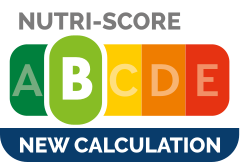 Good nutritional quality
Nutri-Score data warning
Nutrient levels
Fat in low quantity (0.962%)
Saturated fat in low quantity (0.516%)
Sugars in moderate quantity (12.5%)
Salt in low quantity (0.0979%)
Nutrition label

Nutrition facts
| Nutrition facts | As sold for 100 g / 100 ml | Compared to: Low-fat yogurts |
|---|---|---|
| Energy | ~ 322.6008125 kJ (76 kcal) | 252.274 kJ (60 kcal) (+28%) |
| Fat | ~ 0.9620021875 g | 0.685 g (+40%) |
| Saturated fat | ~ 0.5162460625 g | 0.407 g (+27%) |
| Carbohydrates | ~ 13.81214875 g | 8.17 g (+69%) |
| Sugars | ~ 12.4851859375 g | 7.299 g (+71%) |
| Dietary fiber | ~ 0.10383 g | ? |
| Proteins | ~ 2.8858203125 g | 4.715 g (-39%) |
| Salt | ~ 0.09792878125 g | 0.132 g (-26%) |
| Fruits, vegetables and legumes | ~ 5.4 % | ? |
Nutrition facts (Detailed data)
| Nutrition facts | As sold for 100 g / 100 ml | As sold Per 100 g (packaging) | As sold Per 100 g (estimate) |
|---|---|---|---|
| Energy | ~ 322.6008125 kJ (76 kcal) | ? | ~ 322.6008125 kJ (76 kcal) |
| Fat | ~ 0.9620021875 g | ? | ~ 0.9620021875 g |
| Saturated fat | ~ 0.5162460625 g | ? | ~ 0.5162460625 g |
| Carbohydrates | ~ 13.81214875 g | ? | ~ 13.81214875 g |
| Sugars | ~ 12.4851859375 g | ? | ~ 12.4851859375 g |
| Dietary fiber | ~ 0.10383 g | ? | ~ 0.10383 g |
| Proteins | ~ 2.8858203125 g | ? | ~ 2.8858203125 g |
| Salt | ~ 0.09792878125 g | ? | ~ 0.09792878125 g |
| Fruits, vegetables and legumes | ~ 5.4 % | ? | ~ 5.4 % |
Ingredients
Ingredients image

Ingredients list
Ingredient information
Added sugars
Allergens
Traces
Ingredients analysis
Palm oil content unknown
Contains non-vegan ingredients.
Unrecognized: en:biscuit
Vegetarian status unknown
Unrecognized: en:biscuit
Food Processing
NOVA group
 Ultra-processed food and drink products
Elements that indicate the product is in NOVA group 4
How NOVA works
Additives
E14XX - Modified StarchEmulsifierStabiliserThickener
No additive description is available yet.
E161b - LuteinColour
LUTEIN is a xanthophyll and one of 600 known naturally occurring carotenoids. Lutein is extracted from the petals of African marigold (Tagetes erecta). It is approved for use in the EU and Australia and New Zealand. In the United States lutein may not be used as a food coloring for foods intended for human consumption, but can be added to animal feed.
E202 - Potassium sorbate EFSA overexposure risk: highPreservative
Potassium sorbate (E202) is a synthetic food preservative commonly used to extend the shelf life of various food products.
It works by inhibiting the growth of molds, yeast, and some bacteria, preventing spoilage. When added to foods, it helps maintain their freshness and quality.
Some studies have shown that when combined with nitrites, potassium sorbate have genotoxic activity in vitro. However, potassium sorbate is generally recognized as safe (GRAS) by regulatory authorities.
E322 - LecithinsAntioxidantEmulsifier
Lecithins are natural compounds commonly used in the food industry as emulsifiers and stabilizers.
Extracted from sources like soybeans and eggs, lecithins consist of phospholipids that enhance the mixing of oil and water, ensuring smooth textures in various products like chocolates, dressings, and baked goods.
They do not present any known health risks.
E322i - LecithinAntioxidantEmulsifier
Lecithins are natural compounds commonly used in the food industry as emulsifiers and stabilizers.
Extracted from sources like soybeans and eggs, lecithins consist of phospholipids that enhance the mixing of oil and water, ensuring smooth textures in various products like chocolates, dressings, and baked goods.
They do not present any known health risks.
E401 - sodium alginateCarrierEmulsifierHumectantSequestrantStabiliserThickener
No additive description is available yet.
E412 - Guar gumEmulsifierStabiliserThickener
Guar gum (E412) is a natural food additive derived from guar beans.
This white, odorless powder is valued for its remarkable thickening and stabilizing properties, making it a common ingredient in various food products, including sauces, dressings, and ice creams.
When used in moderation, guar gum is considered safe for consumption, with no known adverse health effects.
E440 - PectinsEmulsifierStabiliserThickener
Pectins (E440) are natural carbohydrates, predominantly found in fruits, that act as gelling agents in the food industry, creating the desirable jelly-like texture in jams, jellies, and marmalades.
Pectins stabilize and thicken various food products, such as desserts, confectioneries, and beverages, ensuring a uniform consistency and quality.
Recognized as safe by various health authorities, pectins have been widely used without notable adverse effects when consumed in typical dietary amounts.
E950 - Acesulfame kSweetener
Acesulfame potassium ( AY-see-SUL-faym), also known as acesulfame K (K is the symbol for potassium) or Ace K, is a calorie-free sugar substitute (artificial sweetener) often marketed under the trade names Sunett and Sweet One. In the European Union, it is known under the E number (additive code) E950. It was discovered accidentally in 1967 by German chemist Karl Clauss at Hoechst AG (now Nutrinova). In chemical structure, acesulfame potassium is the potassium salt of 6-methyl-1,2,3-oxathiazine-4(3H)-one 2,2-dioxide. It is a white crystalline powder with molecular formula C4H4KNO4S and a molecular weight of 201.24 g/mol.
E951 - Aspartame EFSA overexposure risk: noSweetener
Aspartame (E951) is a low-calorie artificial sweetener composed of two amino acids.
It is used as a sugar substitute in thousands of "sugar-free" or "diet" products, such as carbonated soft drinks, chewing gum, yogurts, and tabletop sweeteners, to provide sweetness without the calories of sugar.
Despite being one of the most rigorously tested food additives, its safety remains controversial. While major regulatory bodies like the FDA and EFSA deem it safe for the general public, the IARC has classified it as "possibly carcinogenic to humans" (Group 2B). It must also be avoided by individuals with the genetic condition phenylketonuria (PKU).
Environment
Green-Score, origins bonus, and transportation impact are shown for Worldwide .
Green Score
Overall grade
 Very low environmental impact
About Green-Score
Current scope
Life cycle analysis
Average impact of the category
Yogurt, fermented milk or dairy specialty, with fruits, with sugar, fortified with vitamin D • Score: 88/100Life-cycle reference
Overall environmental impact by stage (PEF)
The overall environmental impact figure (PEF) comes from ADEME's Agribalyse database, for the category: Yogurt, fermented milk or dairy specialty, with fruits, with sugar, fortified with vitamin D. Source: ADEME Agribalyse Database.
| Stage | Impact |
|---|---|
| Agriculture | 55.5 % |
| Processing | 14.2 % |
| Packaging | 15.5 % |
| Transportation | 9.5 % |
| Distribution | 4.4 % |
| Consumption | 1.2 % |
Bonuses and maluses
Declared origins
Packaging impact
Green-Score for this product
Green-Score for this product
Final score: 82/100Final score breakdown
Carbon footprint
Carbon footprint
Climate impact by stage (CO2e)
The carbon emission figure comes from ADEME's Agribalyse database, for the category: Yogurt, fermented milk or dairy specialty, with fruits, with sugar, fortified with vitamin D. Source: ADEME Agribalyse Database.
| Stage | Impact |
|---|---|
| Agriculture | 52.9 % |
| Processing | 8.1 % |
| Packaging | 22.3 % |
| Transportation | 14.2 % |
| Distribution | 2.0 % |
| Consumption | 0.4 % |
Packaging
Packaging impact
Packaging components
| Shape | Material | Recycling | Impact |
|---|---|---|---|
| POT | Cardboard | Unknown | Low |
Declared packaging
Transportation
Manufacturing locations
Declared origins
Forest footprint
Forest footprint
Ingredients linked to forest pressure
| Ingredient | Type | Percent in product | Forest footprint |
|---|---|---|---|
| EGG | Oeufs Importés | 0.60 % | 0.00 |
Data Source
Product data comes from Open Food Facts. Food Benchmark also adds translations, category comparisons and explanatory calculations.
The database is licensed under ODbL 1.0, individual contents under DbCL 1.0, and product photos under CC BY-SA 3.0.
Product added on September 25, 2015 at 5:08:40 PM UTC by jeanbono .
Last edit on March 2, 2026 at 3:44:27 PM UTC by new-nutrition-bot .
Product page also edited by claires, d-r, date-limite-app, driveoff, ecoscore-impact-estimator, jeanbono, julie-yuka, kiliweb, magasins-u, moon-rabbit, new-nutrition-bot, openfoodfacts-contributors, packbot, quentinbrd, scari, tacite, yuka.UjUwSklLTVRtL0l4aGRvdXJrNy81dDlTbUtlVldGN3FjdEl0SVE9PQ, yuka.YWE0TU1aZ3hoOGdJaHNRTSt6WHU0TnhyenNUNUJUeW1EdVlOSVE9PQ, yuka.ZjZvaUtMNFFvdHNHeGMxbTkwanE4L1JNNEthblJYaVZLc1FKSWc9PQ.