
Klosterman, 12 grain bread
Health
Nutrition
Nutri-Score
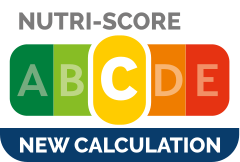 Average nutritional quality
Nutri-Score data warning
Nutrient levels
Fat in moderate quantity (5.26%)
Saturated fat in low quantity (0%)
Sugars in moderate quantity (7.02%)
Salt in moderate quantity (0.92%)
Nutrition facts
| Nutrition facts | As sold for 100 g / 100 ml | Compared to: Breads |
|---|---|---|
| Energy | ~ 1161.48 kJ (263 kcal) | 1,245.662 kJ (294 kcal) (-7%) |
| Fat | 5.26 g | 5.13 g (+3%) |
| Saturated fat | 0 g | 0.904 g (-100%) |
| Trans fat | 0 g | 0 g |
| Cholesterol | 0 g | 1.308 mg (-100%) |
| Carbohydrates | 45.61 g | 50.545 g (-10%) |
| Sugars | 7.02 g | 3.589 g (+96%) |
| Dietary fiber | 5.3 g | ? |
| Proteins | 8.77 g | 9.281 g (-6%) |
| Salt | 0.92 g | 1.224 g (-25%) |
| Sodium | 0.368 g | 0.489 g (-25%) |
| Vitamin A | 0 g | 2.534 µg (-100%) |
| Vitamin D | 0.0000014 g | 0.086 µg (+1528%) |
| Vitamin C | 0 g | ? |
| Vitamin PP | 0.003509 g | ? |
| Folates | 0.000056 g | ? |
| Calcium | 0.105 g | 54.584 mg (+92%) |
| Iron | 0.00253 g | 2.196 mg (+15%) |
| Fruits, vegetables and legumes | ~ 0 % | ? |
Nutrition facts (Detailed data)
| Nutrition facts | As sold for 100 g / 100 ml | As sold Per 100 g (packaging) | As sold Per 100 g (estimate) |
|---|---|---|---|
| Energy | ~ 1161.48 kJ (263 kcal) | ? (263 kcal) | ~ 636.03292911799 kJ (150 kcal) |
| Fat | 5.26 g | 5.26 g | ~ 0.816470892589196 g |
| Saturated fat | 0 g | 0 g | ~ 0.135226783356414 g |
| Trans fat | 0 g | 0 g | ? |
| Cholesterol | 0 g | 0 g | ~ 0.0000145912016129032 g |
| Carbohydrates | 45.61 g | 45.61 g | ~ 29.1753765528623 g |
| Sugars | 7.02 g | 7.02 g | ~ 4.08109701163034 g |
| Dietary fiber | 5.3 g | 5.3 g | ~ 3.272229402 g |
| Proteins | 8.77 g | 8.77 g | ~ 4.9547 g |
| Salt | 0.92 g | 0.92 g | ~ 0.492502381448626 g |
| Sodium | 0.368 g | 0.368 g | ~ 0.188428755663625 g |
| Vitamin A | 0 g | 0 g | ~ 0.00000036855 g |
| Vitamin D | 0.0000014 g | 0.0000014 g | ~ 0.00000005179100197737 g |
| Vitamin C | 0 g | 0 g | ~ 0.000102990518452429 g |
| Vitamin PP | 0.003509 g | 0.003509 g | ~ 0.000681214024514893 g |
| Folates | 0.000056 g | 0.000056 g | ? |
| Calcium | 0.105 g | 0.105 g | ~ 0.0212114941426315 g |
| Iron | 0.00253 g | 0.00253 g | ~ 0.00103656674268466 g |
| Fruits, vegetables and legumes | ~ 0 % | ? | ~ 0 % |
Serving size
Ingredients
Ingredients list
Ingredient information
Added sugars
Allergens
Ingredients analysis
Palm oil content unknown
Contains non-vegan ingredients.
Unrecognized: en:iron, en:invert-sugar, en:oatmeal, en:rye-meal, en:monoglycerides
Vegetarian status unknown
Unrecognized: en:iron, en:invert-sugar, en:oatmeal, en:rye-meal, en:monoglycerides
Food Processing
NOVA group
 Ultra-processed food and drink products
Elements that indicate the product is in NOVA group 4
How NOVA works
Additives
E1200 - PolydextroseHumectantStabiliserThickener
Polydextrose is a synthetic polymer of glucose. It is a food ingredient classified as soluble fiber by the U.S. Food and Drug Administration (FDA) as well as Health Canada, as of April 2013. It is frequently used to increase the dietary fiber content of food, to replace sugar, and to reduce calories and fat content. It is a multi-purpose food ingredient synthesized from dextrose (glucose), plus about 10 percent sorbitol and 1 percent citric acid. Its E number is E1200. The FDA approved it in 1981. It is 0.1 times as sweet as sugar.
E282 - calcium propionatePreservative
CALCIUM PROPIONATE has the formula Ca(C2H5COO)2. Calcium propionate is used as a preservative in a wide variety of products, including but not limited to:bread, other baked goods, processed meat, whey, and other dairy products.
E300 - Ascorbic acidAntioxidantSequestrant
No additive description is available yet.
E322 - LecithinsAntioxidantEmulsifier
Lecithins are natural compounds commonly used in the food industry as emulsifiers and stabilizers.
Extracted from sources like soybeans and eggs, lecithins consist of phospholipids that enhance the mixing of oil and water, ensuring smooth textures in various products like chocolates, dressings, and baked goods.
They do not present any known health risks.
E322i - LecithinAntioxidantEmulsifier
Lecithins are natural compounds commonly used in the food industry as emulsifiers and stabilizers.
Extracted from sources like soybeans and eggs, lecithins consist of phospholipids that enhance the mixing of oil and water, ensuring smooth textures in various products like chocolates, dressings, and baked goods.
They do not present any known health risks.
E330 - Citric acidAntioxidantSequestrant
Citric acid is a natural organic acid found in citrus fruits such as lemons, oranges, and limes.
It is widely used in the food industry as a flavor enhancer, acidulant, and preservative due to its tart and refreshing taste.
Citric acid is safe for consumption when used in moderation and is considered a generally recognized as safe (GRAS) food additive by regulatory agencies worldwide.
E481 - Sodium stearoyl-2-lactylate EFSA overexposure risk: highEmulsifierStabiliser
Sodium stearoyl-2-lactylate (sodium stearoyl lactylate or SSL) is a versatile, FDA approved food additive used to improve the mix tolerance and volume of processed foods. It is one type of a commercially available lactylate. SSL is non-toxic, biodegradable, and typically manufactured using biorenewable feedstocks. Because SSL is a safe and highly effective food additive, it is used in a wide variety of products ranging from baked goods and desserts to pet foods.As described by the Food Chemicals Codex 7th edition, SSL is a cream-colored powder or brittle solid. SSL is currently manufactured by the esterification of stearic acid with lactic acid and partially neutralized with either food-grade soda ash (sodium carbonate) or caustic soda (concentrated sodium hydroxide). Commercial grade SSL is a mixture of sodium salts of stearoyl lactylic acids and minor proportions of other sodium salts of related acids. The HLB for SSL is 10-12. SSL is slightly hygroscopic, soluble in ethanol and in hot oil or fat, and dispersible in warm water. These properties are the reason that SSL is an excellent emulsifier for fat-in-water emulsions and can also function as a humectant.
E516 - Calcium sulphateSequestrantStabiliser
Calcium sulfate (or calcium sulphate) is the inorganic compound with the formula CaSO4 and related hydrates. In the form of γ-anhydrite (the anhydrous form), it is used as a desiccant. One particular hydrate is better known as plaster of Paris, and another occurs naturally as the mineral gypsum. It has many uses in industry. All forms are white solids that are poorly soluble in water. Calcium sulfate causes permanent hardness in water.
E517 - Ammonium sulphate
Ammonium sulfate (American English and international scientific usage; ammonium sulphate in British English); (NH4)2SO4, is an inorganic salt with a number of commercial uses. The most common use is as a soil fertilizer. It contains 21% nitrogen and 24% sulfur.
Environment
Green-Score, origins bonus, and transportation impact are shown for Worldwide .
Green Score
Overall grade
 Unknown environmental impact
About Green-Score
Current scope
Green-Score availability
Bonuses and maluses
Declared origins
Packaging impact
Packaging
Packaging impact
Data precision
Transportation
Declared origins
Data Source
Product data comes from Open Food Facts. Food Benchmark also adds translations, category comparisons and explanatory calculations.
The database is licensed under ODbL 1.0, individual contents under DbCL 1.0, and product photos under CC BY-SA 3.0.
Product added on March 10, 2017 at 9:48:36 AM UTC by usda-ndb-import .
Last edit on February 26, 2026 at 5:59:39 PM UTC by new-nutrition-bot .
Product page also edited by clockwerx, new-nutrition-bot, org-database-usda, usda-ndb-import.
Source List
- usda-ndb
- database-usda