

Hamburger Dill Chips
Health
Nutrition
Nutri-Score
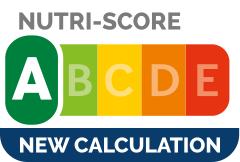 Very good nutritional quality
Nutri-Score data warning
Nutrient levels
Fat in low quantity (0%)
Sugars in low quantity (0%)
Salt in moderate quantity (0.536%)
Nutrition label

Nutrition facts
| Nutrition facts | As sold for 100 g / 100 ml | Compared to: Pickled cucumbers |
|---|---|---|
| Energy | ~ 60.7142857142857 kJ (53 kcal) | 114.546 kJ (28 kcal) (-47%) |
| Energy from fat | 0 g | ? |
| Fat | 0 g | 0.279 g (-100%) |
| Saturated fat | ? | 0.069 g |
| Carbohydrates | < 3.57142857142857 g | 4.775 g (-25%) |
| Sugars | 0 g | 3.853 g (-100%) |
| Dietary fiber | ? | ? |
| Proteins | 0 g | 0.872 g (-100%) |
| Salt | 0.535714285714286 g | 1.566 g (-66%) |
| Sodium | 0.214285714285714 g | 0.628 g (-66%) |
| Vitamin A | 0 g | 0.001 µg (-100%) |
| Vitamin C | 0.00428571428571429 g | ? |
| Calcium | 0.0714285714285714 g | 20.065 mg (+256%) |
| Iron | 0 g | 0.258 mg (-100%) |
| Fruits, vegetables and legumes | ~ 61.6375 % | ? |
Nutrition facts (Detailed data)
| Nutrition facts | As sold for 100 g / 100 ml | As sold Per serving (28 g) (packaging) | As sold Per 100 g (estimate) |
|---|---|---|---|
| Energy | ~ 60.7142857142857 kJ (53 kcal) | ? (15 kcal) | ? |
| Energy from fat | 0 g | 0 g | ? |
| Fat | 0 g | 0 g | ? |
| Saturated fat | ? | ? | ? |
| Carbohydrates | < 3.57142857142857 g | < 1 g | ? |
| Sugars | 0 g | 0 g | ? |
| Dietary fiber | ? | ? | ? |
| Proteins | 0 g | 0 g | ? |
| Salt | 0.535714285714286 g | 0.15 g | ? |
| Sodium | 0.214285714285714 g | 0.06 g | ? |
| Vitamin A | 0 g | 0 g | ? |
| Vitamin C | 0.00428571428571429 g | 0.0012 g | ? |
| Calcium | 0.0714285714285714 g | 0.02 g | ? |
| Iron | 0 g | 0 g | ? |
| Fruits, vegetables and legumes | ~ 61.6375 % | ? | ~ 61.6375 % |
Serving size
Ingredients
Ingredients image

Ingredients list
Ingredient information
Allergens
Ingredients analysis
Palm oil content unknown
Vegan status unknown
Vegetarian status unknown
Food Processing
NOVA group
 Ultra-processed food and drink products
Elements that indicate the product is in NOVA group 4
How NOVA works
Additives
E102 - TartrazineColour
Tartrazine (E102) is a synthetic lemon-yellow azo dye used as a food coloring.
It is found in a wide range of products such as soft drinks, desserts, candies, and snack foods to give them a vibrant yellow appearance.
While approved by many regulatory agencies, tartrazine has been linked to allergic reactions, such as hives, in a small portion of the population. Some studies have also suggested a link to increased hyperactivity in children, particularly when consumed with other additives like benzoates.
E202 - Potassium sorbate EFSA overexposure risk: highPreservative
Potassium sorbate (E202) is a synthetic food preservative commonly used to extend the shelf life of various food products.
It works by inhibiting the growth of molds, yeast, and some bacteria, preventing spoilage. When added to foods, it helps maintain their freshness and quality.
Some studies have shown that when combined with nitrites, potassium sorbate have genotoxic activity in vitro. However, potassium sorbate is generally recognized as safe (GRAS) by regulatory authorities.
E433 - Polyoxyethylene sorbitan monooleate EFSA overexposure risk: moderateEmulsifierStabiliser
Polysorbate 80 is a nonionic surfactant and emulsifier often used in foods and cosmetics. This synthetic compound is a viscous, water-soluble yellow liquid.
E520 - Aluminium sulphate
Aluminium sulfate is a chemical compound with the formula Al2(SO4)3. It is soluble in water and is mainly used as a coagulating agent (promoting particle collision by neutralizing charge) in the purification of drinking water and waste water treatment plants, and also in paper manufacturing. The anhydrous form occurs naturally as a rare mineral millosevichite, found e.g. in volcanic environments and on burning coal-mining waste dumps. Aluminium sulfate is rarely, if ever, encountered as the anhydrous salt. It forms a number of different hydrates, of which the hexadecahydrate Al2(SO4)3•16H2O and octadecahydrate Al2(SO4)3•18H2O are the most common. The heptadecahydrate, whose formula can be written as [Al(H2O)6]2(SO4)3•5H2O, occurs naturally as the mineral alunogen. Aluminium sulfate is sometimes called alum or papermaker's alum in certain industries. However, the name "alum" is more commonly and properly used for any double sulfate salt with the generic formula XAl(SO4)2·12H2O, where X is a monovalent cation such as potassium or ammonium.
Environment
Green-Score, origins bonus, and transportation impact are shown for Worldwide .
Green Score
Overall grade
 Unknown environmental impact
About Green-Score
Current scope
Green-Score availability
Bonuses and maluses
Origins of ingredients
Packaging impact
Packaging

Packaging impact
Packaging components
| Shape | Material | Recycling | Impact |
|---|---|---|---|
| 1 JAR | Clear Glass | Recycle | Low |
| 1 LID | Metal | Recycle | High |
| 1 Label | Paper | Recycle | Low |
Data precision
Transportation
Origins of ingredients
Origins breakdown
| Origin | Percent of ingredients | Impact |
|---|---|---|
| United States | 100 % | Medium |
Forest footprint
Forest footprint
Deforestation risk details
Data Source
Product data comes from Open Food Facts. Food Benchmark also adds translations, category comparisons and explanatory calculations.
The database is licensed under ODbL 1.0, individual contents under DbCL 1.0, and product photos under CC BY-SA 3.0.
Product added on March 31, 2018 at 5:47:50 PM UTC by kiliweb .
Last edit on March 25, 2026 at 6:14:23 PM UTC by new-nutrition-bot .
Product page also edited by 5m4u9, kiliweb, new-nutrition-bot, openfoodfacts-contributors, yuka.SFlrTkFQb212dnM3aDhNVjV6N1FvZTFzeDhDbWZVV1lKL0F6SUE9PQ, yuka.ZnFFc1Q1a2N0TWdLeXNRZi9DMkt3KzllMllmNVdXcVlkdnMySVE9PQ, yuka.sY2b0xO6T85zoF3NwEKvlmVtWvHZrzD4BSHvxVWKzP3QDMLtbON8_6j-N6g.