

Caesar Salad with Grilled Chicken Breast
Health
Nutrition
Nutri-Score
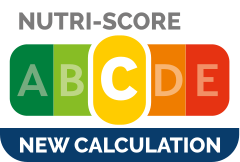 Average nutritional quality
Nutri-Score data warning
Nutrient levels
Fat in moderate quantity (11.9%)
Saturated fat in moderate quantity (2.81%)
Sugars in low quantity (2.5%)
Salt in moderate quantity (1.11%)
Nutrition label

Nutrition facts
| Nutrition facts | As sold for 100 g / 100 ml | Compared to: Prepared salads |
|---|---|---|
| Energy | ~ 672.5 kJ (162 kcal) | 636.623 kJ (153 kcal) (+6%) |
| Fat | 11.875 g | 9.403 g (+26%) |
| Saturated fat | 2.8125 g | 1.382 g (+104%) |
| Carbohydrates | 6.875 g | 10.211 g (-33%) |
| Sugars | 2.5 g | 3.007 g (-17%) |
| Dietary fiber | 1.25 g | ? |
| Proteins | 6.25 g | 4.824 g (+30%) |
| Salt | 1.109375 g | 0.895 g (+24%) |
| Sodium | 0.44375 g | 0.358 g (+24%) |
| Vitamin A | 0.0001875 g | 10.137 µg (+1750%) |
| Potassium | 0.225 g | 227.355 mg (-1%) |
| Calcium | 0.08125 g | 29.823 mg (+172%) |
| Iron | 0.00045 g | 0.745 mg (-40%) |
| Fruits, vegetables and legumes | ~ 0 % | ? |
Nutrition facts (Detailed data)
| Nutrition facts | As sold for 100 g / 100 ml | As sold Per 100 g (packaging) | As sold Per serving (160 g) (packaging) | As sold Per 100 g (estimate) |
|---|---|---|---|---|
| Energy | ~ 672.5 kJ (162 kcal) | ? (162 kcal) | ? (260 kcal) | ? |
| Fat | 11.875 g | ? | 19 g | ? |
| Saturated fat | 2.8125 g | ? | 4.5 g | ? |
| Carbohydrates | 6.875 g | ? | 11 g | ? |
| Sugars | 2.5 g | ? | 4 g | ? |
| Dietary fiber | 1.25 g | ? | 2 g | ? |
| Proteins | 6.25 g | ? | 10 g | ? |
| Salt | 1.109375 g | ? | 1.775 g | ? |
| Sodium | 0.44375 g | ? | 0.71 g | ? |
| Vitamin A | 0.0001875 g | ? | 0.0003 g | ? |
| Potassium | 0.225 g | ? | 0.36 g | ? |
| Calcium | 0.08125 g | ? | 0.13 g | ? |
| Iron | 0.00045 g | ? | 0.00072 g | ? |
| Fruits, vegetables and legumes | ~ 0 % | ? | ? | ~ 0 % |
Serving size
Ingredients
Ingredients image

Ingredients list
Ingredient information
Allergens
Traces
Ingredients analysis
Palm oil content unknown
Unrecognized: th:ผักสลัด, th:ผักสลัดคอส-และกรีนโอ๊ค, th:น้ำสลัดซีซาร์, th:อกไก่นึ่ง, th:เนื้ออกไก่, th:เครื่องปรุงรส, th:พริกไทยด่า-และพาสเล่ย์, th:ขนมปังกรอบรสเนยกระเทียม, th:พาเมซานชีส-1-2-วัตถุปรุงแต่งรสอาหาร, th:มอโนโซเดียมแอล-กลูตาเมต, th:วัตถุเจือปนอาหาร, th:e11006, th:สีธรรมชาติ, th:1, th:วัตถุกันเสีย, th:แต่งกลิ่นสังเคราะห์, th:ใช้เกลือบริโภคเสริมไอโอดีน-ข้อมูลสำหรับผู้แพ้อาหาร, th:มีส่วนผสมของไข่, th:นม-และแป้งสาลี
Vegan status unknown
Unrecognized: th:ผักสลัดคอส-และกรีนโอ๊ค, th:น้ำสลัดซีซาร์, th:เนื้ออกไก่, th:เครื่องปรุงรส, th:พริกไทยด่า-และพาสเล่ย์, th:ขนมปังกรอบรสเนยกระเทียม, th:มอโนโซเดียมแอล-กลูตาเมต, th:e11006, th:สีธรรมชาติ, th:1, th:แต่งกลิ่นสังเคราะห์, th:มีส่วนผสมของไข่, th:นม-และแป้งสาลี
Vegetarian status unknown
Unrecognized: th:ผักสลัดคอส-และกรีนโอ๊ค, th:น้ำสลัดซีซาร์, th:เนื้ออกไก่, th:เครื่องปรุงรส, th:พริกไทยด่า-และพาสเล่ย์, th:ขนมปังกรอบรสเนยกระเทียม, th:มอโนโซเดียมแอล-กลูตาเมต, th:e11006, th:สีธรรมชาติ, th:1, th:แต่งกลิ่นสังเคราะห์, th:มีส่วนผสมของไข่, th:นม-และแป้งสาลี
Food Processing
NOVA group
 Ultra-processed food and drink products
Elements that indicate the product is in NOVA group 4
How NOVA works
Additives
E1420 - Acetylated starchEmulsifierStabiliserThickener
No additive description is available yet.
E160 - Carotenoids
No additive description is available yet.
E200 - Sorbic acid EFSA overexposure risk: highPreservative
SORBIC ACID, or 2,4-hexadienoic acid, is a natural organic compound used as a food preservative. It has the chemical formula CH3(CH)4CO2H.
E260 - Acetic acidPreservative
ACETIC ACID, systematically named ethanoic acid, is a colourless liquid organic compound with the chemical formula CH3COOH (also written as CH3CO2H or C2H4O2).
E300 - Ascorbic acidAntioxidantSequestrant
No additive description is available yet.
E307b - concentrated tocopherolAntioxidant
α-Tocopherol is a type of vitamin E. It has E number "E307". Vitamin E exists in eight different forms, four tocopherols and four tocotrienols. All feature a chromane ring, with a hydroxyl group that can donate a hydrogen atom to reduce free radicals and a hydrophobic side chain which allows for penetration into biological membranes. Compared to the others, α-tocopherol is preferentially absorbed and accumulated in humans.
E330 - Citric acidAntioxidantSequestrant
Citric acid is a natural organic acid found in citrus fruits such as lemons, oranges, and limes.
It is widely used in the food industry as a flavor enhancer, acidulant, and preservative due to its tart and refreshing taste.
Citric acid is safe for consumption when used in moderation and is considered a generally recognized as safe (GRAS) food additive by regulatory agencies worldwide.
E337 - Potassium sodium tartrateSequestrantStabiliser
Potassium sodium tartrate tetrahydrate, also known as Rochelle salt, is a double salt of tartaric acid first prepared (in about 1675) by an apothecary, Pierre Seignette, of La Rochelle, France. Potassium sodium tartrate and monopotassium phosphate were the first materials discovered to exhibit piezoelectricity. This property led to its extensive use in "crystal" gramophone (phono) pick-ups, microphones and earpieces during the post-World War II consumer electronics boom of the mid-20th Century. Such transducers had an exceptionally high output with typical pick-up cartridge outputs as much as 2 volts or more. Rochelle salt is deliquescent so any transducers based on the material deteriorated if stored in damp conditions. It has been used medicinally as a laxative. It has also been used in the process of silvering mirrors. It is an ingredient of Fehling's solution (reagent for reducing sugars). It is used in electroplating, in electronics and piezoelectricity, and as a combustion accelerator in cigarette paper (similar to an oxidizer in pyrotechnics).In organic synthesis, it is used in aqueous workups to break up emulsions, particularly for reactions in which an aluminium-based hydride reagent was used. Sodium Potassium tartrate is also important in the food industry. It is a common precipitant in protein crystallography and is also an ingredient in the Biuret reagent which is used to measure protein concentration. This ingredient maintains cupric ions in solution at an alkaline pH.
E412 - Guar gumEmulsifierStabiliserThickener
Guar gum (E412) is a natural food additive derived from guar beans.
This white, odorless powder is valued for its remarkable thickening and stabilizing properties, making it a common ingredient in various food products, including sauces, dressings, and ice creams.
When used in moderation, guar gum is considered safe for consumption, with no known adverse health effects.
E451 - Triphosphates EFSA overexposure risk: highEmulsifierHumectantSequestrantStabiliserThickener
Sodium triphosphate (STP), also sodium tripolyphosphate (STPP), or tripolyphosphate (TPP),) is an inorganic compound with formula Na5P3O10. It is the sodium salt of the polyphosphate penta-anion, which is the conjugate base of triphosphoric acid. It is produced on a large scale as a component of many domestic and industrial products, especially detergents. Environmental problems associated with eutrophication are attributed to its widespread use.
E475 - Polyglycerol esters of fatty acidsEmulsifierStabiliser
No additive description is available yet.
E509 - Calcium chloride EFSA overexposure risk: moderateStabiliserThickenerCoagulant
Calcium chloride is an inorganic compound, a salt with the chemical formula CaCl2. It is a colorless crystalline solid at room temperature, highly soluble in water. Calcium chloride is commonly encountered as a hydrated solid with generic formula CaCl2(H2O)x, where x = 0, 1, 2, 4, and 6. These compounds are mainly used for de-icing and dust control. Because the anhydrous salt is hygroscopic, it is used as a desiccant.
E927 - Azodicarbonamide and Carbamide
No additive description is available yet.
E928 - Benzole peroxidePreservative
Benzoyl peroxide (BPO) is a medication and industrial chemical. As a medication it is used to treat mild to moderate acne. For more severe cases it may be used together with other treatments. Some versions come mixed with antibiotics such as clindamycin. Other uses include bleaching flour, hair bleaching, teeth whitening, and textile bleaching. It is also used in the plastic industry.Common side effects are skin irritation, dryness, or peeling. Use in pregnancy is of unclear safety. Benzoyl peroxide is in the peroxide family of chemicals. When used for acne it works by killing bacteria.Benzoyl peroxide was first made in 1905 and came into medical use in the 1930s. It is on the World Health Organization's List of Essential Medicines, the most effective and safe medicines needed in a health system. Benzoyl peroxide is available as a generic medication and over the counter. In the United Kingdom 150 ml of a 10% solution costs the NHS about £4. In the United States a month of treatment costs less than US$25.
Environment
Green-Score, origins bonus, and transportation impact are shown for Worldwide .
Green Score
Overall grade
 Unknown environmental impact
About Green-Score
Current scope
Green-Score availability
Bonuses and maluses
Declared origins
Packaging impact
Packaging
Packaging impact
Packaging components
| Shape | Material | Recycling | Impact |
|---|---|---|---|
| BOX | Unknown | Unknown | High |
Declared packaging
Data precision
Transportation
Declared origins
Data Source
Product data comes from Open Food Facts. Food Benchmark also adds translations, category comparisons and explanatory calculations.
The database is licensed under ODbL 1.0, individual contents under DbCL 1.0, and product photos under CC BY-SA 3.0.
Product added on August 15, 2019 at 8:51:56 AM UTC by bank-pc .
Last edit on March 10, 2026 at 1:19:15 PM UTC by municorn-calorie-counter-app .
Product page also edited by bank-pc, foodvisor, macrofactor, municorn-calorie-counter-app, openfoodfacts-contributors, packbot, roboto-app, thfoodeditor.