ProductsSnacks of The WorldHot mix spicy
Hot mix spicy
Barcode 8711299020625
Snacks of The World

Hot mix spicy

400 g
BARCODE:8711299020625
CATEGORIES:Plant Based Foods And Beverages, Plant Based Foods, Legumes And Their Products, Snacks, Legumes, Salty Snacks, Appetizers, Nuts And Their Products, Nuts, Peanuts
COUNTRIES:France

Health

Nutrition

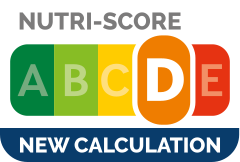
Nutri-Score

DLower nutritional quality

Nutri-Score data warning

Warning: the amount of fruits, vegetables and nuts is not specified on the label, it was estimated from the list of ingredients: 76

Nutrient levels

Fat in high quantity (38.5%)
What you need to know • A high consumption of fat, especially saturated fats, can raise cholesterol, which increases the risk of heart diseases. Recommendation: Limit the consumption of fat and saturated fat • Choose products with lower fat and saturated fat content. Source: National Health Service UK (NHS) - Fat: the facts
Saturated fat in high quantity (6.3%)
What you need to know • A high consumption of fat, especially saturated fats, can raise cholesterol, which increases the risk of heart diseases. Recommendation: Limit the consumption of fat and saturated fat • Choose products with lower fat and saturated fat content. Source: National Health Service UK (NHS) - Fat: the facts
Sugars in moderate quantity (5.9%)
What you need to know • A high consumption of sugar can cause weight gain and tooth decay. It also augments the risk of type 2 diabetes and cardio-vascular diseases. Recommendation: Limit the consumption of sugar and sugary drinks • Sugary drinks (such as sodas, fruit beverages, and fruit juices and nectars) should be limited as much as possible (no more than 1 glass a day). • Choose products with lower sugar content and reduce the consumption of products with added sugars. Source: National Health Service UK (NHS) - Sugar: the facts
Salt in moderate quantity (1.46%)
What you need to know • A high consumption of salt (or sodium) can cause raised blood pressure, which can increase the risk of heart disease and stroke. • Many people who have high blood pressure do not know it, as there are often no symptoms. • Most people consume too much salt (on average 9 to 12 grams per day), around twice the recommended maximum level of intake. Recommendation: Limit the consumption of salt and salted food • Reduce the quantity of salt used when cooking, and don't salt again at the table. • Limit the consumption of salty snacks and choose products with lower salt content. Source: World Health Organization (WHO) - Fact sheet - Salt reduction Source: National Health Service UK (NHS) - Salt: the facts

Nutrition label

Hot mix spicy nutrition label

Nutrition facts

Nutrition factsAs sold for 100 g / 100 mlCompared to: Peanuts
Energy~ 2232 kJ (544 kcal)2,439.631 kJ (587 kcal) (-9%)
Fat38.5 g45.094 g (-15%)
Saturated fat6.3 g7.06 g (-11%)
Carbohydrates27.9 g19.166 g (+46%)
Sugars5.9 g6.299 g (-6%)
Dietary fiber??
Proteins19.6 g23.122 g (-15%)
Salt1.46 g0.897 g (+63%)
Sodium0.584 g0.359 g (+63%)
Fruits, vegetables and legumes~ 0.104862213134767 %?

Nutrition facts (Detailed data)

Nutrition factsAs sold for 100 g / 100 mlAs sold Per 100 g (packaging)As sold Per 100 g (estimate)
Energy~ 2232 kJ (544 kcal)? (544 kcal)?
Fat38.5 g38.5 g?
Saturated fat6.3 g6.3 g?
Carbohydrates27.9 g27.9 g?
Sugars5.9 g5.9 g?
Dietary fiber???
Proteins19.6 g19.6 g?
Salt1.46 g1.46 g?
Sodium0.584 g0.584 g?
Fruits, vegetables and legumes~ 0.104862213134767 %?~ 0.104862213134767 %

Ingredients

Ingredients image

Hot mix spicy ingredients image

Ingredients list

72% peanut, 14% rice, sunflower oil, flour (wheat, maize, rice), starch (corn, potato, wheat), soy sauce (water, soy, salt, wheat), seasoning (herbs and spices, salt, sugar, vegetables [onion, garlic], maltodextrin, yeast extract, rapeseed oil, anti-caking agent [e551]), cane sugar, salt, dextrose, soybean oil, dietary fibre, vegetables (onion, garlic), colour (caramel, carotene, paprika extract, e120, e141), spices, herbal and spice extract (turmeric, paprika, rosemary), caramelized sugar, emulsifier (sunflower lecithin), yeast extract, modified tapioca starch, glucose syrup, oregano, seaweed, may contain sesame and nuts, warning: peanuts pose a strangulation risk for small children, packaged under protective atmosphere, developed in the netherlands,

Ingredient information

Peanut
72.0%
Rice
14.0%
Vegetable Oil
7.32% (estimate)
Sunflower Oil
3.82% (estimate)
Colza Oil
3.5% (estimate)
Starch
3.34% (estimate)
Potato Starch
1.67% (estimate)
Corn Starch
0.84% (estimate)
Wheat Starch
0.84% (estimate)
Flour
1.67% (estimate)
Wheat Flour
0.84% (estimate)
Rice Flour
0.42% (estimate)
Corn Flour
0.42% (estimate)
Sugar
0.84% (estimate)
Soy Sauce
0.42% (estimate)
Soy Sauce
0.21% (estimate)
Water
0.1% (estimate)
Soya Bean
0.05% (estimate)
Wheat
0.03% (estimate)
Salt
0.03% (estimate)
Fructose Syrup
0.21% (estimate)
Salt
0.21% (estimate)
Mixed Spices
0.1% (estimate)
Chili Pepper
0.05% (estimate)
Paprika Powder
0.03% (estimate)
Wheat Flour
0.01% (estimate)
Natural Flavouring
0.01% (estimate)
Stabiliser
0.05% (estimate)
E500
0.05% (estimate)
Ii
0.05% (estimate)
Paprika Powder
0.03% (estimate)
Dextrose
0.01% (estimate)
Onion
0.01% (estimate)
Yeast Extract
0% (estimate)
Colour
0% (estimate)
E150a
0% (estimate)
E160a
0% (estimate)
E160c
0% (estimate)
E141
0% (estimate)
Ii
0% (estimate)
E120
0% (estimate)
Fiber
0% (estimate)
Herbs And Spices
0% (estimate)
Cayenne Pepper
0% (estimate)
Poivre Rouge
0% (estimate)
Garlic
0% (estimate)
Cumin
0% (estimate)
White Pepper
0% (estimate)
Turmeric
0% (estimate)
Oregano
0% (estimate)
Ginger
0% (estimate)
Lovage
0% (estimate)
Chili Pepper
0% (estimate)
E100
0% (estimate)
E392
0% (estimate)
Seaweed
0% (estimate)
Maltodextrin
0% (estimate)
Modified Tapioca Starch
0% (estimate)
Glucose Syrup
0% (estimate)
Caramelised Sugar
0% (estimate)

Added sugars

Contains added sugars (1%) Added sugars: sugar, fructose syrup, dextrose, glucose syrup, caramelised sugar Quantity of added sugars: 1%

Allergens

GlutenPeanutsSoybeans

Ingredients analysis

Palm oil free
Unknown

Palm oil content unknown

Vegan
No

Contains non-vegan ingredients.

Unrecognized: fr:ii, fr:ii, fr:poivre-rouge

Vegetarian
No

Contains non-vegetarian ingredients.

Unrecognized: fr:ii, fr:ii, fr:poivre-rouge


Food Processing

NOVA group

4Ultra-processed food and drink products

Elements that indicate the product is in NOVA group 4

Additives
E100 - Curcumin
Additives
E120 - Cochineal
Additives
E141 - Copper complexes of chlorophylls and chlorophyllins
Additives
E150a - Plain caramel
Additives
E160a - carotene
Additives
E160c - Paprika extract
Ingredients
Colour
Ingredients
Dextrose
Ingredients
Flavouring
Ingredients
Glucose
Ingredients
Glucose Syrup
Ingredients
Maltodextrin
Ingredients
Modified Starch
Ingredients
Fructose

How NOVA works

The NOVA classification assigns food products into 4 groups based on their degree of processing: 1. Unprocessed or minimally processed foods 2. Processed culinary ingredients 3. Processed foods 4. Ultra-processed food and drink products

Additives

E100 - CurcuminColour

No additive description is available yet.

E120 - CochinealColour

Cochineal extract or carmine (E120) is a natural red colorant derived from the dried bodies of the female cochineal insect.

It is widely used to impart a pink, red, or purple hue to various food and beverage products, including yogurts, ice creams, confectionery, and fruit juices.

Although it is a natural additive, E120 is known to cause severe allergic reactions, including anaphylaxis, in some individuals. It is also not suitable for vegetarians or vegans due to its insect origin.

E141 - Copper complexes of chlorophylls and chlorophyllinsColour

No additive description is available yet.

E150a - Plain caramel EFSA overexposure risk: noColour

Caramel color or caramel coloring is a water-soluble food coloring.

E160a - caroteneColour

β-Carotene is an organic, strongly colored red-orange pigment abundant in plants and fruits. It is a member of the carotenes, which are terpenoids (isoprenoids), synthesized biochemically from eight isoprene units and thus having 40 carbons. Among the carotenes, β-carotene is distinguished by having beta-rings at both ends of the molecule. β-Carotene is biosynthesized from geranylgeranyl pyrophosphate.β-Carotene is the most common form of carotene in plants. When used as a food coloring, it has the E number E160a. The structure was deduced by Karrer et al. in 1930. In nature, β-carotene is a precursor (inactive form) to vitamin A via the action of beta-carotene 15,15'-monooxygenase.Isolation of β-carotene from fruits abundant in carotenoids is commonly done using column chromatography. It can also be extracted from the beta-carotene rich algae, Dunaliella salina. The separation of β-carotene from the mixture of other carotenoids is based on the polarity of a compound. β-Carotene is a non-polar compound, so it is separated with a non-polar solvent such as hexane. Being highly conjugated, it is deeply colored, and as a hydrocarbon lacking functional groups, it is very lipophilic.

E160c - Paprika extractColour

No additive description is available yet.

E306 - Tocopherol-rich extract

No additive description is available yet.

E392 - Extracts of rosemary

No additive description is available yet.

E500 - Sodium carbonatesStabiliserThickener

Sodium carbonates (E500) are compounds commonly used in food preparation as leavening agents, helping baked goods rise by releasing carbon dioxide when they interact with acids.

Often found in baking soda, they regulate the pH of food, preventing it from becoming too acidic or too alkaline. In the culinary world, sodium carbonates can also enhance the texture and structure of foods, such as noodles, by modifying the gluten network.

Generally recognized as safe, sodium carbonates are non-toxic when consumed in typical amounts found in food.

Environment

Green-Score, origins bonus, and transportation impact are shown for Worldwide .

Green Score

Overall grade

EVery high environmental impact

About Green-Score

The Green-Score is an experimental score that summarizes the environmental impacts of food products.

Current scope

The Green-Score was initially developed for France and it is being extended to other European countries. The Green-Score formula is subject to change as it is regularly improved to make it more precise and better suited to each country. Select a country to include the full impact of transportation in the final score.

Life cycle analysis

Average impact of the category

CPeanut • Score: 45/100

Life-cycle reference

Category: Peanut PEF environmental score: 0.64 Climate change impact: 4.18 kg CO2 eq / kg product The overall environmental impact figure (PEF) comes from ADEME's Agribalyse database, for the category: Peanut. Source: ADEME Agribalyse Database.

Overall environmental impact by stage (PEF)

The overall environmental impact figure (PEF) comes from ADEME's Agribalyse database, for the category: Peanut. Source: ADEME Agribalyse Database.

StageImpact
Agriculture92.9 %
Processing2.0 %
Packaging1.9 %
Transportation2.2 %
Distribution1.0 %
Consumption0.0 %

Bonuses and maluses

Declared origins

Origins of ingredients are missing for this product. Ingredients need to be completed before the transportation bonus can be computed precisely.

Packaging impact

Packaging with a high impact Malus: -15 The information about the packaging of this product is not filled in.

Green-Score for this product

Green-Score for this product

EFinal score: 25/100

Final score breakdown

Life cycle analysis score: 45 Sum of bonuses and maluses: -20 Final score: 25/100

Carbon footprint

Carbon footprint

Equivalent to driving 2.2 km in a petrol car. 418 g CO2e per 100g of product. Reference category: Peanut. The carbon emission figure comes from ADEME's Agribalyse database, for the category: Peanut. Source: ADEME Agribalyse Database.

Climate impact by stage (CO2e)

The carbon emission figure comes from ADEME's Agribalyse database, for the category: Peanut. Source: ADEME Agribalyse Database.

StageImpact
Agriculture86.1 %
Processing4.7 %
Packaging4.5 %
Transportation4.3 %
Distribution0.6 %
Consumption0.0 %

Packaging

Packaging impact

Packaging with a high impact Malus: -15 The information about the packaging of this product is not filled in.

Data precision

The packaging information is not sufficiently precise to compute the most accurate packaging impact. Exact shapes and materials of all packaging components help improve the Green-Score.

Transportation

Declared origins

Origins of ingredients are missing for this product. Ingredients need to be completed before the transportation bonus can be computed precisely.

Forest footprint

Forest footprint

Forest Footprint not computed Potential deforestation risk but not yet computed. Forest Footprint The Forest Footprint is a methodology developed by the association Envol Vert to estimate the risk of deforestation related to our consumption. → More information on the methodology Forest Footprint not computed Potential deforestation risk but not yet computed.

Deforestation risk details

Other risky ingredients These ingredients are not yet assessed for deforestation risk: rice rice flour corn flour soya bean

Data Source

Product data comes from Open Food Facts. Food Benchmark also adds translations, category comparisons and explanatory calculations.

The database is licensed under ODbL 1.0, individual contents under DbCL 1.0, and product photos under CC BY-SA 3.0.

Product added on November 1, 2019 at 11:02:34 AM UTC by kiliweb .

Last edit on March 13, 2026 at 8:12:05 PM UTC by new-nutrition-bot .

Product page also edited by date-limite-app, ecoscore-impact-estimator, gilcu3, halal-app-chakib, inf, kiliweb, new-nutrition-bot, openfoodfacts-contributors, quechoisir, roboto-app, sebleouf, yuka.UXJJWkdwVTVuTjVWbzhjSC9CbnM0ZDlwNElPWFFVeU9CTEFLSWc9PQ, yuka.sY2b0xO6T85zoF3NwEKvlh1kTfTzsxTfHkzklBW0w4a3JICyZctu6bSjMas, yuka.sY2b0xO6T85zoF3NwEKvlk1sU_yGkijYKkPVsxOM_o6hPp3zXNxNw4vUDqs, yuka.sY2b0xO6T85zoF3NwEKvlk58UdTHqR-ZNADTnGyRm_eJdL7HZfRo-dH_L6g, yuka.sY2b0xO6T85zoF3NwEKvlkscaceG-mvmNQ35q1-k_tupLbH2ffNC-5bKa6s.