

Flautas de pollo y queso
Health
Nutrition
Nutri-Score
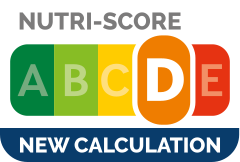 Lower nutritional quality
Nutri-Score data warning
Nutrient levels
Fat in moderate quantity (10.9%)
Saturated fat in high quantity (5.7%)
Sugars in low quantity (0.6%)
Salt in moderate quantity (1.48%)
Nutrition label

Nutrition facts
| Nutrition facts | As sold for 100 g / 100 ml | Compared to: Chicken sandwiches |
|---|---|---|
| Energy | ~ 1149.6 kJ (274 kcal) | 967.578 kJ (231 kcal) (+19%) |
| Fat | 10.9 g | 9.245 g (+18%) |
| Saturated fat | 5.7 g | 1.642 g (+247%) |
| Carbohydrates | 28.7 g | 25.745 g (+11%) |
| Sugars | 0.6 g | 3.048 g (-80%) |
| Added sugars | 0 g | ? |
| Starch | 0 g | 18.702 g (-100%) |
| Dietary fiber | ? | ? |
| Proteins | 15.2 g | 10.228 g (+49%) |
| Salt | 1.475 g | 1.19 g (+24%) |
| Sodium | 0.59 g | 0.476 g (+24%) |
| Vitamin A | 0 g | ? |
| Vitamin E | 0 g | ? |
| Vitamin K | 0 g | ? |
| Vitamin C | 0 g | ? |
| Phosphorus | 0 g | ? |
| Iron | 0 g | ? |
| Magnesium | 0 g | ? |
| Zinc | 0 g | ? |
| Copper | 0 g | ? |
| Manganese | 0 g | ? |
| Selenium | 0 g | ? |
| Caffeine | 0 g | ? |
| Fruits, vegetables and legumes | ~ 0 % | ? |
| Choline | 0 g | 0 g |
Nutrition facts (Detailed data)
| Nutrition facts | As sold for 100 g / 100 ml | As sold Per 100 g (packaging) | As sold Per 100 g (estimate) |
|---|---|---|---|
| Energy | ~ 1149.6 kJ (274 kcal) | ? (274 kcal) | ? |
| Fat | 10.9 g | 10.9 g | ? |
| Saturated fat | 5.7 g | 5.7 g | ? |
| Carbohydrates | 28.7 g | 28.7 g | ? |
| Sugars | 0.6 g | 0.6 g | ? |
| Added sugars | 0 g | 0 g | ~ 0.7375 g |
| Starch | 0 g | 0 g | ? |
| Dietary fiber | ? | ? | ? |
| Proteins | 15.2 g | 15.2 g | ? |
| Salt | 1.475 g | 1.475 g | ? |
| Sodium | 0.59 g | 0.59 g | ? |
| Vitamin A | 0 g | 0 g | ? |
| Vitamin E | 0 g | 0 g | ? |
| Vitamin K | 0 g | 0 g | ? |
| Vitamin C | 0 g | 0 g | ? |
| Phosphorus | 0 g | 0 g | ? |
| Iron | 0 g | 0 g | ? |
| Magnesium | 0 g | 0 g | ? |
| Zinc | 0 g | 0 g | ? |
| Copper | 0 g | 0 g | ? |
| Manganese | 0 g | 0 g | ? |
| Selenium | 0 g | 0 g | ? |
| Caffeine | 0 g | 0 g | ? |
| Fruits, vegetables and legumes | ~ 0 % | ? | ~ 0 % |
| Choline | 0 g | 0 g | ? |
Serving size
Ingredients
Ingredients image

Ingredients list
Ingredient information
Added sugars
Allergens
Ingredients analysis
Contains ingredients containing palm oil.
Contains non-vegan ingredients.
Contains non-vegetarian ingredients.
Food Processing
NOVA group
 Ultra-processed food and drink products
Elements that indicate the product is in NOVA group 4
How NOVA works
Additives
E1442 - Hydroxypropyl distarch phosphateEmulsifierStabiliserThickener
Hydroxypropyl distarch phosphate (HDP) is a modified resistant starch. It is currently used as a food additive (INS number 1442). It is approved for use in the European Union (listed as E1442), the United States, Australia, Taiwan, and New Zealand.
E14XX - Modified StarchEmulsifierStabiliserThickener
No additive description is available yet.
E160a - caroteneColour
β-Carotene is an organic, strongly colored red-orange pigment abundant in plants and fruits. It is a member of the carotenes, which are terpenoids (isoprenoids), synthesized biochemically from eight isoprene units and thus having 40 carbons. Among the carotenes, β-carotene is distinguished by having beta-rings at both ends of the molecule. β-Carotene is biosynthesized from geranylgeranyl pyrophosphate.β-Carotene is the most common form of carotene in plants. When used as a food coloring, it has the E number E160a. The structure was deduced by Karrer et al. in 1930. In nature, β-carotene is a precursor (inactive form) to vitamin A via the action of beta-carotene 15,15'-monooxygenase.Isolation of β-carotene from fruits abundant in carotenoids is commonly done using column chromatography. It can also be extracted from the beta-carotene rich algae, Dunaliella salina. The separation of β-carotene from the mixture of other carotenoids is based on the polarity of a compound. β-Carotene is a non-polar compound, so it is separated with a non-polar solvent such as hexane. Being highly conjugated, it is deeply colored, and as a hydrocarbon lacking functional groups, it is very lipophilic.
E202 - Potassium sorbate EFSA overexposure risk: highPreservative
Potassium sorbate (E202) is a synthetic food preservative commonly used to extend the shelf life of various food products.
It works by inhibiting the growth of molds, yeast, and some bacteria, preventing spoilage. When added to foods, it helps maintain their freshness and quality.
Some studies have shown that when combined with nitrites, potassium sorbate have genotoxic activity in vitro. However, potassium sorbate is generally recognized as safe (GRAS) by regulatory authorities.
E250 - Sodium nitrite EFSA overexposure risk: highPreservative
Sodium nitrite (E250) is a salt used for curing and preserving meat products.
It plays a critical role in preventing the growth of Clostridium botulinum, the bacterium responsible for botulism, in cured meats like bacon, ham, and sausages. It also provides the characteristic pink color and flavor.
However, nitrites can react with amines in the stomach to form nitrosamines, which are potent carcinogens. High intake of processed meats containing nitrites is associated with an increased risk of colorectal cancer. Regulatory bodies have set strict limits on its use in food.
E282 - calcium propionatePreservative
CALCIUM PROPIONATE has the formula Ca(C2H5COO)2. Calcium propionate is used as a preservative in a wide variety of products, including but not limited to:bread, other baked goods, processed meat, whey, and other dairy products.
E316 - sodium erythorbate EFSA overexposure risk: noAntioxidant
SODIUM ERYTHORBATE is the sodium salt of erythorbic acid. Sodium erythorbate is produced from sugars derived from different sources, such as beets, sugar cane, and corn. It is used predominantly in meats, poultry, and soft drinks.
E331 - Sodium citratesEmulsifierSequestrantStabiliser
DISODIUM CITRATE, more properly, disodium hydrogen citrate, is an acid salt of citric acid with the chemical formula Na2C6H6O7. It is used as an antioxidant in food and to improve the effects of other antioxidants. It is also used as an acidity regulator and sequestrant. Typical products include gelatin, jam, sweets, ice cream, carbonated beverages, milk powder, wine, and processed cheeses.
E341 - Calcium phosphates EFSA overexposure risk: highEmulsifierHumectantSequestrantStabiliserThickener
Calcium phosphate is a family of materials and minerals containing calcium ions (Ca2+) together with inorganic phosphate anions. Some so-called calcium phosphates contain oxide and hydroxide as well. They are white solids of nutritious value.
E407 - Carrageenan EFSA overexposure risk: highCarrierEmulsifierHumectantStabiliserThickener
Carrageenan (E407), derived from red seaweed, is widely employed in the food industry as a gelling, thickening, and stabilizing agent, notably in dairy and meat products.
It can exist in various forms, each imparting distinct textural properties to food.
However, its degraded form, often referred to as poligeenan, has raised health concerns due to its potential inflammatory effects and its classification as a possible human carcinogen (Group 2B) by the International Agency for Research on Cancer (IARC).
Nevertheless, food-grade carrageenan has been deemed safe by various regulatory bodies when consumed in amounts typically found in food.
E422 - GlycerolHumectantThickener
Glycerol (; also called glycerine or glycerin; see spelling differences) is a simple polyol compound. It is a colorless, odorless, viscous liquid that is sweet-tasting and non-toxic. The glycerol backbone is found in all lipids known as triglycerides. It is widely used in the food industry as a sweetener and humectant and in pharmaceutical formulations. Glycerol has three hydroxyl groups that are responsible for its solubility in water and its hygroscopic nature.
E450 - Diphosphates EFSA overexposure risk: highEmulsifierHumectantSequestrantStabiliserThickener
Diphosphates (E450) are food additives often utilized to modify the texture of products, acting as leavening agents in baking and preventing the coagulation of canned food.
These salts can stabilize whipped cream and are also found in powdered products to maintain their flow properties. They are commonly present in baked goods, processed meats, and soft drinks.
Derived from phosphoric acid, they're part of our daily phosphate intake, which often surpasses recommended levels due to the prevalence of phosphates in processed foods and drinks.
Excessive phosphate consumption is linked to health issues, such as impaired kidney function and weakened bone health. Though diphosphates are generally regarded as safe when consumed within established acceptable daily intakes, it's imperative to monitor overall phosphate consumption to maintain optimal health.
E450i - Disodium diphosphateEmulsifierHumectantSequestrantStabiliserThickener
No additive description is available yet.
E451 - Triphosphates EFSA overexposure risk: highEmulsifierHumectantSequestrantStabiliserThickener
Sodium triphosphate (STP), also sodium tripolyphosphate (STPP), or tripolyphosphate (TPP),) is an inorganic compound with formula Na5P3O10. It is the sodium salt of the polyphosphate penta-anion, which is the conjugate base of triphosphoric acid. It is produced on a large scale as a component of many domestic and industrial products, especially detergents. Environmental problems associated with eutrophication are attributed to its widespread use.
E451i - Pentasodium triphosphateEmulsifierHumectantSequestrantStabiliserThickener
No additive description is available yet.
E471 - Mono- and diglycerides of fatty acidsEmulsifierStabiliser
Mono- and diglycerides of fatty acids (E471), are food additives commonly used as emulsifiers in various processed foods.
These compounds consist of glycerol molecules linked to one or two fatty acid chains, which help stabilize and blend water and oil-based ingredients. E471 enhances the texture and shelf life of products like margarine, baked goods, and ice cream, ensuring a smooth and consistent texture.
It is generally considered safe for consumption within established regulatory limits.
E500 - Sodium carbonatesStabiliserThickener
Sodium carbonates (E500) are compounds commonly used in food preparation as leavening agents, helping baked goods rise by releasing carbon dioxide when they interact with acids.
Often found in baking soda, they regulate the pH of food, preventing it from becoming too acidic or too alkaline. In the culinary world, sodium carbonates can also enhance the texture and structure of foods, such as noodles, by modifying the gluten network.
Generally recognized as safe, sodium carbonates are non-toxic when consumed in typical amounts found in food.
E500ii - Sodium hydrogen carbonateStabiliserThickener
Sodium hydrogen carbonate, also known as E500ii, is a food additive commonly used as a leavening agent.
When added to recipes, it releases carbon dioxide gas upon exposure to heat or acids, causing dough to rise and resulting in a light, fluffy texture in baked goods.
It is generally recognized as safe (GRAS) by regulatory authorities when used in appropriate quantities and poses no significant health risks when consumed in typical food applications.
E920 - l-cysteine
Cysteine (symbol Cys or C; ) is a semi-essential proteinogenic amino acid with the formula HO2CCH(NH2)CH2SH. The thiol side chain in cysteine often participates in enzymatic reactions, as a nucleophile. The thiol is susceptible to oxidation to give the disulfide derivative cystine, which serves an important structural role in many proteins. When used as a food additive, it has the E number E920. It is encoded by the codons UGU and UGC. Cysteine has the same structure as serine, but with one of its oxygen atoms replaced by sulfur; replacing it with selenium gives selenocysteine. (Like other natural proteinogenic amino acids cysteine has (L) chirality in the older D/L notation based on homology to D and L glyceraldehyde. In the newer R/S system of designating chirality, based on the atomic numbers of atoms near the asymmetric carbon, cysteine (and selenocysteine) have R chirality, because of the presence of sulfur (resp. selenium) as a second neighbor to the asymmetric carbon. The remaining chiral amino acids, having lighter atoms in that position, have S chirality.)
Environment
Green-Score, origins bonus, and transportation impact are shown for Worldwide .
Green Score
Overall grade
 Very high environmental impact
About Green-Score
Current scope
Life cycle analysis
Average impact of the category
 Sandwich made with wholemeal loaf bread, chicken, raw vegetables and mayonnaise • Score: 53/100
Life-cycle reference
Overall environmental impact by stage (PEF)
The overall environmental impact figure (PEF) comes from ADEME's Agribalyse database, for the category: Sandwich made with wholemeal loaf bread, chicken, raw vegetables and mayonnaise. Source: ADEME Agribalyse Database.
| Stage | Impact |
|---|---|
| Agriculture | 68.9 % |
| Processing | 14.0 % |
| Packaging | 10.5 % |
| Transportation | 4.3 % |
| Distribution | 1.9 % |
| Consumption | 0.5 % |
Bonuses and maluses
Declared origins
Threatened species risk
Packaging impact
Green-Score for this product
Green-Score for this product
Final score: 23/100Final score breakdown
Carbon footprint
Carbon footprint
Climate impact by stage (CO2e)
The carbon emission figure comes from ADEME's Agribalyse database, for the category: Sandwich made with wholemeal loaf bread, chicken, raw vegetables and mayonnaise. Source: ADEME Agribalyse Database.
| Stage | Impact |
|---|---|
| Agriculture | 59.1 % |
| Processing | 19.2 % |
| Packaging | 10.7 % |
| Transportation | 9.3 % |
| Distribution | 1.4 % |
| Consumption | 0.2 % |
Packaging

Packaging impact
Declared packaging
Data precision
Transportation
Manufacturing locations
Declared origins
Forest footprint
Forest footprint
Ingredients linked to forest pressure
| Ingredient | Type | Percent in product | Forest footprint |
|---|---|---|---|
| Chicken Breast | Poulet Importé | 19.30 % | 0.55 |
Data Source
Product data comes from Open Food Facts. Food Benchmark also adds translations, category comparisons and explanatory calculations.
The database is licensed under ODbL 1.0, individual contents under DbCL 1.0, and product photos under CC BY-SA 3.0.
Product added on September 29, 2018 at 4:39:49 PM UTC by openfoodfacts-contributors .
Last edit on March 11, 2026 at 6:49:47 PM UTC by marin-erete .
Product page also edited by alia, foodless, irune5, kiliweb, macrofactor, marin-erete, municorn-calorie-counter-app, musarana, openfoodfacts-contributors, roboto-app, saisa, teolemon, thaialagata, yuka.RzYwUUVQOEFuZFlsdGNRdyt6bUtwTkZhd2MrSWRHbU1LTGMvSUE9PQ, yuka.UkpJaEZvczZocVJTbnZRRzRCTEp5dkpIL3NXbFZsK0ZDOGcySVE9PQ, yuka.ZjVBN0tZa3JvZXNIdnZZeTJ5TDExc3QyK1lhakIxaXpBdGd5SVE9PQ.