
The essential baking company, super seeded multi-grain bread
Health
Nutrition
Nutri-Score
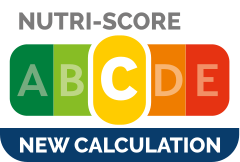 Average nutritional quality
Nutri-Score data warning
Nutrient levels
Fat in moderate quantity (12.1%)
Saturated fat in low quantity (0%)
Sugars in moderate quantity (12.1%)
Salt in moderate quantity (1.06%)
Nutrition facts
| Nutrition facts | As sold for 100 g / 100 ml | Compared to: Breads |
|---|---|---|
| Energy | ~ 1266.38 kJ (242 kcal) | 1,245.662 kJ (294 kcal) (+2%) |
| Fat | 12.12 g | 5.13 g (+136%) |
| Saturated fat | 0 g | 0.904 g (-100%) |
| Trans fat | 0 g | 0 g |
| Cholesterol | 0 g | 1.308 mg (-100%) |
| Carbohydrates | 36.36 g | 50.545 g (-28%) |
| Sugars | 12.12 g | 3.589 g (+238%) |
| Dietary fiber | 12.1 g | ? |
| Proteins | 6.06 g | 9.281 g (-35%) |
| Salt | 1.06 g | 1.224 g (-13%) |
| Sodium | 0.424 g | 0.489 g (-13%) |
| Vitamin A | 0 g | 2.534 µg (-100%) |
| Vitamin C | 0 g | ? |
| Calcium | 0.061 g | 54.584 mg (+12%) |
| Iron | 0.00109 g | 2.196 mg (-50%) |
| Fruits, vegetables and legumes | ~ 0.137867647058826 % | ? |
Nutrition facts (Detailed data)
| Nutrition facts | As sold for 100 g / 100 ml | As sold Per 100 g (packaging) | As sold Per 100 g (estimate) |
|---|---|---|---|
| Energy | ~ 1266.38 kJ (242 kcal) | ? (242 kcal) | ? |
| Fat | 12.12 g | 12.12 g | ? |
| Saturated fat | 0 g | 0 g | ? |
| Trans fat | 0 g | 0 g | ? |
| Cholesterol | 0 g | 0 g | ? |
| Carbohydrates | 36.36 g | 36.36 g | ? |
| Sugars | 12.12 g | 12.12 g | ? |
| Dietary fiber | 12.1 g | 12.1 g | ? |
| Proteins | 6.06 g | 6.06 g | ? |
| Salt | 1.06 g | 1.06 g | ? |
| Sodium | 0.424 g | 0.424 g | ? |
| Vitamin A | 0 g | 0 g | ? |
| Vitamin C | 0 g | 0 g | ? |
| Calcium | 0.061 g | 0.061 g | ? |
| Iron | 0.00109 g | 0.00109 g | ? |
| Fruits, vegetables and legumes | ~ 0.137867647058826 % | ? | ~ 0.137867647058826 % |
Serving size
Ingredients
Ingredients list
Ingredient information
Added sugars
Allergens
Ingredients analysis
No ingredients containing palm oil.
Contains non-vegan ingredients.
Unrecognized: en:brown-and-sweet-rice, en:high-oleic-safflower-oil, en:orange-citrus-fiber
Vegetarian status unknown
Unrecognized: en:brown-and-sweet-rice, en:high-oleic-safflower-oil, en:orange-citrus-fiber
Food Processing
NOVA group
 Ultra-processed food and drink products
Elements that indicate the product is in NOVA group 4
How NOVA works
Additives
E415 - Xanthan gumEmulsifierStabiliserThickener
Xanthan gum (E415) is a natural polysaccharide derived from fermented sugars, often used in the food industry as a thickening and stabilizing agent.
This versatile food additive enhances texture and prevents ingredient separation in a wide range of products, including salad dressings, sauces, and gluten-free baked goods.
It is considered safe for consumption even at high intake amounts.
E460 - CelluloseCarrierEmulsifierHumectantStabiliserThickener
CELLULOSE is an organic compound with the formula (C6H10O5)n, a polysaccharide consisting of a linear chain of several hundred to many thousands of linked D-glucose units. Cellulose is used as emulsifier, thickener and stabilizer in processed foods. Cellulose powder is, for example, used in processed cheese to prevent caking inside the package.
E466 - Sodium carboxy methyl celluloseEmulsifierHumectantStabiliserThickener
Carboxymethyl cellulose (CMC) or cellulose gum or tylose powder is a cellulose derivative with carboxymethyl groups (-CH2-COOH) bound to some of the hydroxyl groups of the glucopyranose monomers that make up the cellulose backbone. It is often used as its sodium salt, sodium carboxymethyl cellulose.
E575 - Glucono-delta-lactoneSequestrant
Glucono delta-lactone (GDL), also known as gluconolactone, is a food additive with the E number E575 used as a sequestrant, an acidifier, or a curing, pickling, or leavening agent. It is a lactone of D-gluconic acid. Pure GDL is a white odorless crystalline powder. GDL has been marketed for use in feta cheese. GDL is neutral, but hydrolyses in water to gluconic acid which is acidic, adding a tangy taste to foods, though it has roughly a third of the sourness of citric acid. It is metabolized to 6-phospho-D-gluconate; one gram of GDL yields roughly the same amount of metabolic energy as one gram of sugar. Upon addition to water, GDL is partially hydrolysed to gluconic acid, with the balance between the lactone form and the acid form established as a chemical equilibrium. The rate of hydrolysis of GDL is increased by heat and high pH.The yeast Saccharomyces bulderi can be used to ferment gluconolactone to ethanol and carbon dioxide. The pH value greatly affects culture growth. Gluconolactone at 1 or 2% in a mineral media solution causes the pH to drop below 3.It is also a complete inhibitor of the enzyme amygdalin beta-glucosidase at concentrations of 1 mM.
Environment
Green-Score, origins bonus, and transportation impact are shown for Worldwide .
Green Score
Overall grade
 Unknown environmental impact
About Green-Score
Current scope
Green-Score availability
Bonuses and maluses
Declared origins
Packaging impact
Packaging
Packaging impact
Data precision
Transportation
Declared origins
Forest footprint
Forest footprint
Ingredients linked to forest pressure
| Ingredient | Type | Percent in product | Forest footprint |
|---|---|---|---|
| Whole EGG | Oeufs Importés | 2.94 % | 0.00 |
| EGG White | Oeufs Importés | 2.94 % | 0.00 |
Data Source
Product data comes from Open Food Facts. Food Benchmark also adds translations, category comparisons and explanatory calculations.
The database is licensed under ODbL 1.0, individual contents under DbCL 1.0, and product photos under CC BY-SA 3.0.
Product added on March 9, 2017 at 11:18:12 AM UTC by usda-ndb-import .
Last edit on February 26, 2026 at 6:30:51 PM UTC by new-nutrition-bot .
Product page also edited by new-nutrition-bot, org-database-usda, usda-ndb-import.
Source List
- usda-ndb
- database-usda