
Silk, cashew milk, vanilla
Health
Nutrition
Nutri-Score
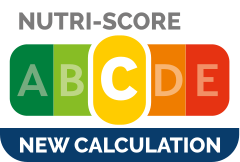 Average nutritional quality
Nutri-Score data warning
Nutrient levels
Fat in low quantity (0.99%)
Saturated fat in low quantity (0.14%)
Sugars in moderate quantity (5.07%)
Salt in moderate quantity (0.198%)
Nutrition facts
| Nutrition facts | As sold for 100 g / 100 ml | Compared to: Plant-based milk alternatives |
|---|---|---|
| Energy | 142 kcal (34 kcal) | 256.262 kJ (62 kcal) |
| Fat | 0.99 g | 3.444 g (-71%) |
| Saturated fat | 0.14 g | 1.834 g (-92%) |
| Trans fat | 0 g | 0.000055 g (-100%) |
| Cholesterol | 0 mg | 0 mg |
| Carbohydrates | 5.63 g | 5.354 g (+5%) |
| Sugars | 5.07 g | 3.26 g (+56%) |
| Dietary fiber | 0 g | ? |
| Proteins | 0.28 g | 1.298 g (-78%) |
| Salt | 0.1975 mg | 0.095 g (-100%) |
| Sodium | 0.079 mg | 0.038 g (-100%) |
| Vitamin A | 0.0000168 IU | 6.303 µg |
| Vitamin D | 0.000000975 IU | 0.342 µg |
| Vitamin C | 0 mg | ? |
| Vitamin B2 | 0.000215 mg | ? |
| Vitamin B12 | 0.00000051 µg | ? |
| Potassium | 0.013 mg | 84.78 mg (-100%) |
| Calcium | 0.127 mg | 58.417 mg (-100%) |
| Iron | 0.0002 mg | 0.661 mg (-100%) |
| Zinc | 0.00042 mg | 0.374 mg (-100%) |
| Fruits, vegetables and legumes | ? | ? |
Nutrition facts (Detailed data)
| Nutrition facts | As sold for 100 g / 100 ml | As sold Per serving (legacy) |
|---|---|---|
| Energy | 142 kcal (34 kcal) | 504 kcal (121 kcal) |
| Fat | 0.99 g | 3.51 g |
| Saturated fat | 0.14 g | 0.497 g |
| Trans fat | 0 g | 0 g |
| Cholesterol | 0 mg | 0 mg |
| Carbohydrates | 5.63 g | 20 g |
| Sugars | 5.07 g | 18 g |
| Dietary fiber | 0 g | 0 g |
| Proteins | 0.28 g | 0.994 g |
| Salt | 0.1975 mg | 0.701 mg |
| Sodium | 0.079 mg | 0.28 mg |
| Vitamin A | 0.0000168 IU | 0.0000596 IU |
| Vitamin D | 0.000000975 IU | 0.00000346 IU |
| Vitamin C | 0 mg | 0 mg |
| Vitamin B2 | 0.000215 mg | 0.000763 mg |
| Vitamin B12 | 0.00000051 µg | 0.00000181 µg |
| Potassium | 0.013 mg | 0.0461 mg |
| Calcium | 0.127 mg | 0.451 mg |
| Iron | 0.0002 mg | 0.00071 mg |
| Zinc | 0.00042 mg | 0.00149 mg |
| Fruits, vegetables and legumes | ? | ? |
Serving size
Ingredients
Ingredients list
Ingredient information
Added sugars
Allergens
Ingredients analysis
No ingredients containing palm oil.
Unrecognized: en:cashewmilk, en:almond-butter, en:riboflavin-b2
Vegan status unknown
Unrecognized: en:cashewmilk, en:almond-butter, en:zinc-gluconate, en:riboflavin-b2, en:vitamin-b12
Vegetarian status unknown
Unrecognized: en:cashewmilk, en:almond-butter, en:zinc-gluconate, en:riboflavin-b2, en:vitamin-b12
Food Processing
NOVA group
 Ultra-processed food and drink products
Elements that indicate the product is in NOVA group 4
How NOVA works
Additives
E322 - LecithinsAntioxidantEmulsifier
Lecithins are natural compounds commonly used in the food industry as emulsifiers and stabilizers.
Extracted from sources like soybeans and eggs, lecithins consist of phospholipids that enhance the mixing of oil and water, ensuring smooth textures in various products like chocolates, dressings, and baked goods.
They do not present any known health risks.
E322i - LecithinAntioxidantEmulsifier
Lecithins are natural compounds commonly used in the food industry as emulsifiers and stabilizers.
Extracted from sources like soybeans and eggs, lecithins consist of phospholipids that enhance the mixing of oil and water, ensuring smooth textures in various products like chocolates, dressings, and baked goods.
They do not present any known health risks.
E410 - Locust bean gumEmulsifierStabiliserThickener
Locust bean gum (LBG, also known as carob gum, carob bean gum, carobin, E410) is a thickening agent and a gelling agent used in food technology.
E418 - Gellan gumStabiliserThickener
GELLAN GUM is a water-soluble anionic polysaccharide produced by the bacterium Sphingomonas elodea. It is used in plant-based milks to keep plant protein suspended in the milk.
Environment
Green-Score, origins bonus, and transportation impact are shown for Worldwide .
Green Score
Overall grade
 Unknown environmental impact
About Green-Score
Current scope
Green-Score availability
Bonuses and maluses
Declared origins
Packaging impact
Packaging
Packaging impact
Data precision
Transportation
Declared origins
Data Source
Product data comes from Open Food Facts. Food Benchmark also adds translations, category comparisons and explanatory calculations.
The database is licensed under ODbL 1.0, individual contents under DbCL 1.0, and product photos under CC BY-SA 3.0.
Product added on March 9, 2017 at 2:34:33 PM UTC by usda-ndb-import .
Last edit on April 22, 2020 at 7:33:56 PM UTC by org-database-usda .
Product page also edited by org-database-usda, usda-ndb-import.
Source List
- usda-ndb
- database-usda