

Classic Caesar Dressing
Health
Nutrition
Nutri-Score
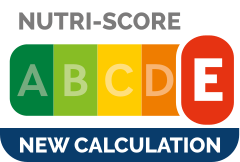 Lower nutritional quality
Nutri-Score data warning
Nutrient levels
Fat in high quantity (41.4%)
Saturated fat in high quantity (8.62%)
Sugars in low quantity (3.45%)
Salt in high quantity (2.5%)
Nutrition label

Nutrition facts
| Nutrition facts | As sold for 100 g / 100 ml | Compared to: Salad dressings |
|---|---|---|
| Energy | ~ 1706.89655172414 kJ (413 kcal) | 1,270.758 kJ (308 kcal) (+34%) |
| Fat | 41.3793103448276 g | 29.085 g (+42%) |
| Saturated fat | 8.62068965517241 g | 3.101 g (+178%) |
| Carbohydrates | 6.89655172413793 g | 8.103 g (-15%) |
| Sugars | 3.44827586206897 g | 5.669 g (-39%) |
| Added sugars | 3.44827586206896 g | 3.504 g (-2%) |
| Starch | 0 g | 0.627 g (-100%) |
| Dietary fiber | ? | ? |
| Proteins | 3.44827586206897 g | 0.951 g (+263%) |
| Salt | 2.5 g | 1.75 g (+43%) |
| Sodium | 1 g | 0.698 g (+43%) |
| Vitamin A | 0 g | 3.839 µg (-100%) |
| Vitamin E | 0 g | 7.969 mg (-100%) |
| Vitamin K | 0 g | 0 µg |
| Vitamin C | 0 g | ? |
| Phosphorus | 0 g | 15.398 mg (-100%) |
| Iron | 0 g | 0.214 mg (-100%) |
| Magnesium | 0 g | 5.399 mg (-100%) |
| Zinc | 0 g | 0.1 mg (-100%) |
| Copper | 0 g | 0.022 mg (-100%) |
| Manganese | 0 g | 0.08 mg (-100%) |
| Selenium | 0 g | 3.528 µg (-100%) |
| Caffeine | 0 g | 0 mg |
| Fruits, vegetables and legumes | ~ 2.31 % | ? |
| Choline | 0 g | 0 g |
Nutrition facts (Detailed data)
| Nutrition facts | As sold for 100 g / 100 ml | As sold Per 100 g (packaging) | As sold Per serving (29 g) (packaging) | As sold Per 100 g (estimate) |
|---|---|---|---|---|
| Energy | ~ 1706.89655172414 kJ (413 kcal) | ? (413 kcal) | ? (120 kcal) | ? |
| Fat | 41.3793103448276 g | ? | 12 g | ? |
| Saturated fat | 8.62068965517241 g | ? | 2.5 g | ? |
| Carbohydrates | 6.89655172413793 g | ? | 2 g | ? |
| Sugars | 3.44827586206897 g | ? | 1 g | ? |
| Added sugars | 3.44827586206896 g | 3.44827586206896 g | 3.44827586206896 g | ~ 3.96 g |
| Starch | 0 g | ? | 0 g | ? |
| Dietary fiber | ? | ? | ? | ? |
| Proteins | 3.44827586206897 g | ? | 1 g | ? |
| Salt | 2.5 g | ? | 0.725 g | ? |
| Sodium | 1 g | ? | 0.29 g | ? |
| Vitamin A | 0 g | ? | 0 g | ? |
| Vitamin E | 0 g | ? | 0 g | ? |
| Vitamin K | 0 g | ? | 0 g | ? |
| Vitamin C | 0 g | ? | 0 g | ? |
| Phosphorus | 0 g | ? | 0 g | ? |
| Iron | 0 g | ? | 0 g | ? |
| Magnesium | 0 g | ? | 0 g | ? |
| Zinc | 0 g | ? | 0 g | ? |
| Copper | 0 g | ? | 0 g | ? |
| Manganese | 0 g | ? | 0 g | ? |
| Selenium | 0 g | ? | 0 g | ? |
| Caffeine | 0 g | ? | 0 g | ? |
| Fruits, vegetables and legumes | ~ 2.31 % | ? | ? | ~ 2.31 % |
| Choline | 0 g | ? | 0 g | ? |
Serving size
Ingredients
Ingredients image

Ingredients list
Ingredient information
Added sugars
Allergens
Ingredients analysis
No ingredients containing palm oil.
Unrecognized: en:parmesan made from cow's milk cheeses, en:contains less than 2% of dried garlic, en:calcium 0% autolyzed yeast extract, en:disodium sorbic acid, en:kraftheinz guanylate
Contains non-vegan ingredients.
Unrecognized: en:contains less than 2% of dried garlic, en:calcium 0% autolyzed yeast extract, en:e339ii, en:disodium sorbic acid, en:kraftheinz guanylate
Vegetarian status unknown
Unrecognized: en:contains less than 2% of dried garlic, en:calcium 0% autolyzed yeast extract, en:e339ii, en:disodium sorbic acid, en:kraftheinz guanylate
Food Processing
NOVA group
 Ultra-processed food and drink products
Elements that indicate the product is in NOVA group 4
How NOVA works
Additives
E339ii - Disodium phosphateEmulsifierHumectantPreservativeSequestrantStabiliserThickener
No additive description is available yet.
E385 - Calcium disodium ethylenediaminetetraacetateAntioxidantPreservativeSequestrant
No additive description is available yet.
E415 - Xanthan gumEmulsifierStabiliserThickener
Xanthan gum (E415) is a natural polysaccharide derived from fermented sugars, often used in the food industry as a thickening and stabilizing agent.
This versatile food additive enhances texture and prevents ingredient separation in a wide range of products, including salad dressings, sauces, and gluten-free baked goods.
It is considered safe for consumption even at high intake amounts.
E631 - Disodium inosinate
Disodium inosinate (E631) is the disodium salt of inosinic acid with the chemical formula C10H11N4Na2O8P. It is used as a food additive and often found in instant noodles, potato chips, and a variety of other snacks. Although it can be obtained from bacterial fermentation of sugars, it is often commercially prepared from animal sources.
Environment
Green-Score, origins bonus, and transportation impact are shown for Worldwide .
Green Score
Overall grade
 High environmental impact
About Green-Score
Current scope
Life cycle analysis
Average impact of the category
 Salad dressing, prepacked • Score: 58/100
Life-cycle reference
Overall environmental impact by stage (PEF)
The overall environmental impact figure (PEF) comes from ADEME's Agribalyse database, for the category: Salad dressing, prepacked. Source: ADEME Agribalyse Database.
| Stage | Impact |
|---|---|
| Agriculture | 68.6 % |
| Processing | 11.3 % |
| Packaging | 11.6 % |
| Transportation | 5.8 % |
| Distribution | 2.3 % |
| Consumption | 0.6 % |
Bonuses and maluses
Declared origins
Packaging impact
Green-Score for this product
Green-Score for this product
Final score: 38/100Final score breakdown
Carbon footprint
Carbon footprint
Climate impact by stage (CO2e)
The carbon emission figure comes from ADEME's Agribalyse database, for the category: Salad dressing, prepacked. Source: ADEME Agribalyse Database.
| Stage | Impact |
|---|---|
| Agriculture | 59.7 % |
| Processing | 12.1 % |
| Packaging | 13.7 % |
| Transportation | 12.4 % |
| Distribution | 1.8 % |
| Consumption | 0.3 % |
Packaging
Packaging impact
Data precision
Transportation
Declared origins
Forest footprint
Forest footprint
Ingredients linked to forest pressure
| Ingredient | Type | Percent in product | Forest footprint |
|---|---|---|---|
| EGG Yolk | Oeufs Importés | 2.32 % | 0.00 |
Data Source
Product data comes from Open Food Facts. Food Benchmark also adds translations, category comparisons and explanatory calculations.
The database is licensed under ODbL 1.0, individual contents under DbCL 1.0, and product photos under CC BY-SA 3.0.
Product added on June 2, 2018 at 11:54:12 AM UTC by kiliweb .
Last edit on September 3, 2026 at 3:30:28 PM UTC by foodless .
Product page also edited by foodless, inf, kiliweb, macrofactor, municorn-calorie-counter-app, openfoodfacts-contributors, roboto-app, teolemon, vaporous, yuka.U1B3RkhwUUdqTUpXdC9BandqbjY2dU5VNXBhclhtenZHOWdQSVE9PQ, yuka.sY2b0xO6T85zoF3NwEKvlkJbYfvQumnbFDHTu1C27NmKIrPzZuhd-7n_Nag, yuka.sY2b0xO6T85zoF3NwEKvlmZBXvfY_2z2BibvtxDVnMjWC776f_dT5ZmlM6g.