ProductsMarks & SpencerReduced fat caesar dressing
Reduced fat caesar dressing
Barcode 00154277
Marks & Spencer

Reduced fat caesar dressing

235 ml
BARCODE:00154277
COMMON NAME:Sauce Caesar allégée en matière grasse - Caesar Dressing Reduced Fat
CATEGORIES:Condiments, Sauces, Salad Dressings, Caesar Salad Dressings, Groceries
LABELS:Low Or No Fat, Low Fat, Reduced Fat
PACKAGING:Verre
COUNTRIES:France, United Kingdom

Health

Nutrition

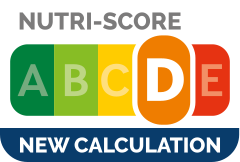
Nutri-Score

DLower nutritional quality

Nutri-Score data warning

Warning: the amount of fruits, vegetables and nuts is not specified on the label, it was estimated from the list of ingredients: 28

Nutrient levels

Fat in high quantity (29.1%)
What you need to know • A high consumption of fat, especially saturated fats, can raise cholesterol, which increases the risk of heart diseases. Recommendation: Limit the consumption of fat and saturated fat • Choose products with lower fat and saturated fat content. Source: National Health Service UK (NHS) - Fat: the facts
Saturated fat in moderate quantity (2.4%)
What you need to know • A high consumption of fat, especially saturated fats, can raise cholesterol, which increases the risk of heart diseases. Recommendation: Limit the consumption of fat and saturated fat • Choose products with lower fat and saturated fat content. Source: National Health Service UK (NHS) - Fat: the facts
Sugars in moderate quantity (7.3%)
What you need to know • A high consumption of sugar can cause weight gain and tooth decay. It also augments the risk of type 2 diabetes and cardio-vascular diseases. Recommendation: Limit the consumption of sugar and sugary drinks • Sugary drinks (such as sodas, fruit beverages, and fruit juices and nectars) should be limited as much as possible (no more than 1 glass a day). • Choose products with lower sugar content and reduce the consumption of products with added sugars. Source: National Health Service UK (NHS) - Sugar: the facts
Salt in moderate quantity (1.23%)
What you need to know • A high consumption of salt (or sodium) can cause raised blood pressure, which can increase the risk of heart disease and stroke. • Many people who have high blood pressure do not know it, as there are often no symptoms. • Most people consume too much salt (on average 9 to 12 grams per day), around twice the recommended maximum level of intake. Recommendation: Limit the consumption of salt and salted food • Reduce the quantity of salt used when cooking, and don't salt again at the table. • Limit the consumption of salty snacks and choose products with lower salt content. Source: World Health Organization (WHO) - Fact sheet - Salt reduction Source: National Health Service UK (NHS) - Salt: the facts

Nutrition label

Reduced fat caesar dressing nutrition label

Nutrition facts

Nutrition factsAs sold for 100 mlCompared to: Caesar salad dressings
Energy~ 1317 kJ (318 kcal)1,454.552 kJ (352 kcal) (-9%)
Fat29.1 g35.344 g (-18%)
Saturated fat2.4 g3.963 g (-39%)
Carbohydrates11.9 g5.347 g (+123%)
Sugars7.3 g3.084 g (+137%)
Dietary fiber0.5 g?
Proteins2 g2.007 g (~0%)
Salt1.23 g1.696 g (-27%)
Sodium0.492 g0.679 g (-28%)
Fruits, vegetables and legumes~ 1.27 %?

Nutrition facts (Detailed data)

Nutrition factsAs sold for 100 mlAs sold Per 100 ml (packaging)As sold Per 100 g (estimate)
Energy~ 1317 kJ (318 kcal)? (318 kcal)~ 1300.0225 kJ (314 kcal)
Fat29.1 g29.1 g~ 28.98835 g
Saturated fat2.4 g2.4 g~ 2.634665 g
Carbohydrates11.9 g11.9 g~ 11.546949 g
Sugars7.3 g7.3 g~ 7.3134017 g
Dietary fiber0.5 g0.5 g~ 0.373155 g
Proteins2 g2 g~ 1.639793 g
Salt1.23 g1.23 g~ 0.01676293 g
Sodium0.492 g0.492 g~ 0.006449038 g
Fruits, vegetables and legumes~ 1.27 %?~ 1.27 %

Ingredients

Ingredients image

Reduced fat caesar dressing ingredients image

Ingredients list

Water. Rapeseed Oil. Sugar. Pasteurised Egg Yolk. Cornflour. Italian Hard Cheese (Milk) (2%) Vinegar .Salt Dried Onions. Concentrated Lemon Juice. Worcester Sauce (Water: Sugar Vinegar. Molasses Onion Purée · Salt. Tamarind Paste Cloves Ginger Purée. Garlic Purée) Cracked Black Pepper. Preservative: E202 - Anchovies (Fish). Olive Oil.

Ingredient information

Water
49.17% (estimate)
Rapeseed Oil
27.15% (estimate)
Sugar
7.24% (estimate)
Pasteurised Egg Yolk
4.91% (estimate)
Corn Flour
4.91% (estimate)
Hard Cheese
0.95% (estimate)
Vinegar .Salt Dried Onions
0.95% (estimate)
Concentrated Lemon Juice
0.95% (estimate)
Worcestershire Sauce
0.95% (estimate)
Water
0.95% (estimate)
Sugar Vinegar
0.32% (estimate)
Onion
0.32% (estimate)
Salt
0.32% (estimate)
Cracked Black Pepper
0.95% (estimate)
E202
0.95% (estimate)
Anchovy
0.95% (estimate)

Added sugars

Contains added sugars (7%) Added sugars: sugar Quantity of added sugars: 7%

Allergens

EggsFishMilk

Ingredients analysis

Palm oil free
Yes

No ingredients containing palm oil.

Unrecognized: en:Vinegar .Salt Dried Onions, en:Sugar Vinegar, en:Tamarind Paste Cloves Ginger Purée

Vegan
No

Contains non-vegan ingredients.

Unrecognized: en:Vinegar .Salt Dried Onions, en:Sugar Vinegar, en:Tamarind Paste Cloves Ginger Purée

Vegetarian
No

Contains non-vegetarian ingredients.

Unrecognized: en:Vinegar .Salt Dried Onions, en:Sugar Vinegar, en:Tamarind Paste Cloves Ginger Purée


Food Processing

NOVA group

3Processed foods

Elements that indicate the product is in NOVA group 3

Additives
E202 - Potassium sorbate
Ingredients
Salt
Ingredients
Sugar
Ingredients
Vegetable Oil
Ingredients
Cheese
Ingredients
Sauce

How NOVA works

The NOVA classification assigns food products into 4 groups based on their degree of processing: 1. Unprocessed or minimally processed foods 2. Processed culinary ingredients 3. Processed foods 4. Ultra-processed food and drink products

Additives

E202 - Potassium sorbate EFSA overexposure risk: highPreservative

Potassium sorbate (E202) is a synthetic food preservative commonly used to extend the shelf life of various food products.

It works by inhibiting the growth of molds, yeast, and some bacteria, preventing spoilage. When added to foods, it helps maintain their freshness and quality.

Some studies have shown that when combined with nitrites, potassium sorbate have genotoxic activity in vitro. However, potassium sorbate is generally recognized as safe (GRAS) by regulatory authorities.

Environment

Green-Score, origins bonus, and transportation impact are shown for Worldwide .

Green Score

Overall grade

UnknownUnknown environmental impact

About Green-Score

The Green-Score is an experimental score that summarizes the environmental impacts of food products.

Current scope

The Green-Score was initially developed for France and it is being extended to other European countries. The Green-Score formula is subject to change as it is regularly improved to make it more precise and better suited to each country. Select a country to include the full impact of transportation in the final score.

Green-Score availability

We could not compute the Green-Score of this product because some data is missing. A more precise category, ingredients list, origins or packaging data can unlock the computation.

Bonuses and maluses

Origins of ingredients

Declared origins are missing for this product. Origins malus: -5 Transportation (Worldwide): 0 Environmental policy adjustment: -5 Select a country to include the full impact of transportation.

Packaging impact

Packaging with a low impact Malus: -2 Packaging score: +81

Packaging

Packaging impact

Packaging with a low impact Malus: -2 Packaging score: +81

Packaging components

ShapeMaterialRecyclingImpact
UnknownGlassUnknownLow

Declared packaging

Verre

Data precision

The packaging information is not sufficiently precise to compute the most accurate packaging impact. Exact shapes and materials of all packaging components help improve the Green-Score.

Transportation

Origins of ingredients

Declared origins are missing for this product. Origins malus: -5 Transportation (Worldwide): 0 Environmental policy adjustment: -5 Select a country to include the full impact of transportation.

Origins breakdown

OriginPercent of ingredientsImpact
Unknown99 %High
Italy1 %High

Forest footprint

Forest footprint

Total forest footprint: 0.00 m2 per kg of food This estimate highlights ingredients that depend on soy-linked animal feed and deforestation risk.

Ingredients linked to forest pressure

IngredientTypePercent in productForest footprint
Pasteurised EGG YolkOeufs Importés4.91 %0.00

Data Source

Product data comes from Open Food Facts. Food Benchmark also adds translations, category comparisons and explanatory calculations.

The database is licensed under ODbL 1.0, individual contents under DbCL 1.0, and product photos under CC BY-SA 3.0.

Product added on May 26, 2018 at 6:52:17 AM UTC by kiliweb .

Last edit on March 25, 2026 at 6:22:37 PM UTC by new-nutrition-bot .

Product page also edited by beniben, craggmire, guezguez-majed, kiliweb, macrofactor, moon-rabbit, new-nutrition-bot, openfoodfacts-contributors, packbot, roboto-app, vegetarian-app-chakib, yuka.UjY0dkR2VWx2OVF5aC8xaDRBSHkvWXRIbDhTRWVubUpJZG9PSWc9PQ.