ProductsBauduccoTostada multigranos
Tostada multigranos
Barcode 7891962040622
Bauducco

Tostada multigranos

BARCODE:7891962040622
CATEGORIES:Plant Based Foods And Beverages, Plant Based Foods, Cereals And Potatoes, Breads
COUNTRIES:Brazil, France

Health

Nutrition

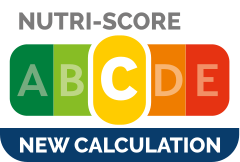
Nutri-Score

CAverage nutritional quality

Nutri-Score data warning

Warning: the amount of fruits, vegetables and nuts is not specified on the label, it was estimated from the list of ingredients: 0

Nutrient levels

Fat in moderate quantity (8%)
What you need to know • A high consumption of fat, especially saturated fats, can raise cholesterol, which increases the risk of heart diseases. Recommendation: Limit the consumption of fat and saturated fat • Choose products with lower fat and saturated fat content. Source: National Health Service UK (NHS) - Fat: the facts
Saturated fat in moderate quantity (3%)
What you need to know • A high consumption of fat, especially saturated fats, can raise cholesterol, which increases the risk of heart diseases. Recommendation: Limit the consumption of fat and saturated fat • Choose products with lower fat and saturated fat content. Source: National Health Service UK (NHS) - Fat: the facts
Sugars in moderate quantity (5.3%)
What you need to know • A high consumption of sugar can cause weight gain and tooth decay. It also augments the risk of type 2 diabetes and cardio-vascular diseases. Recommendation: Limit the consumption of sugar and sugary drinks • Sugary drinks (such as sodas, fruit beverages, and fruit juices and nectars) should be limited as much as possible (no more than 1 glass a day). • Choose products with lower sugar content and reduce the consumption of products with added sugars. Source: National Health Service UK (NHS) - Sugar: the facts
Salt in moderate quantity (1.34%)
What you need to know • A high consumption of salt (or sodium) can cause raised blood pressure, which can increase the risk of heart disease and stroke. • Many people who have high blood pressure do not know it, as there are often no symptoms. • Most people consume too much salt (on average 9 to 12 grams per day), around twice the recommended maximum level of intake. Recommendation: Limit the consumption of salt and salted food • Reduce the quantity of salt used when cooking, and don't salt again at the table. • Limit the consumption of salty snacks and choose products with lower salt content. Source: World Health Organization (WHO) - Fact sheet - Salt reduction Source: National Health Service UK (NHS) - Salt: the facts

Nutrition label

Tostada multigranos nutrition label

Nutrition facts

Nutrition factsAs sold for 100 g / 100 mlCompared to: Breads
Energy1470 kJ (350 kcal)1,245.584 kJ (294 kcal) (+18%)
Fat8 g5.131 g (+56%)
Saturated fat3 g0.904 g (+232%)
Carbohydrates57 g50.537 g (+13%)
Sugars5.3 g3.588 g (+48%)
Dietary fiber8.3 g?
Proteins14 g9.282 g (+51%)
Salt1.3425 g1.224 g (+10%)
Sodium0.537 g0.489 g (+10%)
Fruits, vegetables and legumes~ 0 %?

Nutrition facts (Detailed data)

Nutrition factsAs sold for 100 g / 100 mlAs sold Per 100 g (packaging)As sold Per 100 g (estimate)
Energy1470 kJ (350 kcal)1470 kJ (350 kcal)?
Fat8 g8 g?
Saturated fat3 g3 g?
Carbohydrates57 g57 g?
Sugars5.3 g5.3 g?
Dietary fiber8.3 g8.3 g?
Proteins14 g14 g?
Salt1.3425 g1.3425 g?
Sodium0.537 g0.537 g?
Fruits, vegetables and legumes~ 0 %?~ 0 %

Ingredients

Ingredients image

Tostada multigranos ingredients image

Ingredients list

harina de trigo enriquecida "harina enriquecida ley 25.630 con sulfato ferroso: 30 mg/kg, ácido fólico: 2,2 mg/kg, tiamina (vitamina b1): 6,3 mg/kg, riboflavina (vitamina b2): 1,3 mg/kg y niacina: 13 mg/kg", grasa vegetal interesterificada y parcialmente hidrogenada (pulpa de palma), harina de trigo entera, azúcar, linaza dorado, linaza marrón, sal, avena, extracto de malta, quinoa, harina de centeno entera, harina de cebada entera, sésamo, azúcar invertido, amidón de maiz, fécula de mandioca, emulsionantes: lecitina de soia (ins 322) y estearoil lactato de sodio (ins 481), aromatizante identico al natural, espesante: carboximetilcelulose sódica (ins 466), mejorador de harina: ácido ascorbico (ins 300) y antihumectante silicio dioxido (ins 551).

Ingredient information

Harina De Trigo Enriquecida Harina Enriquecida Ley 25 630 Con Sulfato Ferroso
51.92% (estimate)
Folic Acid
24.04% (estimate)
2 2 Mg
12.02% (estimate)
Kg
12.02% (estimate)
Thiamin
12.02% (estimate)
Thiamin
6.01% (estimate)
6 3 Mg
3% (estimate)
Kg
3% (estimate)
E101
6.01% (estimate)
E101
3% (estimate)
1 3 Mg
1.5% (estimate)
Kg
0.75% (estimate)
E375
0.75% (estimate)
Kg
3% (estimate)
Grasa Vegetal Interesterificada Y Parcialmente Hidrogenada
1.5% (estimate)
Palm
1.5% (estimate)
Wheat
0.75% (estimate)
Sugar
0.38% (estimate)
Golden Flax Seeds
0.19% (estimate)
Brown Flax Seeds
0.09% (estimate)
Salt
0.05% (estimate)
Oat
0.02% (estimate)
Malt Extract
0.01% (estimate)
Quinoa
0.01% (estimate)
Rye
0% (estimate)
Barley
0% (estimate)
Sesame
0% (estimate)
Invert Sugar
0% (estimate)
Amidon De Maiz
0% (estimate)
Tapioca
0% (estimate)
Emulsifier
0% (estimate)
Lecitina De Soia
0% (estimate)
E322
0% (estimate)
Estearoil Lactato De Sodio
0% (estimate)
E481
0% (estimate)
Aromatizante Identico Al Natural
0% (estimate)
Thickener
0% (estimate)
Carboximetilcelulose Sodica
0% (estimate)
E466
0% (estimate)
Flour Treatment Agent
0% (estimate)
E300
0% (estimate)
E300
0% (estimate)
Antihumectante Silicio Dioxido
0% (estimate)
E551
0% (estimate)

Added sugars

Contains added sugars (1%) Added sugars: sugar, invert sugar Quantity of added sugars: 1%

Allergens

GlutenSesame Seeds

Ingredients analysis

Palm oil free
No

Contains ingredients containing palm oil.

Vegan
Unknown

Vegan status unknown

Unrecognized: es:harina-de-trigo-enriquecida-harina-enriquecida-ley-25-630-con-sulfato-ferroso, es:2-2-mg, es:kg, es:6-3-mg, es:kg, es:1-3-mg, es:kg, es:kg, en:invert-sugar, es:amidon-de-maiz, es:aromatizante-identico-al-natural

Vegetarian
Unknown

Vegetarian status unknown

Unrecognized: es:harina-de-trigo-enriquecida-harina-enriquecida-ley-25-630-con-sulfato-ferroso, es:2-2-mg, es:kg, es:6-3-mg, es:kg, es:1-3-mg, es:kg, es:kg, en:invert-sugar, es:amidon-de-maiz, es:aromatizante-identico-al-natural


Food Processing

NOVA group

4Ultra-processed food and drink products

Elements that indicate the product is in NOVA group 4

Additives
E322 - Lecithins
Additives
E466 - Sodium carboxy methyl cellulose
Additives
E481 - Sodium stearoyl-2-lactylate
Additives
E551 - Silicon dioxide
Ingredients
Emulsifier
Ingredients
Invert Sugar
Ingredients
Thickener

How NOVA works

The NOVA classification assigns food products into 4 groups based on their degree of processing: 1. Unprocessed or minimally processed foods 2. Processed culinary ingredients 3. Processed foods 4. Ultra-processed food and drink products

Additives

E300 - Ascorbic acidAntioxidantSequestrant

No additive description is available yet.

E322 - LecithinsAntioxidantEmulsifier

Lecithins are natural compounds commonly used in the food industry as emulsifiers and stabilizers.

Extracted from sources like soybeans and eggs, lecithins consist of phospholipids that enhance the mixing of oil and water, ensuring smooth textures in various products like chocolates, dressings, and baked goods.

They do not present any known health risks.

E322i - LecithinAntioxidantEmulsifier

Lecithins are natural compounds commonly used in the food industry as emulsifiers and stabilizers.

Extracted from sources like soybeans and eggs, lecithins consist of phospholipids that enhance the mixing of oil and water, ensuring smooth textures in various products like chocolates, dressings, and baked goods.

They do not present any known health risks.

E466 - Sodium carboxy methyl celluloseEmulsifierHumectantStabiliserThickener

Carboxymethyl cellulose (CMC) or cellulose gum or tylose powder is a cellulose derivative with carboxymethyl groups (-CH2-COOH) bound to some of the hydroxyl groups of the glucopyranose monomers that make up the cellulose backbone. It is often used as its sodium salt, sodium carboxymethyl cellulose.

E481 - Sodium stearoyl-2-lactylate EFSA overexposure risk: highEmulsifierStabiliser

Sodium stearoyl-2-lactylate (sodium stearoyl lactylate or SSL) is a versatile, FDA approved food additive used to improve the mix tolerance and volume of processed foods. It is one type of a commercially available lactylate. SSL is non-toxic, biodegradable, and typically manufactured using biorenewable feedstocks. Because SSL is a safe and highly effective food additive, it is used in a wide variety of products ranging from baked goods and desserts to pet foods.As described by the Food Chemicals Codex 7th edition, SSL is a cream-colored powder or brittle solid. SSL is currently manufactured by the esterification of stearic acid with lactic acid and partially neutralized with either food-grade soda ash (sodium carbonate) or caustic soda (concentrated sodium hydroxide). Commercial grade SSL is a mixture of sodium salts of stearoyl lactylic acids and minor proportions of other sodium salts of related acids. The HLB for SSL is 10-12. SSL is slightly hygroscopic, soluble in ethanol and in hot oil or fat, and dispersible in warm water. These properties are the reason that SSL is an excellent emulsifier for fat-in-water emulsions and can also function as a humectant.

E551 - Silicon dioxideCarrier

Silicon dioxide, also known as silica, silicic acid or silicic acid anydride is an oxide of silicon with the chemical formula SiO2, most commonly found in nature as quartz and in various living organisms. In many parts of the world, silica is the major constituent of sand. Silica is one of the most complex and most abundant families of materials, existing as a compound of several minerals and as synthetic product. Notable examples include fused quartz, fumed silica, silica gel, and aerogels. It is used in structural materials, microelectronics (as an electrical insulator), and as components in the food and pharmaceutical industries. Inhaling finely divided crystalline silica is toxic and can lead to severe inflammation of the lung tissue, silicosis, bronchitis, lung cancer, and systemic autoimmune diseases, such as lupus and rheumatoid arthritis. Uptake of amorphous silicon dioxide, in high doses, leads to non-permanent short-term inflammation, where all effects heal.

Environment

Green-Score, origins bonus, and transportation impact are shown for Worldwide .

Green Score

Overall grade

UnknownUnknown environmental impact

About Green-Score

The Green-Score is an experimental score that summarizes the environmental impacts of food products.

Current scope

The Green-Score was initially developed for France and it is being extended to other European countries. The Green-Score formula is subject to change as it is regularly improved to make it more precise and better suited to each country. Select a country to include the full impact of transportation in the final score.

Green-Score availability

We could not compute the Green-Score of this product because some data is missing. A more precise category, ingredients list, origins or packaging data can unlock the computation.

Bonuses and maluses

Origins of ingredients

Declared origins are missing for this product. Origins malus: -5 Transportation (Worldwide): 0 Environmental policy adjustment: -5 Select a country to include the full impact of transportation.

Threatened species risk

Contains ingredients that may threaten species or ecosystems, such as palm oil.

Packaging impact

Packaging with a high impact Malus: -15 The information about the packaging of this product is not filled in.

Packaging

Packaging impact

Packaging with a high impact Malus: -15 The information about the packaging of this product is not filled in.

Data precision

The packaging information is not sufficiently precise to compute the most accurate packaging impact. Exact shapes and materials of all packaging components help improve the Green-Score.

Transportation

Origins of ingredients

Declared origins are missing for this product. Origins malus: -5 Transportation (Worldwide): 0 Environmental policy adjustment: -5 Select a country to include the full impact of transportation.

Origins breakdown

OriginPercent of ingredientsImpact
Kyrgyzstan52 %High
Unknown48 %High

Forest footprint

Forest footprint

Low risk of deforestation Presence of one or more ingredients at risk of deforestation, but low risk given their quantity, origin and/or labels. Forest Footprint The Forest Footprint is a methodology developed by the association Envol Vert to estimate the risk of deforestation related to our consumption. → More information on the methodology Forest Footprint grade: B Presence of one or more ingredients at risk of deforestation, but low risk given their quantity, origin and/or labels. Total Forest Footprint: 0.001 m² per kg of food

Deforestation risk details

Palm oil Primary ingredient grade: B Primary ingredient: 0.001 m² per kg of food Palm oil production, concentrated mainly in Indonesia and Malaysia, contributes significantly to deforestation. Borneo has lost more than half of its forests since the 1970s. Labels The presence of certain labels can greatly help reduce the risk of deforestation, through the presence of environmental criteria and/or through better remuneration of producers.

Data Source

Product data comes from Open Food Facts. Food Benchmark also adds translations, category comparisons and explanatory calculations.

The database is licensed under ODbL 1.0, individual contents under DbCL 1.0, and product photos under CC BY-SA 3.0.

Product added on February 1, 2019 at 6:20:09 AM UTC by kiliweb .

Last edit on March 3, 2026 at 10:57:27 AM UTC by new-nutrition-bot .

Product page also edited by aleene, algum-br, autorotate-bot, kiliweb, new-nutrition-bot, openfoodfacts-contributors, teolemon, yuka.Zi81ZUNxa2R2ZllNd01FQTBTclJvTmhlKzhieVZENitKN29CSWc9PQ, yuka.sY2b0xO6T85zoF3NwEKvlmlHSYvMgQrpOQfnhUyg78uyIrn1c99g_aPBGqs.