ProductsGamesaChokis Rellena
Chokis Rellena
Barcode 7501000634224
Gamesa

Chokis Rellena

300 g
BARCODE:7501000634224
COMMON NAME:Sabor a chocolate y relleno sabor a chocolate
CATEGORIES:Snacks, Sweet Snacks, Biscuits And Cakes, Biscuits
LABELS:Sistema De Etiquetado Frontal De Alimentos Y Bebidas, Exceso Calorias
PACKAGING:Caja De Carton
ORIGIN:Mexico
MANUFACTURING:Ciudad,de México
COUNTRIES:Mexico
STORES:Walmart, Sams Club, Bodega aurrera, Soriana, La Comer

Health

Nutrition

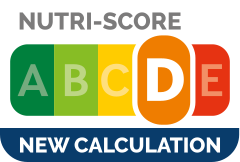
Nutri-Score

DLower nutritional quality

Nutri-Score data warning

Warning: the amount of fruits, vegetables and nuts is not specified on the label, it was estimated from the list of ingredients: 0

Nutrient levels

Fat in high quantity (22.3%)
What you need to know • A high consumption of fat, especially saturated fats, can raise cholesterol, which increases the risk of heart diseases. Recommendation: Limit the consumption of fat and saturated fat • Choose products with lower fat and saturated fat content. Source: National Health Service UK (NHS) - Fat: the facts
Saturated fat in moderate quantity (3.5%)
What you need to know • A high consumption of fat, especially saturated fats, can raise cholesterol, which increases the risk of heart diseases. Recommendation: Limit the consumption of fat and saturated fat • Choose products with lower fat and saturated fat content. Source: National Health Service UK (NHS) - Fat: the facts
Sugars in high quantity (36%)
What you need to know • A high consumption of sugar can cause weight gain and tooth decay. It also augments the risk of type 2 diabetes and cardio-vascular diseases. Recommendation: Limit the consumption of sugar and sugary drinks • Sugary drinks (such as sodas, fruit beverages, and fruit juices and nectars) should be limited as much as possible (no more than 1 glass a day). • Choose products with lower sugar content and reduce the consumption of products with added sugars. Source: National Health Service UK (NHS) - Sugar: the facts
Salt in moderate quantity (0.749%)
What you need to know • A high consumption of salt (or sodium) can cause raised blood pressure, which can increase the risk of heart disease and stroke. • Many people who have high blood pressure do not know it, as there are often no symptoms. • Most people consume too much salt (on average 9 to 12 grams per day), around twice the recommended maximum level of intake. Recommendation: Limit the consumption of salt and salted food • Reduce the quantity of salt used when cooking, and don't salt again at the table. • Limit the consumption of salty snacks and choose products with lower salt content. Source: World Health Organization (WHO) - Fact sheet - Salt reduction Source: National Health Service UK (NHS) - Salt: the facts

Nutrition facts

Nutrition factsAs sold for 100 g / 100 mlCompared to: Biscuits and crackers
Energy582 kcal (139 kcal)1,963.616 kJ (468 kcal)
Fat22.3 g20.059 g (+11%)
Saturated fat3.5 g8.649 g (-60%)
Carbohydrates63.6 g63.207 g (+1%)
Sugars36 g23.724 g (+52%)
Dietary fiber2.4 g?
Proteins5.3 g7.003 g (-24%)
Salt0.7493 mg0.739 g (-100%)
Sodium0.29972 mg0.295 g (-100%)
Iron0.00198 % DV2.034 mg
Fruits, vegetables and legumes??

Nutrition facts (Detailed data)

Nutrition factsAs sold for 100 g / 100 mlAs sold Per serving (legacy)
Energy582 kcal (139 kcal)582 kcal (139 kcal)
Fat22.3 g22.3 g
Saturated fat3.5 g3.5 g
Carbohydrates63.6 g63.6 g
Sugars36 g36 g
Dietary fiber2.4 g2.4 g
Proteins5.3 g5.3 g
Salt0.7493 mg0.749 mg
Sodium0.29972 mg0.3 mg
Iron0.00198 % DV0.00198 % DV
Fruits, vegetables and legumes??

Serving size

100g

Ingredients

Ingredients list

HARINA DE TRIGO, AZÚCARES AÑADIDOS (AZÚCAR, JARABE DE ALTA FRUCTOSA, LACTOSA), CHISPAS SABOR A CHOCOLATE (17%) AZÚCARES AÑADIDOS (AZÚCAR, DEXTROSA), ACEITE VEGETAL HIDROGENADO, COCOA, LECHE DESCREMADA EN POLVO, LECHE ENTERA EN POLVO, LECITINA DE SOYA (EMULSIFCANTE), SABORIZANTE ARTIFICIAL, ACEITE VEGETAL (CONTIENE ANTIOXIDANTES TBHQ, PALMITATO DE ASCORBILO, TOCOFEROLES), SÓLIDOS DE LA LECHE, COCOA, HARINA DE AVENA, EMULSIFICANTES (LECITINA DE SOYA, ÉSTERES DE PROPILENGLICOL DE ÁCDOS GRASOS, MONOESTEARATO DE GLICERILO, ESTEAROL LACTILATO DE SODIO), FOSFATO TRICÁLCICO, SAL YODADA, SABORIZANTES ARTIFICIALES, COLORANTE (CARAMELO CLASE IV). CONTIENE TRIGO Y AVENA (GLUTEN) LECHE Y SOYA. PUEDE CONTENER HUEVO, NUECES DE ÁRBOLES, CACAHUATE Y OTROS CEREALES CON GLUTEN.

Ingredient information

Wheat Flour
41.5% (estimate)
Added Sugar
29.25% (estimate)
Sugar
17.46% (estimate)
Jarabe De Alta Fructosa
5.9% (estimate)
Lactose
5.9% (estimate)
Chispas Sabor A Chocolate
17.0%
Added Sugar
6.13% (estimate)
Sugar
3.06% (estimate)
Dextrose
3.06% (estimate)
Hydrogenated Vegetable Oil
3.06% (estimate)
Cocoa
1.53% (estimate)
Skimmed Milk Powder
0.77% (estimate)
Whole Milk Powder
0.38% (estimate)
Soya Lecithin
0.19% (estimate)
Emulsifcante
0.19% (estimate)
Artificial Flavouring
0.1% (estimate)
Vegetable Oil
0.05% (estimate)
Contiene Antioxidantes Tbhq
0.02% (estimate)
E304i
0.01% (estimate)
E307
0.01% (estimate)
Milk Solids
0.02% (estimate)
Cocoa
0.01% (estimate)
Oat Flour
0.01% (estimate)
Emulsifier
0% (estimate)
Soya Lecithin
0% (estimate)
Esteres De Propilenglicol De Acdos Grasos
0% (estimate)
E471
0% (estimate)
Estearol Lactilato De Sodio
0% (estimate)
E341iii
0% (estimate)
Iodised Salt
0% (estimate)
Artificial Flavouring
0% (estimate)
Colour
0% (estimate)
E150d
0% (estimate)
Oat
0% (estimate)
Soy Milk
0% (estimate)

Added sugars

Contains added sugars (35%) Added sugars: added sugar, sugar, dextrose Quantity of added sugars: 35%

Allergens

GlutenMilkSoybeans

Traces

EggsGlutenMilkNutsPeanutsSoybeans

Ingredients analysis

Palm oil free
Unknown

Palm oil content unknown

Vegan
No

Contains non-vegan ingredients.

Unrecognized: en:added-sugar, es:jarabe-de-alta-fructosa, es:chispas-sabor-a-chocolate, en:added-sugar, es:emulsifcante, es:contiene-antioxidantes-tbhq, es:esteres-de-propilenglicol-de-acdos-grasos, es:estearol-lactilato-de-sodio, en:soy-milk

Vegetarian
Unknown

Vegetarian status unknown

Unrecognized: en:added-sugar, es:jarabe-de-alta-fructosa, es:chispas-sabor-a-chocolate, en:added-sugar, es:emulsifcante, es:contiene-antioxidantes-tbhq, es:esteres-de-propilenglicol-de-acdos-grasos, es:estearol-lactilato-de-sodio, en:soy-milk


Food Processing

NOVA group

4Ultra-processed food and drink products

Elements that indicate the product is in NOVA group 4

Additives
E150d - Sulphite ammonia caramel
Additives
E322 - Lecithins
Additives
E471 - Mono- and diglycerides of fatty acids
Ingredients
Colour
Ingredients
Dextrose
Ingredients
Emulsifier
Ingredients
Flavouring
Ingredients
Glucose
Ingredients
Hydrogenated Oil
Ingredients
Lactose
Ingredients
Soy Preparation

How NOVA works

The NOVA classification assigns food products into 4 groups based on their degree of processing: 1. Unprocessed or minimally processed foods 2. Processed culinary ingredients 3. Processed foods 4. Ultra-processed food and drink products

Additives

E150d - Sulphite ammonia caramel EFSA overexposure risk: noColour

No additive description is available yet.

E304 - Fatty acid esters of ascorbic acidAntioxidant

ASCORBYL PALMITATE is an ester formed from ascorbic acid and palmitic acid creating a fat-soluble form of vitamin C.

E304i - Ascorbyl palmitateAntioxidant

No additive description is available yet.

E307 - Alpha-tocopherol

α-Tocopherol is a type of vitamin E. It has E number "E307". Vitamin E exists in eight different forms, four tocopherols and four tocotrienols. All feature a chromane ring, with a hydroxyl group that can donate a hydrogen atom to reduce free radicals and a hydrophobic side chain which allows for penetration into biological membranes. Compared to the others, α-tocopherol is preferentially absorbed and accumulated in humans.

E322 - LecithinsAntioxidantEmulsifier

Lecithins are natural compounds commonly used in the food industry as emulsifiers and stabilizers.

Extracted from sources like soybeans and eggs, lecithins consist of phospholipids that enhance the mixing of oil and water, ensuring smooth textures in various products like chocolates, dressings, and baked goods.

They do not present any known health risks.

E322i - LecithinAntioxidantEmulsifier

Lecithins are natural compounds commonly used in the food industry as emulsifiers and stabilizers.

Extracted from sources like soybeans and eggs, lecithins consist of phospholipids that enhance the mixing of oil and water, ensuring smooth textures in various products like chocolates, dressings, and baked goods.

They do not present any known health risks.

E471 - Mono- and diglycerides of fatty acidsEmulsifierStabiliser

Mono- and diglycerides of fatty acids (E471), are food additives commonly used as emulsifiers in various processed foods.

These compounds consist of glycerol molecules linked to one or two fatty acid chains, which help stabilize and blend water and oil-based ingredients. E471 enhances the texture and shelf life of products like margarine, baked goods, and ice cream, ensuring a smooth and consistent texture.

It is generally considered safe for consumption within established regulatory limits.

Environment

Green-Score, origins bonus, and transportation impact are shown for Worldwide .

Green Score

Overall grade

CModerate environmental impact

About Green-Score

The Green-Score is an experimental score that summarizes the environmental impacts of food products.

Current scope

The Green-Score was initially developed for France and it is being extended to other European countries. The Green-Score formula is subject to change as it is regularly improved to make it more precise and better suited to each country. Select a country to include the full impact of transportation in the final score.

Life cycle analysis

Average impact of the category

BBiscuit (cookie) • Score: 70/100

Life-cycle reference

Category: Biscuit (cookie) PEF environmental score: 0.34 Climate change impact: 2.86 kg CO2 eq / kg product The overall environmental impact figure (PEF) comes from ADEME's Agribalyse database, for the category: Biscuit (cookie). Source: ADEME Agribalyse Database.

Overall environmental impact by stage (PEF)

The overall environmental impact figure (PEF) comes from ADEME's Agribalyse database, for the category: Biscuit (cookie). Source: ADEME Agribalyse Database.

StageImpact
Agriculture80.2 %
Processing12.0 %
Packaging3.2 %
Transportation3.2 %
Distribution1.4 %
Consumption0.0 %

Bonuses and maluses

Origins of ingredients

Declared origins: Mexico Origins malus: -3 Transportation (Worldwide): 0 Environmental policy adjustment: -3 Select a country to include the full impact of transportation.

Packaging impact

Packaging with a medium impact Malus: -10 Packaging score: 0

Green-Score for this product

Green-Score for this product

CFinal score: 57/100

Final score breakdown

Life cycle analysis score: 70 Sum of bonuses and maluses: -13 Final score: 57/100

Carbon footprint

Carbon footprint

Equivalent to driving 1.5 km in a petrol car. 286 g CO2e per 100g of product. Reference category: Biscuit (cookie). The carbon emission figure comes from ADEME's Agribalyse database, for the category: Biscuit (cookie). Source: ADEME Agribalyse Database.

Climate impact by stage (CO2e)

The carbon emission figure comes from ADEME's Agribalyse database, for the category: Biscuit (cookie). Source: ADEME Agribalyse Database.

StageImpact
Agriculture82.7 %
Processing8.0 %
Packaging3.8 %
Transportation4.7 %
Distribution0.7 %
Consumption0.0 %

Packaging

Packaging impact

Packaging with a medium impact Malus: -10 Packaging score: 0

Packaging components

ShapeMaterialRecyclingImpact
BOXUnknownUnknownUnknown

Declared packaging

Caja De Carton

Data precision

The packaging information is not sufficiently precise to compute the most accurate packaging impact. Exact shapes and materials of all packaging components help improve the Green-Score.

Transportation

Manufacturing locations

Ciudad,de México

Origins of ingredients

Declared origins: Mexico Origins malus: -3 Transportation (Worldwide): 0 Environmental policy adjustment: -3 Select a country to include the full impact of transportation.

Origins breakdown

OriginPercent of ingredientsImpact
Mexico100 %High

Data Source

Product data comes from Open Food Facts. Food Benchmark also adds translations, category comparisons and explanatory calculations.

The database is licensed under ODbL 1.0, individual contents under DbCL 1.0, and product photos under CC BY-SA 3.0.

Product added on November 13, 2018 at 4:12:52 PM UTC by openfoodfactsmx4 .

Last edit on December 13, 2023 at 9:42:23 PM UTC by 5m4u9 .

Product page also edited by 5m4u9, elenarawrz, openfoodfactsmx4, packbot.