

Ekologisk blåbärssylt
Health
Nutrition
Nutri-Score
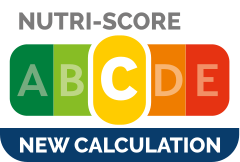 Average nutritional quality
Nutrient levels
Fat in low quantity (0.5%)
Saturated fat in low quantity (0%)
Sugars in high quantity (34%)
Salt in low quantity (0%)
Nutrition label

Nutrition facts
| Nutrition facts | As sold for 100 g / 100 ml |
|---|---|
| Energy | 653 kJ (154 kcal) |
| Fat | < 0.5 g |
| Saturated fat | 0 g |
| Carbohydrates | 36 g |
| Sugars | 34 g |
| Dietary fiber | 1.8 g |
| Proteins | < 0.5 g |
| Salt | 0 g |
| Sodium | 0 g |
| Fruits, vegetables and legumes | ? |
Nutrition facts (Detailed data)
| Nutrition facts | As sold for 100 g / 100 ml | As sold Per serving (legacy) |
|---|---|---|
| Energy | 653 kJ (154 kcal) | ? |
| Fat | < 0.5 g | ? |
| Saturated fat | 0 g | ? |
| Carbohydrates | 36 g | ? |
| Sugars | 34 g | ? |
| Dietary fiber | 1.8 g | ? |
| Proteins | < 0.5 g | ? |
| Salt | 0 g | ? |
| Sodium | 0 g | ? |
| Fruits, vegetables and legumes | ? | ? |
Ingredients
Ingredients image

Ingredients list
Ingredient information
Traces
Ingredients analysis
No ingredients containing palm oil.
No non-vegan ingredients.
No non-vegetarian ingredients.
Food Processing
NOVA group
 Ultra-processed food and drink products
Elements that indicate the product is in NOVA group 4
How NOVA works
Additives
E330 - Citric acidAntioxidantSequestrant
Citric acid is a natural organic acid found in citrus fruits such as lemons, oranges, and limes.
It is widely used in the food industry as a flavor enhancer, acidulant, and preservative due to its tart and refreshing taste.
Citric acid is safe for consumption when used in moderation and is considered a generally recognized as safe (GRAS) food additive by regulatory agencies worldwide.
E333 - Calcium citratesSequestrantStabiliser
Calcium citrate is the calcium salt of citric acid. It is commonly used as a food additive (E333), usually as a preservative, but sometimes for flavor. In this sense, it is similar to sodium citrate. Calcium citrate is also found in some dietary calcium supplements (e.g. Citracal). Calcium makes up 24.1% of calcium citrate (anhydrous) and 21.1% of calcium citrate (tetrahydrate) by mass. The tetrahydrate occurs in nature as the mineral Earlandite.
E440a - PectinEmulsifierStabiliserThickener
Pectin (from Ancient Greek: πηκτικός pēktikós, "congealed, curdled") is a structural heteropolysaccharide contained in the primary cell walls of terrestrial plants. It was first isolated and described in 1825 by Henri Braconnot. It is produced commercially as a white to light brown powder, mainly extracted from citrus fruits, and is used in food as a gelling agent, particularly in jams and jellies. It is also used in dessert fillings, medicines, sweets, as a stabilizer in fruit juices and milk drinks, and as a source of dietary fiber.
Environment
Green-Score, origins bonus, and transportation impact are shown for Worldwide .
Green Score
Overall grade
 Very low environmental impact
About Green-Score
Current scope
Life cycle analysis
Average impact of the category
 Jam, strawberry • Score: 80/100
Life-cycle reference
Overall environmental impact by stage (PEF)
The overall environmental impact figure (PEF) comes from ADEME's Agribalyse database, for the category: Jam, strawberry. Source: ADEME Agribalyse Database.
| Stage | Impact |
|---|---|
| Agriculture | 53.9 % |
| Processing | 14.4 % |
| Packaging | 20.4 % |
| Transportation | 8.7 % |
| Distribution | 1.8 % |
| Consumption | 0.9 % |
Bonuses and maluses
Production system
Origins of ingredients
Packaging impact
Green-Score for this product
Green-Score for this product
Final score: 91/100Final score breakdown
Carbon footprint
Carbon footprint
Climate impact by stage (CO2e)
The carbon emission figure comes from ADEME's Agribalyse database, for the category: Jam, strawberry. Source: ADEME Agribalyse Database.
| Stage | Impact |
|---|---|
| Agriculture | 23.1 % |
| Processing | 17.7 % |
| Packaging | 37.1 % |
| Transportation | 20.2 % |
| Distribution | 1.4 % |
| Consumption | 0.5 % |
Packaging

Packaging impact
Packaging components
| Shape | Material | Recycling | Impact |
|---|---|---|---|
| 1 JAR (400 g) | Glass | Recycle IN Uncoloured Glass BIN | Low |
| 1 LID (400 g) | Metal | Recycle IN Metal Packaging BIN | High |
Declared packaging
Data precision
Transportation
Manufacturing locations
Origins of ingredients
Origins breakdown
| Origin | Percent of ingredients | Impact |
|---|---|---|
| Denmark | 50 % | High |
| Sweden | 50 % | High |
Data Source
Product data comes from Open Food Facts. Food Benchmark also adds translations, category comparisons and explanatory calculations.
The database is licensed under ODbL 1.0, individual contents under DbCL 1.0, and product photos under CC BY-SA 3.0.
Product added on August 20, 2019 at 7:19:33 PM UTC by wolfgang8741 .
Last edit on May 24, 2025 at 9:03:15 AM UTC by freso .
Product page also edited by freso, moon-rabbit, openfoodfacts-contributors, packbot, roboto-app, wolfgang8741.