

Mars High Protein Milk Drink
Health
Nutrition
Nutri-Score
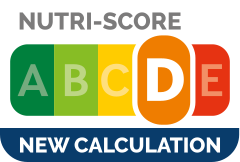 Lower nutritional quality
Nutri-Score data warning
Nutrient levels
Fat in moderate quantity (1.98%)
Saturated fat in moderate quantity (1.27%)
Sugars in moderate quantity (6%)
Salt in moderate quantity (0.246%)
Nutrition label

Nutrition facts
| Nutrition facts | As sold for 100 ml | Compared to: Chocolate milks |
|---|---|---|
| Energy | ~ 238.825 kJ (57 kcal) | 299.289 kJ (71 kcal) (-20%) |
| Fat | 1.975 g | 1.723 g (+15%) |
| Saturated fat | 1.275 g | 1.063 g (+20%) |
| Carbohydrates | 6.5 g | 10.091 g (-36%) |
| Sugars | 6 g | 9.471 g (-37%) |
| Dietary fiber | 0 g | ? |
| Proteins | 3.25 g | 3.537 g (-8%) |
| Salt | 0.245625 g | 0.138 g (+78%) |
| Sodium | 0.09825 g | 0.055 g (+79%) |
| Fruits, vegetables and legumes | ~ 0 % | ? |
Nutrition facts (Detailed data)
| Nutrition facts | As sold for 100 ml | As sold Per serving (400 ml) (packaging) | As sold Per 100 g (estimate) |
|---|---|---|---|
| Energy | ~ 238.825 kJ (57 kcal) | ? (228 kcal) | ? |
| Fat | 1.975 g | 7.9 g | ? |
| Saturated fat | 1.275 g | 5.1 g | ? |
| Carbohydrates | 6.5 g | 26 g | ? |
| Sugars | 6 g | 24 g | ? |
| Dietary fiber | 0 g | 0 g | ? |
| Proteins | 3.25 g | 13 g | ? |
| Salt | 0.245625 g | 0.9825 g | ? |
| Sodium | 0.09825 g | 0.393 g | ? |
| Fruits, vegetables and legumes | ~ 0 % | ? | ~ 0 % |
Serving size
Ingredients
Ingredients image

Ingredients list
Ingredient information
Allergens
Ingredients analysis
No ingredients containing palm oil.
Contains non-vegan ingredients.
Unrecognized: en:recombined-whey
Vegetarian status unknown
Unrecognized: en:recombined-whey
Food Processing
NOVA group
 Ultra-processed food and drink products
Elements that indicate the product is in NOVA group 4
How NOVA works
Additives
E14XX - Modified StarchEmulsifierStabiliserThickener
No additive description is available yet.
E339 - Sodium phosphates EFSA overexposure risk: highEmulsifierHumectantPreservativeSequestrantStabiliserThickener
TRISODIUM PHOSPHATE is the inorganic compound with the chemical formula Na3PO4.
E418 - Gellan gumStabiliserThickener
GELLAN GUM is a water-soluble anionic polysaccharide produced by the bacterium Sphingomonas elodea. It is used in plant-based milks to keep plant protein suspended in the milk.
E460 - CelluloseCarrierEmulsifierHumectantStabiliserThickener
CELLULOSE is an organic compound with the formula (C6H10O5)n, a polysaccharide consisting of a linear chain of several hundred to many thousands of linked D-glucose units. Cellulose is used as emulsifier, thickener and stabilizer in processed foods. Cellulose powder is, for example, used in processed cheese to prevent caking inside the package.
E466 - Sodium carboxy methyl celluloseEmulsifierHumectantStabiliserThickener
Carboxymethyl cellulose (CMC) or cellulose gum or tylose powder is a cellulose derivative with carboxymethyl groups (-CH2-COOH) bound to some of the hydroxyl groups of the glucopyranose monomers that make up the cellulose backbone. It is often used as its sodium salt, sodium carboxymethyl cellulose.
E950 - Acesulfame kSweetener
Acesulfame potassium ( AY-see-SUL-faym), also known as acesulfame K (K is the symbol for potassium) or Ace K, is a calorie-free sugar substitute (artificial sweetener) often marketed under the trade names Sunett and Sweet One. In the European Union, it is known under the E number (additive code) E950. It was discovered accidentally in 1967 by German chemist Karl Clauss at Hoechst AG (now Nutrinova). In chemical structure, acesulfame potassium is the potassium salt of 6-methyl-1,2,3-oxathiazine-4(3H)-one 2,2-dioxide. It is a white crystalline powder with molecular formula C4H4KNO4S and a molecular weight of 201.24 g/mol.
E955 - SucraloseSweetener
Sucralose is an artificial sweetener and sugar substitute. The majority of ingested sucralose is not broken down by the body, so it is noncaloric. In the European Union, it is also known under the E number E955. It is produced by chlorination of sucrose. Sucralose is about 320 to 1,000 times sweeter than sucrose, three times as sweet as both aspartame and acesulfame potassium, and twice as sweet as sodium saccharin. Evidence of benefit is lacking for long-term weight loss with some data supporting weight gain and heart disease risks.It is stable under heat and over a broad range of pH conditions. Therefore, it can be used in baking or in products that require a long shelf life. The commercial success of sucralose-based products stems from its favorable comparison to other low-calorie sweeteners in terms of taste, stability, and safety. Common brand names of sucralose-based sweeteners are Splenda, Zerocal, Sukrana, SucraPlus, Candys, Cukren, and Nevella. Canderel Yellow also contains sucralose, but the original Canderel and Green Canderel do not.
Environment
Green-Score, origins bonus, and transportation impact are shown for Worldwide .
Green Score
Overall grade
 High environmental impact
About Green-Score
Current scope
Life cycle analysis
Average impact of the category
 Chocolate flavoured milk, with sugar, partially skimmed, fortified with vitamins and chemicals elements • Score: 52/100
Life-cycle reference
Overall environmental impact by stage (PEF)
The overall environmental impact figure (PEF) comes from ADEME's Agribalyse database, for the category: Chocolate flavoured milk, with sugar, partially skimmed, fortified with vitamins and chemicals elements. Source: ADEME Agribalyse Database.
| Stage | Impact |
|---|---|
| Agriculture | 63.0 % |
| Processing | 1.0 % |
| Packaging | 12.1 % |
| Transportation | 15.6 % |
| Distribution | 6.6 % |
| Consumption | 1.8 % |
Bonuses and maluses
Declared origins
Packaging impact
Green-Score for this product
Green-Score for this product
Final score: 41/100Final score breakdown
Carbon footprint
Carbon footprint
Climate impact by stage (CO2e)
The carbon emission figure comes from ADEME's Agribalyse database, for the category: Chocolate flavoured milk, with sugar, partially skimmed, fortified with vitamins and chemicals elements. Source: ADEME Agribalyse Database.
| Stage | Impact |
|---|---|
| Agriculture | 62.2 % |
| Processing | 0.8 % |
| Packaging | 14.4 % |
| Transportation | 19.8 % |
| Distribution | 2.4 % |
| Consumption | 0.5 % |
Packaging

Packaging impact
Packaging components
| Shape | Material | Recycling | Impact |
|---|---|---|---|
| Bottle | PET 1 Polyethylene Terephthalate | Unknown | Medium |
| Film | Light Aluminium | Unknown | Medium |
Declared packaging
Transportation
Declared origins
Forest footprint
Forest footprint
Deforestation risk details
Data Source
Product data comes from Open Food Facts. Food Benchmark also adds translations, category comparisons and explanatory calculations.
The database is licensed under ODbL 1.0, individual contents under DbCL 1.0, and product photos under CC BY-SA 3.0.
Product added on April 19, 2019 at 8:42:52 AM UTC by kiliweb .
Last edit on March 8, 2026 at 7:21:43 PM UTC by domdomegg .
Product page also edited by alia, anonymous-lpgn2z4pnm, davidepio, domdomegg, kiliweb, macrofactor, openfoodfacts-contributors, packbot, roboto-app, swipe-studio, yuka.ZjVBaEw0OEFxdmN4cFBFMW9VUEkzSUpyM0xyMFpYRzdLOGM4SVE9PQ, yuka.sY2b0xO6T85zoF3NwEKvlmV4CsbFmgj6CSbmlx2E6se8LLPSfOhp3rXFaqs, yuka.sY2b0xO6T85zoF3NwEKvlnYaX8LBpxfVbELUn2yVyeehFqHZZvBrvrXbPas.