

Quorn sausages
Health
Nutrition
Nutri-Score
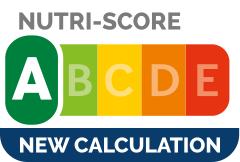 Very good nutritional quality
Nutrient levels
Fat in moderate quantity (11.1%)
Saturated fat in low quantity (1.4%)
Sugars in low quantity (1.5%)
Salt in moderate quantity (1.2%)
Nutrition label

Nutrition facts
| Nutrition facts | Prepared for 100 g / 100 ml | Compared to: Vegetarian sausages |
|---|---|---|
| Energy | 827 kJ (198 kcal) | 895.981 kJ (216 kcal) (-8%) |
| Fat | 11.1 g | 13.187 g (-16%) |
| Saturated fat | 1.4 g | 2.282 g (-39%) |
| Carbohydrates | 10.6 g | 7.086 g (+50%) |
| Sugars | 1.5 g | 1.582 g (-5%) |
| Dietary fiber | 5.5 g | ? |
| Proteins | 11.2 g | 14.651 g (-24%) |
| Salt | 1.2 g | 1.683 g (-29%) |
| Sodium | 0.48 g | 0.671 g (-28%) |
| Fruits, vegetables and legumes | ? | ? |
Nutrition facts (Detailed data)
| Nutrition facts | Prepared for 100 g / 100 ml | Prepared Per 100 g (packaging) | As sold Per 100 g (packaging) | As sold Per 100 g (estimate) |
|---|---|---|---|---|
| Energy | 827 kJ (198 kcal) | 827 kJ (198 kcal) | 827 kJ (198 kcal) | ? |
| Fat | 11.1 g | 11.1 g | 11 g | ? |
| Saturated fat | 1.4 g | 1.4 g | 1.4 g | ? |
| Carbohydrates | 10.6 g | 10.6 g | 11 g | ? |
| Sugars | 1.5 g | 1.5 g | 1.5 g | ? |
| Dietary fiber | 5.5 g | 5.5 g | 5.5 g | ? |
| Proteins | 11.2 g | 11.2 g | 11 g | ? |
| Salt | 1.2 g | 1.2 g | 1.2 g | ? |
| Sodium | 0.48 g | 0.48 g | 0.48 g | ? |
| Fruits, vegetables and legumes | ? | ? | ? | ~ 4.74027193509615 % |
Serving size
Ingredients
Ingredients image

Ingredients list
Ingredient information
Allergens
Ingredients analysis
Contains ingredients containing palm oil.
Contains non-vegan ingredients.
Unrecognized: en:mycoprotein, en:natural-caramelised-sugar
Vegetarian status unknown
Unrecognized: en:mycoprotein, en:natural-caramelised-sugar
Food Processing
NOVA group
 Ultra-processed food and drink products
Elements that indicate the product is in NOVA group 4
How NOVA works
Additives
E263 - Calcium acetatePreservativeStabiliser
CALCIUM ACETATE is a chemical compound which is a calcium salt of acetic acid. Calcium acetate is used as a food additive, as a stabilizer, buffer and sequestrant, mainly in candy products.
E401 - sodium alginateCarrierEmulsifierHumectantSequestrantStabiliserThickener
No additive description is available yet.
E404 - Calcium alginateCarrierHumectantSequestrantStabiliserThickener
Calcium alginate is a water-insoluble, gelatinous, cream-coloured substance that can be created through the addition of aqueous calcium chloride to aqueous sodium alginate. Calcium alginate is also used for entrapment of enzymes and forming artificial seeds in plant tissue culture. "Alginate" is usually the salts of alginic acid, but it can also refer to derivatives of alginic acid and alginic acid itself; in some publications the term "algin" is used instead of alginate. Alginate is present in the cell walls of brown algae, as the calcium, magnesium and sodium salts of alginic acid.
E509 - Calcium chloride EFSA overexposure risk: moderateStabiliserThickenerCoagulant
Calcium chloride is an inorganic compound, a salt with the chemical formula CaCl2. It is a colorless crystalline solid at room temperature, highly soluble in water. Calcium chloride is commonly encountered as a hydrated solid with generic formula CaCl2(H2O)x, where x = 0, 1, 2, 4, and 6. These compounds are mainly used for de-icing and dust control. Because the anhydrous salt is hygroscopic, it is used as a desiccant.
Environment
Green-Score, origins bonus, and transportation impact are shown for Worldwide .
Green Score
Overall grade
 Very low environmental impact
About Green-Score
Current scope
Life cycle analysis
Average impact of the category
Plant-based sausage with tofu (vegan) • Score: 88/100Life-cycle reference
Overall environmental impact by stage (PEF)
The overall environmental impact figure (PEF) comes from ADEME's Agribalyse database, for the category: Plant-based sausage with tofu (vegan). Source: ADEME Agribalyse Database.
| Stage | Impact |
|---|---|
| Agriculture | 24.8 % |
| Processing | 34.1 % |
| Packaging | 18.3 % |
| Transportation | 11.3 % |
| Distribution | 5.8 % |
| Consumption | 5.9 % |
Bonuses and maluses
Declared origins
Packaging impact
Green-Score for this product
Green-Score for this product
Final score: 75/100Final score breakdown
Carbon footprint
Carbon footprint
Climate impact by stage (CO2e)
The carbon emission figure comes from ADEME's Agribalyse database, for the category: Plant-based sausage with tofu (vegan). Source: ADEME Agribalyse Database.
| Stage | Impact |
|---|---|
| Agriculture | 20.4 % |
| Processing | 22.2 % |
| Packaging | 30.2 % |
| Transportation | 18.6 % |
| Distribution | 3.1 % |
| Consumption | 5.4 % |
Packaging
Packaging impact
Packaging components
| Shape | Material | Recycling | Impact |
|---|---|---|---|
| BAG | Ldpe 4 LOW Density Polyethylene | Unknown | High |
Declared packaging
Transportation
Declared origins
Forest footprint
Forest footprint
Ingredients linked to forest pressure
| Ingredient | Type | Percent in product | Forest footprint |
|---|---|---|---|
| Free Range Eggs | Oeufs Importés | 22.77 % | 0.02 |
Data Source
Product data comes from Open Food Facts. Food Benchmark also adds translations, category comparisons and explanatory calculations.
The database is licensed under ODbL 1.0, individual contents under DbCL 1.0, and product photos under CC BY-SA 3.0.
Product added on February 28, 2019 at 11:42:30 AM UTC by waistline-app .
Last edit on March 8, 2026 at 1:38:55 PM UTC by amduck .
Product page also edited by alh225, amduck, arc2, fooducate.69ABE1AB-A419-48D6-4EAE-8B13094BD871, kfletcher, kiliweb, mummymelgearing, roboto-app, swipe-studio, taylotom, waistline.594fdda0-3cbd-4d9a-9a49-b033618e28ec, yuka.YWZsUUFhQUxyZFl1eGRvbDJ6UE05T3A0NUszd1JsTHFMdUE3SUE9PQ.