

Farmhouse Soft Bread
Health
Nutrition
Nutri-Score
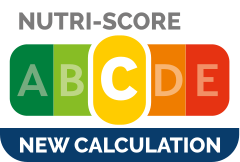 Average nutritional quality
Nutri-Score data warning
Nutrient levels
Fat in low quantity (2.59%)
Saturated fat in low quantity (0.741%)
Sugars in low quantity (2.22%)
Salt in moderate quantity (0.944%)
Nutrition facts
| Nutrition facts | As sold for 100 g / 100 ml | Compared to: White breads |
|---|---|---|
| Energy | ~ 1032.96296296296 kJ (244 kcal) | 1,182.871 kJ (276 kcal) (-13%) |
| Fat | 2.59259259259259 g | 4.764 g (-46%) |
| Saturated fat | 0.740740740740741 g | 1.017 g (-27%) |
| Carbohydrates | 45.1851851851852 g | 48.627 g (-7%) |
| Sugars | 2.22222222222222 g | 3.084 g (-28%) |
| Dietary fiber | 2.22222222222222 g | ? |
| Proteins | 8.88888888888889 g | 8.776 g (+1%) |
| Salt | 0.944444444444444 g | 1.155 g (-18%) |
| Sodium | 0.377777777777778 g | 0.461 g (-18%) |
| Fruits, vegetables and legumes | ~ 0 % | ? |
Nutrition facts (Detailed data)
| Nutrition facts | As sold for 100 g / 100 ml | As sold Per 100 g (estimate) | As sold Per serving (27 g) (packaging) |
|---|---|---|---|
| Energy | ~ 1032.96296296296 kJ (244 kcal) | ? | ? (66 kcal) |
| Fat | 2.59259259259259 g | ? | 0.7 g |
| Saturated fat | 0.740740740740741 g | ? | 0.2 g |
| Carbohydrates | 45.1851851851852 g | ? | 12.2 g |
| Sugars | 2.22222222222222 g | ? | 0.6 g |
| Dietary fiber | 2.22222222222222 g | ? | 0.6 g |
| Proteins | 8.88888888888889 g | ? | 2.4 g |
| Salt | 0.944444444444444 g | ? | 0.255 g |
| Sodium | 0.377777777777778 g | ? | 0.102 g |
| Fruits, vegetables and legumes | ~ 0 % | ~ 0 % | ? |
Serving size
Ingredients
Ingredients image

Ingredients list
Ingredient information
Allergens
Ingredients analysis
Contains ingredients containing palm oil.
Vegan status unknown
Unrecognized: en:wheat-flour-calcium, en:iron, en:added-to-inhibit-mould-growth
Vegetarian status unknown
Unrecognized: en:wheat-flour-calcium, en:iron, en:added-to-inhibit-mould-growth
Food Processing
NOVA group
 Ultra-processed food and drink products
Elements that indicate the product is in NOVA group 4
How NOVA works
Additives
E282 - calcium propionatePreservative
CALCIUM PROPIONATE has the formula Ca(C2H5COO)2. Calcium propionate is used as a preservative in a wide variety of products, including but not limited to:bread, other baked goods, processed meat, whey, and other dairy products.
E300 - Ascorbic acidAntioxidantSequestrant
No additive description is available yet.
E471 - Mono- and diglycerides of fatty acidsEmulsifierStabiliser
Mono- and diglycerides of fatty acids (E471), are food additives commonly used as emulsifiers in various processed foods.
These compounds consist of glycerol molecules linked to one or two fatty acid chains, which help stabilize and blend water and oil-based ingredients. E471 enhances the texture and shelf life of products like margarine, baked goods, and ice cream, ensuring a smooth and consistent texture.
It is generally considered safe for consumption within established regulatory limits.
E481 - Sodium stearoyl-2-lactylate EFSA overexposure risk: highEmulsifierStabiliser
Sodium stearoyl-2-lactylate (sodium stearoyl lactylate or SSL) is a versatile, FDA approved food additive used to improve the mix tolerance and volume of processed foods. It is one type of a commercially available lactylate. SSL is non-toxic, biodegradable, and typically manufactured using biorenewable feedstocks. Because SSL is a safe and highly effective food additive, it is used in a wide variety of products ranging from baked goods and desserts to pet foods.As described by the Food Chemicals Codex 7th edition, SSL is a cream-colored powder or brittle solid. SSL is currently manufactured by the esterification of stearic acid with lactic acid and partially neutralized with either food-grade soda ash (sodium carbonate) or caustic soda (concentrated sodium hydroxide). Commercial grade SSL is a mixture of sodium salts of stearoyl lactylic acids and minor proportions of other sodium salts of related acids. The HLB for SSL is 10-12. SSL is slightly hygroscopic, soluble in ethanol and in hot oil or fat, and dispersible in warm water. These properties are the reason that SSL is an excellent emulsifier for fat-in-water emulsions and can also function as a humectant.
E920 - l-cysteine
Cysteine (symbol Cys or C; ) is a semi-essential proteinogenic amino acid with the formula HO2CCH(NH2)CH2SH. The thiol side chain in cysteine often participates in enzymatic reactions, as a nucleophile. The thiol is susceptible to oxidation to give the disulfide derivative cystine, which serves an important structural role in many proteins. When used as a food additive, it has the E number E920. It is encoded by the codons UGU and UGC. Cysteine has the same structure as serine, but with one of its oxygen atoms replaced by sulfur; replacing it with selenium gives selenocysteine. (Like other natural proteinogenic amino acids cysteine has (L) chirality in the older D/L notation based on homology to D and L glyceraldehyde. In the newer R/S system of designating chirality, based on the atomic numbers of atoms near the asymmetric carbon, cysteine (and selenocysteine) have R chirality, because of the presence of sulfur (resp. selenium) as a second neighbor to the asymmetric carbon. The remaining chiral amino acids, having lighter atoms in that position, have S chirality.)
Environment
Green-Score, origins bonus, and transportation impact are shown for Worldwide .
Green Score
Overall grade
 Unknown environmental impact
About Green-Score
Current scope
Green-Score availability
Bonuses and maluses
Origins of ingredients
Threatened species risk
Packaging impact
Packaging
Packaging impact
Data precision
Transportation
Origins of ingredients
Origins breakdown
| Origin | Percent of ingredients | Impact |
|---|---|---|
| Unknown | 94 % | High |
| Burundi | 6 % | High |
Forest footprint
Forest footprint
Deforestation risk details
Data Source
Product data comes from Open Food Facts. Food Benchmark also adds translations, category comparisons and explanatory calculations.
The database is licensed under ODbL 1.0, individual contents under DbCL 1.0, and product photos under CC BY-SA 3.0.
Product added on December 20, 2017 at 11:10:35 AM UTC by kiliweb .
Last edit on March 3, 2026 at 8:45:08 AM UTC by new-nutrition-bot .
Product page also edited by doublah, kiliweb, macrofactor, new-nutrition-bot, openfoodfacts-contributors, teolemon, yuka.YUlVN0V2aFEvZVlFdnNJKzVSSDU1dHR2bG9lcUFVNjJMTWdlSWc9PQ, yuka.sY2b0xO6T85zoF3NwEKvlkxraPGCjB-cHjXQvkOt1uWyM436fNtZ7a3zGqs.