

Salsa Kebab
Health
Nutrition
Nutri-Score
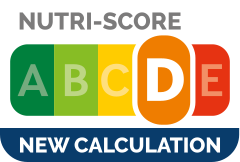 Lower nutritional quality
Nutri-Score data warning
Nutrient levels
Fat in high quantity (30.1%)
Saturated fat in moderate quantity (2.5%)
Sugars in moderate quantity (7.8%)
Salt in high quantity (1.6%)
Nutrition label

Nutrition facts
| Nutrition facts | As sold for 100 g / 100 ml | Compared to: Kebab sauces |
|---|---|---|
| Energy | 1352 kJ (327 kcal) | 1,551.924 kJ (371 kcal) (-13%) |
| Fat | 30.1 g | 37.73 g (-20%) |
| Saturated fat | 2.5 g | 3.359 g (-26%) |
| Carbohydrates | 12.3 g | 6.569 g (+87%) |
| Sugars | 7.8 g | 3.639 g (+114%) |
| Dietary fiber | 0.5 g | ? |
| Proteins | 1.5 g | 1.172 g (+28%) |
| Salt | 1.6 g | 1.446 g (+11%) |
| Sodium | 0.64 g | 0.586 g (+9%) |
| Fruits, vegetables and legumes | ~ 7.2 % | ? |
Nutrition facts (Detailed data)
| Nutrition facts | As sold for 100 g / 100 ml | As sold Per 100 g (packaging) | As sold Per 100 g (estimate) |
|---|---|---|---|
| Energy | 1352 kJ (327 kcal) | 1352 kJ (327 kcal) | ~ 1098.69476666667 kJ (265 kcal) |
| Fat | 30.1 g | 30.1 g | ~ 22.7085108333333 g |
| Saturated fat | 2.5 g | 2.5 g | ~ 1.79319375 g |
| Carbohydrates | 12.3 g | 12.3 g | ~ 17.6359825 g |
| Sugars | 7.8 g | 7.8 g | ~ 8.63668666666667 g |
| Dietary fiber | 0.5 g | 0.5 g | ~ 0.114183333333333 g |
| Proteins | 1.5 g | 1.5 g | ~ 0.396579166666666 g |
| Salt | 1.6 g | 1.6 g | ~ 0.01570075 g |
| Sodium | 0.64 g | 0.64 g | ~ 0.006136435 g |
| Fruits, vegetables and legumes | ~ 7.2 % | ? | ~ 7.2 % |
Ingredients
Ingredients image
Ingredients list
Ingredient information
Added sugars
Allergens
Ingredients analysis
No ingredients containing palm oil.
Contains non-vegan ingredients.
Unrecognized: es:proteinas-de-lactosuero, es:aroma-natural-de-comino
Vegetarian status unknown
Unrecognized: es:proteinas-de-lactosuero, es:aroma-natural-de-comino
Food Processing
NOVA group
 Ultra-processed food and drink products
Elements that indicate the product is in NOVA group 4
How NOVA works
Additives
E150 - Caramel
CARAMEL is a medium to dark-orange confectionery product made by heating a variety of sugars.
E200 - Sorbic acid EFSA overexposure risk: highPreservative
SORBIC ACID, or 2,4-hexadienoic acid, is a natural organic compound used as a food preservative. It has the chemical formula CH3(CH)4CO2H.
E270 - Lactic acid
LACTIC ACID is an organic compound with the formula CH3CH(OH)CO2H. In the form of its conjugate base called lactate (this is thus different and kept as a separate ingredient). Lactic acid is chiral, consisting of two optical isomers. One is known as L-(+)-lactic acid or (S)-lactic acid and the other, its mirror image, is D-(−)-lactic acid or (R)-lactic acid in food the L-variant is used
E330 - Citric acidAntioxidantSequestrant
Citric acid is a natural organic acid found in citrus fruits such as lemons, oranges, and limes.
It is widely used in the food industry as a flavor enhancer, acidulant, and preservative due to its tart and refreshing taste.
Citric acid is safe for consumption when used in moderation and is considered a generally recognized as safe (GRAS) food additive by regulatory agencies worldwide.
E412 - Guar gumEmulsifierStabiliserThickener
Guar gum (E412) is a natural food additive derived from guar beans.
This white, odorless powder is valued for its remarkable thickening and stabilizing properties, making it a common ingredient in various food products, including sauces, dressings, and ice creams.
When used in moderation, guar gum is considered safe for consumption, with no known adverse health effects.
E415 - Xanthan gumEmulsifierStabiliserThickener
Xanthan gum (E415) is a natural polysaccharide derived from fermented sugars, often used in the food industry as a thickening and stabilizing agent.
This versatile food additive enhances texture and prevents ingredient separation in a wide range of products, including salad dressings, sauces, and gluten-free baked goods.
It is considered safe for consumption even at high intake amounts.
E575 - Glucono-delta-lactoneSequestrant
Glucono delta-lactone (GDL), also known as gluconolactone, is a food additive with the E number E575 used as a sequestrant, an acidifier, or a curing, pickling, or leavening agent. It is a lactone of D-gluconic acid. Pure GDL is a white odorless crystalline powder. GDL has been marketed for use in feta cheese. GDL is neutral, but hydrolyses in water to gluconic acid which is acidic, adding a tangy taste to foods, though it has roughly a third of the sourness of citric acid. It is metabolized to 6-phospho-D-gluconate; one gram of GDL yields roughly the same amount of metabolic energy as one gram of sugar. Upon addition to water, GDL is partially hydrolysed to gluconic acid, with the balance between the lactone form and the acid form established as a chemical equilibrium. The rate of hydrolysis of GDL is increased by heat and high pH.The yeast Saccharomyces bulderi can be used to ferment gluconolactone to ethanol and carbon dioxide. The pH value greatly affects culture growth. Gluconolactone at 1 or 2% in a mineral media solution causes the pH to drop below 3.It is also a complete inhibitor of the enzyme amygdalin beta-glucosidase at concentrations of 1 mM.
Environment
Green-Score, origins bonus, and transportation impact are shown for Worldwide .
Green Score
Overall grade
 Moderate environmental impact
About Green-Score
Current scope
Life cycle analysis
Average impact of the category
 Kebab sauce, prepacked • Score: 78/100
Life-cycle reference
Overall environmental impact by stage (PEF)
The overall environmental impact figure (PEF) comes from ADEME's Agribalyse database, for the category: Kebab sauce, prepacked. Source: ADEME Agribalyse Database.
| Stage | Impact |
|---|---|
| Agriculture | 49.3 % |
| Processing | 18.4 % |
| Packaging | 21.1 % |
| Transportation | 6.8 % |
| Distribution | 3.5 % |
| Consumption | 0.9 % |
Bonuses and maluses
Declared origins
Packaging impact
Green-Score for this product
Green-Score for this product
Final score: 58/100Final score breakdown
Carbon footprint
Carbon footprint
Climate impact by stage (CO2e)
The carbon emission figure comes from ADEME's Agribalyse database, for the category: Kebab sauce, prepacked. Source: ADEME Agribalyse Database.
| Stage | Impact |
|---|---|
| Agriculture | 54.5 % |
| Processing | 12.9 % |
| Packaging | 18.5 % |
| Transportation | 11.9 % |
| Distribution | 2.1 % |
| Consumption | 0.3 % |
Packaging
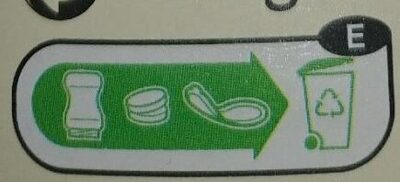
Packaging impact
Data precision
Transportation
Declared origins
Forest footprint
Forest footprint
Ingredients linked to forest pressure
| Ingredient | Type | Percent in product | Forest footprint |
|---|---|---|---|
| EGG Yolk | Oeufs Importés | 2.06 % | 0.00 |
Additional information
- Conservation conditions
- Antes de abrir, conservar a temperatura ambiente. Una vez abierto, se conserva un mes en el frigorífico. Consumir preferentemente antes del fin de / Nº de lote: ver en el tapón.
- Customer service
- Interdis - TSA 91431 - 91343 MASSY Cedex - France
Data Source
Product data comes from Open Food Facts. Food Benchmark also adds translations, category comparisons and explanatory calculations.
The database is licensed under ODbL 1.0, individual contents under DbCL 1.0, and product photos under CC BY-SA 3.0.
Product added on June 8, 2019 at 9:53:11 PM UTC by openfoodfacts-contributors .
Last edit on March 17, 2026 at 9:43:29 AM UTC by new-nutrition-bot .
Product page also edited by arc2, ecoscore-impact-estimator, halal-app-chakib, kiliweb, new-nutrition-bot, openfoodfacts-contributors, org-carrefour, org-carrefour-espana, roboto-app, spotter, teolemon, thaialagata, yuka.Ui90YU5KOHdxZGdCa2MwQzNDdlBvZTVNMllXTGRqN3RMTTlBSVE9PQ, yuka.sY2b0xO6T85zoF3NwEKvlnZ_bcT0mhXrHEHtukSO7P6XNsLGTIBUsrrIIas.
Source List
- carrefour
- carrefour-espana