

Épinards Hachés
Health
Nutrition
Nutri-Score
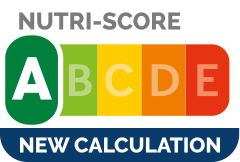 Very good nutritional quality
Nutri-Score data warning
Nutrient levels
Fat in low quantity (0.8%)
Saturated fat in low quantity (0.1%)
Sugars in low quantity (1%)
Salt in low quantity (0.13%)
Nutrition label

Nutrition facts
| Nutrition facts | As sold for 100 g / 100 ml | Compared to: Frozen chopped spinachs |
|---|---|---|
| Energy | 123 kJ (29 kcal) | 101.934 kJ (25 kcal) (+21%) |
| Fat | 0.8 g | 0.464 g (+72%) |
| Saturated fat | 0.1 g | 0.073 g (+37%) |
| Carbohydrates | 1.4 g | 1.185 g (+18%) |
| Sugars | 1 g | 0.478 g (+109%) |
| Dietary fiber | 2.1 g | ? |
| Proteins | 3.1 g | 2.727 g (+14%) |
| Salt | 0.13 g | 0.105 g (+24%) |
| Sodium | 0.052 g | 0.042 g (+24%) |
| Fruits, vegetables and legumes | ? | ? |
Nutrition facts (Detailed data)
| Nutrition facts | As sold for 100 g / 100 ml | As sold Per serving (legacy) |
|---|---|---|
| Energy | 123 kJ (29 kcal) | 246 kJ (58 kcal) |
| Fat | 0.8 g | 1.6 g |
| Saturated fat | 0.1 g | 0.2 g |
| Carbohydrates | 1.4 g | 2.8 g |
| Sugars | 1 g | 2 g |
| Dietary fiber | 2.1 g | 4.2 g |
| Proteins | 3.1 g | 6.2 g |
| Salt | 0.13 g | 0.26 g |
| Sodium | 0.052 g | 0.104 g |
| Fruits, vegetables and legumes | ? | ? |
Serving size
Ingredients
Ingredients image

Ingredients list
Ingredient information
Allergens
Traces
Ingredients analysis
No ingredients containing palm oil.
No non-vegan ingredients.
No non-vegetarian ingredients.
Food Processing
NOVA group
 Unprocessed or minimally processed foods
How NOVA works
Additives
Environment
Green-Score, origins bonus, and transportation impact are shown for Worldwide .
Green Score
Overall grade
 Very low environmental impact
About Green-Score
Current scope
Life cycle analysis
Average impact of the category
Spinach, frozen, raw • Score: 97/100Life-cycle reference
Overall environmental impact by stage (PEF)
The overall environmental impact figure (PEF) comes from ADEME's Agribalyse database, for the category: Spinach, frozen, raw. Source: ADEME Agribalyse Database.
| Stage | Impact |
|---|---|
| Agriculture | 17.2 % |
| Processing | 13.5 % |
| Packaging | 23.4 % |
| Transportation | 18.0 % |
| Distribution | 17.8 % |
| Consumption | 10.0 % |
Bonuses and maluses
Production system
Origins of ingredients
Packaging impact
Green-Score for this product
Green-Score for this product
Final score: 100/100Final score breakdown
Carbon footprint
Carbon footprint
Climate impact by stage (CO2e)
The carbon emission figure comes from ADEME's Agribalyse database, for the category: Spinach, frozen, raw. Source: ADEME Agribalyse Database.
| Stage | Impact |
|---|---|
| Agriculture | 14.1 % |
| Processing | 10.4 % |
| Packaging | 34.9 % |
| Transportation | 28.1 % |
| Distribution | 9.1 % |
| Consumption | 3.4 % |
Packaging
Packaging impact
Packaging components
| Shape | Material | Recycling | Impact |
|---|---|---|---|
| BAG | Plastic | Discard | High |
Declared packaging
Transportation
Manufacturing locations
Origins of ingredients
Origins breakdown
| Origin | Percent of ingredients | Impact |
|---|---|---|
| Belgium | 50 % | High |
| Netherlands | 50 % | High |
Forest footprint
Forest footprint
Deforestation risk details
Additional information
- Other information
- Surgelés + étoile 600 g e Cultivé en Belgique et / ou aux Pays-Bas Ces épinards sont cultivés sans engrais chimique de synthèse en limitant strictement l'emploi de pesticides conformément aux règles de production biologique. Dans les heures suivant leur récolte, les épinards frais sont lavés, blanchis et hachés avec soin puis surgelés afin de contribuer à la préservation de leurs propriétés nutritionnelles et de leurs saveurs. Servez-les en accompagnement de viandes ou de poissons ou utilisez-les dans la préparation de tous vos plats. Hachés
- Preparation
- Ce produit doit être cuit avant consommation. Sans décongélation préalable. À la casserole : Plongez les épinards surgelés dans 1 litre d'eau bouillante salée. Laissez cuire 6 à 7 min à partir de la reprise du frémissement.
- Recipe idea
- Tarte épinards, fromage de chèvre, pignons de pin et raisins secs POUR 4 PERSONNES : 400 g d'épinards hachés surgelés Carrefour Bio, 80 g de bûche de chèvre Carrefour Bio, 20 g de pignons de pin, 40 g de raisins secs Carrefour Bio, 1 pâte feuilletée Carrefour Bio, 1 cuillère à soupe de crème fraîche Carrefour Bio. - Faites cuire les épinards selon le mode de cuisson ci-dessous. Pendant ce temps, étalez votre pâte feuilletée dans un plat à tarte, et enfournez-la 15 minutes à 200°C. - Faites griller vos pignons dans une poêle quelques minutes puis mélangez-les aux épinards avec les raisins secs et la cuillère de crème fraîche. Assaisonnez à votre convenance. - Sortez la pâte précuite du four, étalez-y les épinards puis recouvrez le tout avec des tranches fines de chèvre. - Enfournez 10 minutes à 200°C.
- Conservation conditions
- Pour une dégustation optimale, à consommer de préférence avant fin : voir la date au dos du sachet. À conserver 24h au réfrigérateur, jusqu'à la date de durabilité minimale dans un congélateur*** à -18°C. ATTENTION, NE PAS RECONGELER APRÈS DÉCONGÉLATION.
- Customer service
- Interdis - TSA 91431 - 91343 MASSY Cedex - France
Data Source
Product data comes from Open Food Facts. Food Benchmark also adds translations, category comparisons and explanatory calculations.
The database is licensed under ODbL 1.0, individual contents under DbCL 1.0, and product photos under CC BY-SA 3.0.
Product added on January 7, 2014 at 8:06:01 PM UTC by openfoodfacts-contributors .
Last edit on October 8, 2025 at 4:17:54 AM UTC by org-carrefour .
Product page also edited by carrefour, driveoff, ecoscore-impact-estimator, kaitlynella, kiliweb, miles67off, morganesh, openfoodfacts-contributors, org-carrefour, packbot, quentinbrd, roboto-app, tacite, teolemon.
Source List
- Carrefour
- carrefour