

So good !
Health
Nutrition
Nutri-Score
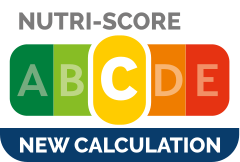 Average nutritional quality
Nutri-Score data warning
Nutrient levels
Fat in low quantity (0.6%)
Saturated fat in low quantity (0.4%)
Sugars in high quantity (13.3%)
Salt in low quantity (0.09%)
Nutrition facts
| Nutrition facts | As sold for 100 g / 100 ml | Compared to: Non-dairy desserts |
|---|---|---|
| Energy | 331 kcal (79 kcal) | 460.38 kJ (110 kcal) |
| Fat | 0.6 g | 4.929 g (-88%) |
| Saturated fat | 0.4 g | 2.904 g (-86%) |
| Carbohydrates | 16.1 g | 13.394 g (+20%) |
| Sugars | 13.3 g | 9.149 g (+45%) |
| Dietary fiber | 0 g | ? |
| Proteins | 2 g | 2.319 g (-14%) |
| Salt | 0.09 g | 0.103 g (-13%) |
| Sodium | 0.036 g | 0.041 g (-12%) |
| Fruits, vegetables and legumes | ? | ? |
Nutrition facts (Detailed data)
| Nutrition facts | As sold for 100 g / 100 ml | As sold Per serving (legacy) |
|---|---|---|
| Energy | 331 kcal (79 kcal) | ? |
| Fat | 0.6 g | ? |
| Saturated fat | 0.4 g | ? |
| Carbohydrates | 16.1 g | ? |
| Sugars | 13.3 g | ? |
| Dietary fiber | 0 g | ? |
| Proteins | 2 g | ? |
| Salt | 0.09 g | ? |
| Sodium | 0.036 g | ? |
| Fruits, vegetables and legumes | ? | ? |
Ingredients
Ingredients list
Ingredient information
Added sugars
Ingredients analysis
Palm oil content unknown
Vegan status unknown
Unrecognized: fr:lait-ecreme-de-vache, fr:creme-de-lait-de-vache
Vegetarian status unknown
Unrecognized: fr:lait-ecreme-de-vache, fr:creme-de-lait-de-vache
Food Processing
NOVA group
 Ultra-processed food and drink products
Elements that indicate the product is in NOVA group 4
How NOVA works
Additives
E14XX - Modified StarchEmulsifierStabiliserThickener
No additive description is available yet.
E160a - caroteneColour
β-Carotene is an organic, strongly colored red-orange pigment abundant in plants and fruits. It is a member of the carotenes, which are terpenoids (isoprenoids), synthesized biochemically from eight isoprene units and thus having 40 carbons. Among the carotenes, β-carotene is distinguished by having beta-rings at both ends of the molecule. β-Carotene is biosynthesized from geranylgeranyl pyrophosphate.β-Carotene is the most common form of carotene in plants. When used as a food coloring, it has the E number E160a. The structure was deduced by Karrer et al. in 1930. In nature, β-carotene is a precursor (inactive form) to vitamin A via the action of beta-carotene 15,15'-monooxygenase.Isolation of β-carotene from fruits abundant in carotenoids is commonly done using column chromatography. It can also be extracted from the beta-carotene rich algae, Dunaliella salina. The separation of β-carotene from the mixture of other carotenoids is based on the polarity of a compound. β-Carotene is a non-polar compound, so it is separated with a non-polar solvent such as hexane. Being highly conjugated, it is deeply colored, and as a hydrocarbon lacking functional groups, it is very lipophilic.
E406 - AgarCarrierEmulsifierHumectantStabiliserThickener
Agar (pronounced , sometimes ) or agar-agar is a jelly-like substance, obtained from red algae.Agar is a mixture of two components: the linear polysaccharide agarose, and a heterogeneous mixture of smaller molecules called agaropectin. It forms the supporting structure in the cell walls of certain species of algae, and is released on boiling. These algae are known as agarophytes, and belong to the Rhodophyta (red algae) phylum.Agar has been used as an ingredient in desserts throughout Asia, and also as a solid substrate to contain culture media for microbiological work. Agar can be used as a laxative, an appetite suppressant, a vegetarian substitute for gelatin, a thickener for soups, in fruit preserves, ice cream, and other desserts, as a clarifying agent in brewing, and for sizing paper and fabrics.The gelling agent in agar is an unbranched polysaccharide obtained from the cell walls of some species of red algae, primarily from tengusa (Gelidiaceae) and ogonori (Gracilaria). For commercial purposes, it is derived primarily from ogonori. In chemical terms, agar is a polymer made up of subunits of the sugar galactose.
E440 - PectinsEmulsifierStabiliserThickener
Pectins (E440) are natural carbohydrates, predominantly found in fruits, that act as gelling agents in the food industry, creating the desirable jelly-like texture in jams, jellies, and marmalades.
Pectins stabilize and thicken various food products, such as desserts, confectioneries, and beverages, ensuring a uniform consistency and quality.
Recognized as safe by various health authorities, pectins have been widely used without notable adverse effects when consumed in typical dietary amounts.
Environment
Green-Score, origins bonus, and transportation impact are shown for Worldwide .
Green Score
Overall grade
 Unknown environmental impact
About Green-Score
Current scope
Green-Score availability
Bonuses and maluses
Declared origins
Packaging impact
Packaging
Packaging impact
Data precision
Transportation
Declared origins
Forest footprint
Forest footprint
Deforestation risk details
Data Source
Product data comes from Open Food Facts. Food Benchmark also adds translations, category comparisons and explanatory calculations.
The database is licensed under ODbL 1.0, individual contents under DbCL 1.0, and product photos under CC BY-SA 3.0.
Product added on January 5, 2018 at 12:46:16 PM UTC by kiliweb .
Last edit on November 1, 2024 at 5:26:17 PM UTC by roboto-app .
Product page also edited by fix-serving-size-bot, geodata, kiliweb, openfoodfacts-contributors, roboto-app, yuka.VDd3bFBLUXpnL05VbzhNNjNqZnJ3ZlJmNjg2c1VUNnRBdEFTSVE9PQ.