ProductsLeader PriceTourte au Chapon
Tourte au Chapon
Barcode 3263859971618
Leader Price

Tourte au Chapon

500 g
BARCODE:3263859971618
PACKAGER CODE:FR 29.160.500 EC,EMB 29160C
CATEGORIES:Meats And Their Products, Frozen Foods, Meals, Pies, Pizzas Pies And Quiches, Double Crust Pies, Meals With Meat, Salted Pies, Combination Meals, Meat Pies, Poultry Meals, Frozen Ready Made Meals
LABELS:Green Dot, Triman
PACKAGING:Plastic, Box, Cardboard, Frozen
ORIGIN:European Union
COUNTRIES:France
STORES:Leader Price

Health

Nutrition

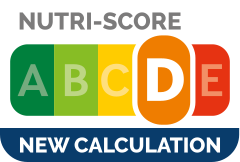
Nutri-Score

DLower nutritional quality

Nutri-Score data warning

Warning: the amount of fruits, vegetables and nuts is not specified on the label, it was estimated from the list of ingredients: 15

Nutrient levels

Fat in moderate quantity (14.2%)
What you need to know • A high consumption of fat, especially saturated fats, can raise cholesterol, which increases the risk of heart diseases. Recommendation: Limit the consumption of fat and saturated fat • Choose products with lower fat and saturated fat content. Source: National Health Service UK (NHS) - Fat: the facts
Saturated fat in high quantity (9.5%)
What you need to know • A high consumption of fat, especially saturated fats, can raise cholesterol, which increases the risk of heart diseases. Recommendation: Limit the consumption of fat and saturated fat • Choose products with lower fat and saturated fat content. Source: National Health Service UK (NHS) - Fat: the facts
Sugars in low quantity (2.7%)
What you need to know • A high consumption of sugar can cause weight gain and tooth decay. It also augments the risk of type 2 diabetes and cardio-vascular diseases. Recommendation: Limit the consumption of sugar and sugary drinks • Sugary drinks (such as sodas, fruit beverages, and fruit juices and nectars) should be limited as much as possible (no more than 1 glass a day). • Choose products with lower sugar content and reduce the consumption of products with added sugars. Source: National Health Service UK (NHS) - Sugar: the facts
Salt in moderate quantity (0.78%)
What you need to know • A high consumption of salt (or sodium) can cause raised blood pressure, which can increase the risk of heart disease and stroke. • Many people who have high blood pressure do not know it, as there are often no symptoms. • Most people consume too much salt (on average 9 to 12 grams per day), around twice the recommended maximum level of intake. Recommendation: Limit the consumption of salt and salted food • Reduce the quantity of salt used when cooking, and don't salt again at the table. • Limit the consumption of salty snacks and choose products with lower salt content. Source: World Health Organization (WHO) - Fact sheet - Salt reduction Source: National Health Service UK (NHS) - Salt: the facts

Nutrition facts

Nutrition factsAs sold for 100 g / 100 mlCompared to: Meat pies
Energy1061 kJ (253 kcal)1,199.053 kJ (287 kcal) (-12%)
Fat14.2 g17.103 g (-17%)
Saturated fat9.5 g7.54 g (+26%)
Carbohydrates22.4 g22.805 g (-2%)
Sugars2.7 g1.568 g (+72%)
Dietary fiber??
Proteins8.7 g9.582 g (-9%)
Salt0.78 g0.871 g (-10%)
Sodium0.312 g0.352 g (-11%)
Fruits, vegetables and legumes??

Nutrition facts (Detailed data)

Nutrition factsAs sold for 100 g / 100 mlAs sold Per serving (legacy)
Energy1061 kJ (253 kcal)1330 kJ (317 kcal)
Fat14.2 g17.8 g
Saturated fat9.5 g11.9 g
Carbohydrates22.4 g28 g
Sugars2.7 g3.38 g
Dietary fiber??
Proteins8.7 g10.9 g
Salt0.78 g0.975 g
Sodium0.312 g0.39 g
Fruits, vegetables and legumes??

Serving size

125 g

Ingredients

Ingredients list

Farine de blé, eau, émincés de filet de chapon traités en salaison cuits rôtis 15 % (filet de chapon 12 %, amidon de riz, dextrose, sirop de glucose, sel, poivre blanc), beurre (beurre, colorant : bêta-carotène), champignons de Paris 6,8 %, crème fraîche, panais, marron cuit 3,4 %, oignon, Porto rouge transformé (Porto rouge, sel), amidon transformé de maïs, sel, lait entier en poudre; beurre, bouillon de volaille (maltodextrine, arômes naturels, fécule, sel, graisse et viande de poulet, plante aromatique), ail, persil, arôme naturel (contient lait), protéines de blé, épices, enzymes : protéase, œuf entier.

Ingredient information

Wheat Flour
30.6% (estimate)
Water
22.8% (estimate)
Eminces De Filet De Chapon Traites En Salaison Cuits Rotis
15.0%
Filet De Chapon
12.0%
Rice Starch
1.8% (estimate)
Dextrose
0.6% (estimate)
Glucose Syrup
0.3% (estimate)
Salt
0.15% (estimate)
White Pepper
0.15% (estimate)
Butter
10.9% (estimate)
Butter
7.15% (estimate)
Colour
3.75% (estimate)
Beta Carotene Dye
3.75% (estimate)
Cultivated Mushroom
6.8%
Fresh Cream
5.1% (estimate)
Parsnip
5.1% (estimate)
Marron
3.4%
Onion
0.15% (estimate)
Porto Rouge Transforme
0.08% (estimate)
Red Port
0.04% (estimate)
Salt
0.04% (estimate)
Modified Corn Starch
0.04% (estimate)
Salt
0.02% (estimate)
Whole Milk Powder
0.01% (estimate)
Butter
0% (estimate)
Poultry Broth
0% (estimate)
Maltodextrin
0% (estimate)
Natural Flavouring
0% (estimate)
Starch
0% (estimate)
Salt
0% (estimate)
Fat
0% (estimate)
Chicken Meat
0% (estimate)
Herb
0% (estimate)
Garlic
0% (estimate)
Parsley
0% (estimate)
Natural Flavouring
0% (estimate)
Wheat Protein
0% (estimate)
Spice
0% (estimate)
Enzyme
0% (estimate)
E1101
0% (estimate)
Whole Egg
0% (estimate)

Added sugars

Contains added sugars (1%) Added sugars: dextrose, glucose syrup Quantity of added sugars: 1%

Allergens

EggsGlutenMilkNuts

Ingredients analysis

Palm oil free
Unknown

Palm oil content unknown

Vegan
No

Contains non-vegan ingredients.

Unrecognized: fr:eminces-de-filet-de-chapon-traites-en-salaison-cuits-rotis, fr:filet-de-chapon, fr:porto-rouge-transforme

Vegetarian
No

Contains non-vegetarian ingredients.

Unrecognized: fr:eminces-de-filet-de-chapon-traites-en-salaison-cuits-rotis, fr:filet-de-chapon, fr:porto-rouge-transforme


Food Processing

NOVA group

4Ultra-processed food and drink products

Elements that indicate the product is in NOVA group 4

Additives
E14XX - Modified Starch
Additives
E160a - carotene
Ingredients
Colour
Ingredients
Dextrose
Ingredients
Flavouring
Ingredients
Glucose
Ingredients
Glucose Syrup
Ingredients
Maltodextrin
Ingredients
Modified Starch

How NOVA works

The NOVA classification assigns food products into 4 groups based on their degree of processing: 1. Unprocessed or minimally processed foods 2. Processed culinary ingredients 3. Processed foods 4. Ultra-processed food and drink products

Additives

E1101 - ProteaseStabiliser

A protease (also called a peptidase or proteinase) is an enzyme that performs proteolysis: protein catabolism by hydrolysis of peptide bonds. Proteases have evolved multiple times, and different classes of protease can perform the same reaction by completely different catalytic mechanisms. Proteases can be found in Animalia, Plantae, Fungi, Bacteria, Archaea and viruses.

E14XX - Modified StarchEmulsifierStabiliserThickener

No additive description is available yet.

E160a - caroteneColour

β-Carotene is an organic, strongly colored red-orange pigment abundant in plants and fruits. It is a member of the carotenes, which are terpenoids (isoprenoids), synthesized biochemically from eight isoprene units and thus having 40 carbons. Among the carotenes, β-carotene is distinguished by having beta-rings at both ends of the molecule. β-Carotene is biosynthesized from geranylgeranyl pyrophosphate.β-Carotene is the most common form of carotene in plants. When used as a food coloring, it has the E number E160a. The structure was deduced by Karrer et al. in 1930. In nature, β-carotene is a precursor (inactive form) to vitamin A via the action of beta-carotene 15,15'-monooxygenase.Isolation of β-carotene from fruits abundant in carotenoids is commonly done using column chromatography. It can also be extracted from the beta-carotene rich algae, Dunaliella salina. The separation of β-carotene from the mixture of other carotenoids is based on the polarity of a compound. β-Carotene is a non-polar compound, so it is separated with a non-polar solvent such as hexane. Being highly conjugated, it is deeply colored, and as a hydrocarbon lacking functional groups, it is very lipophilic.

E160ai - Beta-caroteneColour

No additive description is available yet.

Environment

Green-Score, origins bonus, and transportation impact are shown for Worldwide .

Green Score

Overall grade

EVery high environmental impact

About Green-Score

The Green-Score is an experimental score that summarizes the environmental impacts of food products.

Current scope

The Green-Score was initially developed for France and it is being extended to other European countries. The Green-Score formula is subject to change as it is regularly improved to make it more precise and better suited to each country. Select a country to include the full impact of transportation in the final score.

Life cycle analysis

Average impact of the category

DChicken, Basque style • Score: 43/100

Life-cycle reference

Category: Chicken, Basque style PEF environmental score: 0.68 Climate change impact: 5.14 kg CO2 eq / kg product The overall environmental impact figure (PEF) comes from ADEME's Agribalyse database, for the category: Chicken, Basque style. Source: ADEME Agribalyse Database.

Overall environmental impact by stage (PEF)

The overall environmental impact figure (PEF) comes from ADEME's Agribalyse database, for the category: Chicken, Basque style. Source: ADEME Agribalyse Database.

StageImpact
Agriculture77.0 %
Processing15.1 %
Packaging2.3 %
Transportation3.4 %
Distribution1.3 %
Consumption0.9 %

Bonuses and maluses

Origins of ingredients

Declared origins: European Union Origins malus: -5 Transportation (Worldwide): 0 Environmental policy adjustment: -5 Select a country to include the full impact of transportation.

Packaging impact

Packaging with a medium impact Malus: -11 Packaging score: -8

Green-Score for this product

Green-Score for this product

EFinal score: 27/100

Final score breakdown

Life cycle analysis score: 43 Sum of bonuses and maluses: -16 Final score: 27/100

Carbon footprint

Carbon footprint

Equivalent to driving 2.7 km in a petrol car. 514 g CO2e per 100g of product. Reference category: Chicken, Basque style. The carbon emission figure comes from ADEME's Agribalyse database, for the category: Chicken, Basque style. Source: ADEME Agribalyse Database.

Climate impact by stage (CO2e)

The carbon emission figure comes from ADEME's Agribalyse database, for the category: Chicken, Basque style. Source: ADEME Agribalyse Database.

StageImpact
Agriculture71.3 %
Processing18.4 %
Packaging3.6 %
Transportation5.7 %
Distribution0.7 %
Consumption0.3 %

Packaging

Packaging impact

Packaging with a medium impact Malus: -11 Packaging score: -8

Packaging components

ShapeMaterialRecyclingImpact
BAGPlasticUnknownHigh
BOXCardboardUnknownLow

Declared packaging

Plastic, Box, Cardboard, Frozen

Transportation

Origins of ingredients

Declared origins: European Union Origins malus: -5 Transportation (Worldwide): 0 Environmental policy adjustment: -5 Select a country to include the full impact of transportation.

Origins breakdown

OriginPercent of ingredientsImpact
European Union100 %High

Forest footprint

Forest footprint

Total forest footprint: 0.00 m2 per kg of food This estimate highlights ingredients that depend on soy-linked animal feed and deforestation risk.

Ingredients linked to forest pressure

IngredientTypePercent in productForest footprint
Chicken MeatPoulet Importé0.00 %0.00
Whole EGGOeufs Importés0.00 %0.00

Data Source

Product data comes from Open Food Facts. Food Benchmark also adds translations, category comparisons and explanatory calculations.

The database is licensed under ODbL 1.0, individual contents under DbCL 1.0, and product photos under CC BY-SA 3.0.

Product added on December 8, 2017 at 4:31:39 PM UTC by openfoodfacts-contributors .

Last edit on March 24, 2025 at 11:00:06 AM UTC by laura-chaud .

Product page also edited by beniben, laura-chaud, openfoodfacts-contributors, packbot, sebleouf.