
Aldi Marzipan Figur
Health
Nutrition
Nutri-Score
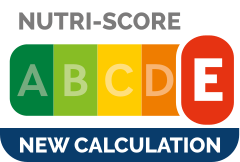 Lower nutritional quality
Nutri-Score data warning
Nutrient levels
Fat in moderate quantity (13.9%)
Saturated fat in low quantity (1.1%)
Sugars in high quantity (62.6%)
Salt in low quantity (0.01%)
Nutrition facts
| Nutrition facts | As sold for 100 g / 100 ml | Compared to: Marzipan |
|---|---|---|
| Energy | ~ 1765.5 kJ (427 kcal) | 1,917.423 kJ (459 kcal) (-8%) |
| Fat | 13.9 g | 22.245 g (-38%) |
| Saturated fat | 1.1 g | 3.5 g (-69%) |
| Carbohydrates | 67.6 g | 54.681 g (+24%) |
| Sugars | 62.6 g | 50.614 g (+24%) |
| Dietary fiber | ? | ? |
| Proteins | 6 g | 8.015 g (-25%) |
| Salt | 0.01 g | 0.03 g (-67%) |
| Sodium | 0.004 g | 0.012 g (-67%) |
| Fruits, vegetables and legumes | ~ 0 % | ? |
Nutrition facts (Detailed data)
| Nutrition facts | As sold for 100 g / 100 ml | As sold Per 100 g (packaging) | As sold Per 100 g (estimate) |
|---|---|---|---|
| Energy | ~ 1765.5 kJ (427 kcal) | ? (427 kcal) | ? |
| Fat | 13.9 g | 13.9 g | ? |
| Saturated fat | 1.1 g | 1.1 g | ? |
| Carbohydrates | 67.6 g | 67.6 g | ? |
| Sugars | 62.6 g | 62.6 g | ? |
| Dietary fiber | ? | ? | ? |
| Proteins | 6 g | 6 g | ? |
| Salt | 0.01 g | 0.01 g | ? |
| Sodium | 0.004 g | 0.004 g | ? |
| Fruits, vegetables and legumes | ~ 0 % | ? | ~ 0 % |
Ingredients
Ingredients image

Ingredients list
Ingredient information
Added sugars
Allergens
Traces
Ingredients analysis
No ingredients containing palm oil.
Contains non-vegan ingredients.
Unrecognized: de:chlorophyllineì-carotin
Contains non-vegetarian ingredients.
Unrecognized: de:chlorophyllineì-carotin
Food Processing
NOVA group
 Ultra-processed food and drink products
Elements that indicate the product is in NOVA group 4
How NOVA works
Additives
E100 - CurcuminColour
No additive description is available yet.
E1103 - InvertaseStabiliser
Invertase is an enzyme that catalyzes the hydrolysis (breakdown) of sucrose (table sugar) into fructose and glucose. Alternative names for invertase include EC 3.2.1.26, saccharase, glucosucrase, beta-h-fructosidase, beta-fructosidase, invertin, sucrase, maxinvert L 1000, fructosylinvertase, alkaline invertase, acid invertase, and the systematic name: beta-fructofuranosidase. The resulting mixture of fructose and glucose is called inverted sugar syrup. Related to invertases are sucrases. Invertases and sucrases hydrolyze sucrose to give the same mixture of glucose and fructose. Invertases cleave the O-C(fructose) bond, whereas the sucrases cleave the O-C(glucose) bond.For industrial use, invertase is usually derived from yeast. It is also synthesized by bees, which use it to make honey from nectar. Optimal temperature at which the rate of reaction is at its greatest is 60 °C and an optimum pH of 4.5. Typically, sugar is inverted with sulfuric acid.
E120 - CochinealColour
Cochineal extract or carmine (E120) is a natural red colorant derived from the dried bodies of the female cochineal insect.
It is widely used to impart a pink, red, or purple hue to various food and beverage products, including yogurts, ice creams, confectionery, and fruit juices.
Although it is a natural additive, E120 is known to cause severe allergic reactions, including anaphylaxis, in some individuals. It is also not suitable for vegetarians or vegans due to its insect origin.
E202 - Potassium sorbate EFSA overexposure risk: highPreservative
Potassium sorbate (E202) is a synthetic food preservative commonly used to extend the shelf life of various food products.
It works by inhibiting the growth of molds, yeast, and some bacteria, preventing spoilage. When added to foods, it helps maintain their freshness and quality.
Some studies have shown that when combined with nitrites, potassium sorbate have genotoxic activity in vitro. However, potassium sorbate is generally recognized as safe (GRAS) by regulatory authorities.
E330 - Citric acidAntioxidantSequestrant
Citric acid is a natural organic acid found in citrus fruits such as lemons, oranges, and limes.
It is widely used in the food industry as a flavor enhancer, acidulant, and preservative due to its tart and refreshing taste.
Citric acid is safe for consumption when used in moderation and is considered a generally recognized as safe (GRAS) food additive by regulatory agencies worldwide.
Environment
Green-Score, origins bonus, and transportation impact are shown for Worldwide .
Green Score
Overall grade
 Unknown environmental impact
About Green-Score
Current scope
Green-Score availability
Bonuses and maluses
Declared origins
Packaging impact
Packaging
Packaging impact
Data precision
Transportation
Declared origins
Forest footprint
Forest footprint
Deforestation risk details
Data Source
Product data comes from Open Food Facts. Food Benchmark also adds translations, category comparisons and explanatory calculations.
The database is licensed under ODbL 1.0, individual contents under DbCL 1.0, and product photos under CC BY-SA 3.0.
Product added on January 7, 2018 at 1:05:58 PM UTC by kiliweb .
Last edit on March 14, 2026 at 3:38:01 AM UTC by new-nutrition-bot .
Product page also edited by alex-na, kiliweb, new-nutrition-bot, openfoodfacts-contributors, teolemon, vaporous, yuka.VDZzaUFhMDhoL2NzdFBRMTd4RHM1T0oxeGNXTFprK3NETFk4SVE9PQ.