ProductsToque du ChefPaella Royale
Paella Royale
Barcode 20231668
Toque du Chef

Paella Royale

1000 g
BARCODE:20231668
COMMON NAME:Paella royale (volaille, fruits de mer et chorizo)
PACKAGER CODE:FR 44.190.005 EC,EMB 44190F
CATEGORIES:Canned Foods, Meats And Their Products, Meals, Meals With Meat, Rice Dishes, Poultry Meals, Canned Meals, Paella
LABELS:Green Dot, Eco Emballages
PACKAGING:Metal, Pot, Box, Canned, Lid, Couvercle Ouverture Facile, Plastique 05 Pp, Sachet Papier
MANUFACTURING:Covi (Groupe Covi) - 341 Route de Clisson - 44230 Saint-Sébastien-sur-Loire,Loire-Atlantique,Pays de la Loire,France
COUNTRIES:France
STORES:Lidl

Health

Nutrition

Nutri-Score

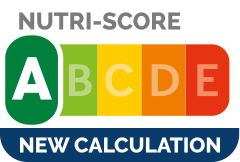
AVery good nutritional quality

Nutri-Score data warning

Warning: the amount of fruits, vegetables and nuts is not specified on the label, it was estimated from the list of ingredients: 46

Nutrient levels

Fat in moderate quantity (4.5%)
What you need to know • A high consumption of fat, especially saturated fats, can raise cholesterol, which increases the risk of heart diseases. Recommendation: Limit the consumption of fat and saturated fat • Choose products with lower fat and saturated fat content. Source: National Health Service UK (NHS) - Fat: the facts
Saturated fat in low quantity (1.2%)
What you need to know • A high consumption of fat, especially saturated fats, can raise cholesterol, which increases the risk of heart diseases. Recommendation: Limit the consumption of fat and saturated fat • Choose products with lower fat and saturated fat content. Source: National Health Service UK (NHS) - Fat: the facts
Sugars in low quantity (0.8%)
What you need to know • A high consumption of sugar can cause weight gain and tooth decay. It also augments the risk of type 2 diabetes and cardio-vascular diseases. Recommendation: Limit the consumption of sugar and sugary drinks • Sugary drinks (such as sodas, fruit beverages, and fruit juices and nectars) should be limited as much as possible (no more than 1 glass a day). • Choose products with lower sugar content and reduce the consumption of products with added sugars. Source: National Health Service UK (NHS) - Sugar: the facts
Salt in moderate quantity (0.5%)
What you need to know • A high consumption of salt (or sodium) can cause raised blood pressure, which can increase the risk of heart disease and stroke. • Many people who have high blood pressure do not know it, as there are often no symptoms. • Most people consume too much salt (on average 9 to 12 grams per day), around twice the recommended maximum level of intake. Recommendation: Limit the consumption of salt and salted food • Reduce the quantity of salt used when cooking, and don't salt again at the table. • Limit the consumption of salty snacks and choose products with lower salt content. Source: World Health Organization (WHO) - Fact sheet - Salt reduction Source: National Health Service UK (NHS) - Salt: the facts

Nutrition label

Paella Royale nutrition label

Nutrition facts

Nutrition factsAs sold for 100 g / 100 mlCompared to: Paella
Energy~ 642 kJ (140 kcal)579.331 kJ (140 kcal) (+11%)
Fat4.5 g4.396 g (+2%)
Saturated fat1.2 g0.944 g (+27%)
Carbohydrates19 g16.809 g (+13%)
Sugars0.8 g1.216 g (-34%)
Dietary fiber1 g?
Proteins8.5 g6.775 g (+25%)
Salt0.5 g0.888 g (-44%)
Sodium0.2 g0.355 g (-44%)
Fruits, vegetables and legumes~ 42.078125 %?

Nutrition facts (Detailed data)

Nutrition factsAs sold for 100 g / 100 mlAs sold Per 100 g (packaging)As sold Per 100 g (estimate)
Energy~ 642 kJ (140 kcal)? (140 kcal)?
Fat4.5 g4.5 g?
Saturated fat1.2 g1.2 g?
Carbohydrates19 g19 g?
Sugars0.8 g0.8 g?
Dietary fiber1 g1 g?
Proteins8.5 g8.5 g?
Salt0.5 g0.5 g?
Sodium0.2 g0.2 g?
Fruits, vegetables and legumes~ 42.078125 %?~ 42.078125 %

Serving size

470 g

Ingredients

Ingredients image

Paella Royale ingredients image

Ingredients list

GARNITURE 800 g [Sauce : eau, concentré de tomates, sel, sucre, huile de colza, arômes (dont crustacés, poisson et lait, exhausteurs de goût : mon glutamate de sodium, inosinate de sodium et guanylate de sodium), exhausteur de goût : mon glutamate de sodium, épaississants : gomme guar et farine de graines de caroube. Morceaux de cuisses de poulet non désossées et ailerons et/ou manchons de poulet 30 %. Légumes : carottes, petits pois, poivrons, oignons, Moules et/ou moules du Pacifique 7,5 %. Chorizo 3 % (maigre et gras de porc, piments, sel, dextrose de blé, épices et extraits d'épices, ferments lactiques, conservateurs : nitrite de sodium et ascorbate de sodium)]. RIZ 200 g. ÉPICES 0,8 g (dont curcumine).

Ingredient information

Filling
102.91% (estimate)
Sauce
43.66% (estimate)
Water
43.66% (estimate)
Tomato Concentrate
33.38% (estimate)
Salt
4% (estimate)
Sugar
4% (estimate)
Colza Oil
4% (estimate)
Flavouring
4% (estimate)
Crustaceans Flavouring
2% (estimate)
Fish
1% (estimate)
Milk Flavouring
0.5% (estimate)
Flavour Enhancer
0.25% (estimate)
Mon Glutamate De Sodium
0.25% (estimate)
E631
0.13% (estimate)
E627
0.13% (estimate)
Flavour Enhancer
4% (estimate)
Mon Glutamate De Sodium
4% (estimate)
Thickener
4% (estimate)
E412
2% (estimate)
Carob Seed Flour
1% (estimate)
Morceaux De Cuisses De Poulet Non Desossees Et Ailerons Et Manchons De Poulet
30.0%
Carrot
4% (estimate)
Garden Peas
2.69% (estimate)
Bell Pepper
1.34% (estimate)
Onion
0.67% (estimate)
Mussel
7.5%
Mussel
7.5%
Chorizo
3.0%
Salt
< 0.5% (estimate)
Rice
0.8%-49.6% (estimate)
Spice
0.8%
E100
0.8%-0.8% (estimate)

Added sugars

Contains added sugars (3%) Added sugars: sugar, wheat dextrose Quantity of added sugars: 3%

Allergens

CrustaceansFishGlutenMilkMolluscsMoules Du PacifiqueMoules Du Pacifique

Traces

CeleryGlutenMustardSoybeans

Ingredients analysis

Palm oil free
Yes

No ingredients containing palm oil.

Vegan
No

Contains non-vegan ingredients.

Unrecognized: fr:mon-glutamate-de-sodium, fr:mon-glutamate-de-sodium, fr:morceaux-de-cuisses-de-poulet-non-desossees-et-ailerons-et-manchons-de-poulet

Vegetarian
No

Contains non-vegetarian ingredients.

Unrecognized: fr:mon-glutamate-de-sodium, fr:mon-glutamate-de-sodium, fr:morceaux-de-cuisses-de-poulet-non-desossees-et-ailerons-et-manchons-de-poulet


Food Processing

NOVA group

4Ultra-processed food and drink products

Elements that indicate the product is in NOVA group 4

Additives
E412 - Guar gum
Additives
E627 - Disodium guanylate
Additives
E631 - Disodium inosinate
Ingredients
Dextrose
Ingredients
Flavour Enhancer
Ingredients
Flavouring
Ingredients
Glucose
Ingredients
Thickener

How NOVA works

The NOVA classification assigns food products into 4 groups based on their degree of processing: 1. Unprocessed or minimally processed foods 2. Processed culinary ingredients 3. Processed foods 4. Ultra-processed food and drink products

Additives

E250 - Sodium nitrite EFSA overexposure risk: highPreservative

Sodium nitrite (E250) is a salt used for curing and preserving meat products.

It plays a critical role in preventing the growth of Clostridium botulinum, the bacterium responsible for botulism, in cured meats like bacon, ham, and sausages. It also provides the characteristic pink color and flavor.

However, nitrites can react with amines in the stomach to form nitrosamines, which are potent carcinogens. High intake of processed meats containing nitrites is associated with an increased risk of colorectal cancer. Regulatory bodies have set strict limits on its use in food.

E301 - Sodium ascorbateAntioxidant

SODIUM ASCORBATE is one of a number of mineral salts of ascorbic acid (vitamin C).

E412 - Guar gumEmulsifierStabiliserThickener

Guar gum (E412) is a natural food additive derived from guar beans.

This white, odorless powder is valued for its remarkable thickening and stabilizing properties, making it a common ingredient in various food products, including sauces, dressings, and ice creams.

When used in moderation, guar gum is considered safe for consumption, with no known adverse health effects.

E627 - Disodium guanylate

Disodium guanylate, also known as sodium 5'-guanylate and disodium 5'-guanylate, is a natural sodium salt of the flavor enhancing nucleotide guanosine monophosphate (GMP). Disodium guanylate is a food additive with the E number E627. It is commonly used in conjunction with glutamic acid. As it is a fairly expensive additive, it is not used independently of glutamic acid; if disodium guanylate is present in a list of ingredients but MSG does not appear to be, it is likely that glutamic acid is provided as part of another ingredient such as a processed soy protein complex. It is often added to foods in conjunction with disodium inosinate; the combination is known as disodium 5'-ribonucleotides. Disodium guanylate is produced from dried seaweed and is often added to instant noodles, potato chips and other snacks, savory rice, tinned vegetables, cured meats, and packaged soup.

E631 - Disodium inosinate

Disodium inosinate (E631) is the disodium salt of inosinic acid with the chemical formula C10H11N4Na2O8P. It is used as a food additive and often found in instant noodles, potato chips, and a variety of other snacks. Although it can be obtained from bacterial fermentation of sugars, it is often commercially prepared from animal sources.

Environment

Green-Score, origins bonus, and transportation impact are shown for Worldwide .

Green Score

Overall grade

DHigh environmental impact

About Green-Score

The Green-Score is an experimental score that summarizes the environmental impacts of food products.

Current scope

The Green-Score was initially developed for France and it is being extended to other European countries. The Green-Score formula is subject to change as it is regularly improved to make it more precise and better suited to each country. Select a country to include the full impact of transportation in the final score.

Life cycle analysis

Average impact of the category

CPaëlla • Score: 54/100

Life-cycle reference

Category: Paëlla PEF environmental score: 0.50 Climate change impact: 3.28 kg CO2 eq / kg product The overall environmental impact figure (PEF) comes from ADEME's Agribalyse database, for the category: Paëlla. Source: ADEME Agribalyse Database.

Overall environmental impact by stage (PEF)

The overall environmental impact figure (PEF) comes from ADEME's Agribalyse database, for the category: Paëlla. Source: ADEME Agribalyse Database.

StageImpact
Agriculture74.1 %
Processing9.0 %
Packaging7.1 %
Transportation6.6 %
Distribution2.0 %
Consumption1.4 %

Bonuses and maluses

Declared origins

Origins of ingredients are missing for this product. Ingredients need to be completed before the transportation bonus can be computed precisely.

Packaging impact

Packaging with a high impact Malus: -15 Packaging score: -123.8

Green-Score for this product

Green-Score for this product

DFinal score: 34/100

Final score breakdown

Life cycle analysis score: 54 Sum of bonuses and maluses: -20 Final score: 34/100

Carbon footprint

Carbon footprint

Equivalent to driving 1.7 km in a petrol car. 328 g CO2e per 100g of product. Reference category: Paëlla. The carbon emission figure comes from ADEME's Agribalyse database, for the category: Paëlla. Source: ADEME Agribalyse Database.

Climate impact by stage (CO2e)

The carbon emission figure comes from ADEME's Agribalyse database, for the category: Paëlla. Source: ADEME Agribalyse Database.

StageImpact
Agriculture60.1 %
Processing9.7 %
Packaging16.6 %
Transportation12.0 %
Distribution1.3 %
Consumption0.6 %

Packaging

Packaging impact

Packaging with a high impact Malus: -15 Packaging score: -123.8

Packaging components

ShapeMaterialRecyclingImpact
LIDPP 5 PolypropyleneUnknownHigh
BAGPaperUnknownLow
BOXMetalUnknownHigh
POTUnknownUnknownHigh

Declared packaging

Metal, Pot, Box, Canned, Lid, Couvercle Ouverture Facile, Plastique 05 Pp, Sachet Papier

Data precision

The packaging information is not sufficiently precise to compute the most accurate packaging impact. Exact shapes and materials of all packaging components help improve the Green-Score.

Transportation

Manufacturing locations

Covi (Groupe Covi) - 341 Route de Clisson - 44230 Saint-Sébastien-sur-Loire,Loire-Atlantique,Pays de la Loire,France

Declared origins

Origins of ingredients are missing for this product. Ingredients need to be completed before the transportation bonus can be computed precisely.

Forest footprint

Forest footprint

Forest Footprint not computed Potential deforestation risk but not yet computed. Forest Footprint The Forest Footprint is a methodology developed by the association Envol Vert to estimate the risk of deforestation related to our consumption. → More information on the methodology Forest Footprint not computed Potential deforestation risk but not yet computed.

Deforestation risk details

Other risky ingredients These ingredients are not yet assessed for deforestation risk: rice chorizo fr:maigre et gras de porc

Data Source

Product data comes from Open Food Facts. Food Benchmark also adds translations, category comparisons and explanatory calculations.

The database is licensed under ODbL 1.0, individual contents under DbCL 1.0, and product photos under CC BY-SA 3.0.

Product added on September 22, 2014 at 5:48:16 AM UTC by jacob80 .

Last edit on March 13, 2026 at 2:20:16 PM UTC by new-nutrition-bot .

Product page also edited by jacob80, kiliweb, new-nutrition-bot, openfoodfacts-contributors, packbot, quentinbrd, yuka.VnJzL0tJVlFsdVUzd2RwaHdEREkvdng0MTdqNVh6dUlJcllWSVE9PQ.