

Chopped Tomatoes
Health
Nutrition
Nutri-Score
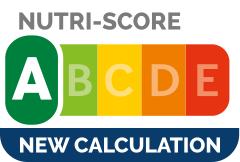 Very good nutritional quality
Nutri-Score data warning
Nutrient levels
Fat in low quantity (0.1%)
Saturated fat in low quantity (0%)
Sugars in low quantity (3%)
Salt in low quantity (0.05%)
Nutrition label

Nutrition facts
| Nutrition facts | As sold for 100 g / 100 ml | Compared to: Canned tomatoes |
|---|---|---|
| Energy | ~ 85.6 kJ (20 kcal) | 104.632 kJ (25 kcal) (-18%) |
| Fat | 0.1 g | 0.268 g (-63%) |
| Saturated fat | 0 g | 0.039 g (-100%) |
| Carbohydrates | 3 g | 3.934 g (-24%) |
| Sugars | 3 g | 3.326 g (-10%) |
| Dietary fiber | 1.1 g | ? |
| Proteins | 1.3 g | 1.19 g (+9%) |
| Salt | 0.05 g | 0.187 g (-73%) |
| Sodium | 0.02 g | 0.075 g (-73%) |
| Vitamin E | ~ 0.00065934 g | 0.761 mg (-13%) |
| Potassium | ~ 0.255744 g | 279.782 mg (-9%) |
| Calcium | ~ 0.00813186 g | 10.234 mg (-21%) |
| Iron | ~ 0.00011988 g | 0.179 mg (-33%) |
| Magnesium | ~ 0.0100899 g | 11.244 mg (-10%) |
| Zinc | ~ 0.000086913 g | 0.098 mg (-11%) |
| Copper | ~ 0.000028971 g | 0.034 mg (-15%) |
| Manganese | ~ 0.000065934 g | 0.075 mg (-12%) |
| Selenium | ~ 0.000004995 g | 5.58 µg (-10%) |
| Fruits, vegetables and legumes | ~ 99.9 % | ? |
Nutrition facts (Detailed data)
| Nutrition facts | As sold for 100 g / 100 ml | As sold Per 100 g (packaging) | As sold Per 100 g (estimate) |
|---|---|---|---|
| Energy | ~ 85.6 kJ (20 kcal) | ? (20 kcal) | ~ 81.0189 kJ (19 kcal) |
| Fat | 0.1 g | 0.1 g | ~ 0.25974 g |
| Saturated fat | 0 g | 0 g | ~ 0.055944 g |
| Carbohydrates | 3 g | 3 g | ~ 2.48751 g |
| Sugars | 3 g | 3 g | ~ 2.47752 g |
| Dietary fiber | 1.1 g | 1.1 g | ~ 1.1988 g |
| Proteins | 1.3 g | 1.3 g | ~ 0.85914 g |
| Salt | 0.05 g | 0.05 g | ~ 0.0080919 g |
| Sodium | 0.02 g | 0.02 g | ~ 0.00321678 g |
| Vitamin E | ~ 0.00065934 g | ? | ~ 0.00065934 g |
| Potassium | ~ 0.255744 g | ? | ~ 0.255744 g |
| Calcium | ~ 0.00813186 g | ? | ~ 0.00813186 g |
| Iron | ~ 0.00011988 g | ? | ~ 0.00011988 g |
| Magnesium | ~ 0.0100899 g | ? | ~ 0.0100899 g |
| Zinc | ~ 0.000086913 g | ? | ~ 0.000086913 g |
| Copper | ~ 0.000028971 g | ? | ~ 0.000028971 g |
| Manganese | ~ 0.000065934 g | ? | ~ 0.000065934 g |
| Selenium | ~ 0.000004995 g | ? | ~ 0.000004995 g |
| Fruits, vegetables and legumes | ~ 99.9 % | ? | ~ 99.9 % |
Serving size
Ingredients
Ingredients image

Ingredients list
Ingredient information
Ingredients analysis
No ingredients containing palm oil.
No non-vegan ingredients.
No non-vegetarian ingredients.
Food Processing
NOVA group
 Unprocessed or minimally processed foods
How NOVA works
Additives
E330 - Citric acidAntioxidantSequestrant
Citric acid is a natural organic acid found in citrus fruits such as lemons, oranges, and limes.
It is widely used in the food industry as a flavor enhancer, acidulant, and preservative due to its tart and refreshing taste.
Citric acid is safe for consumption when used in moderation and is considered a generally recognized as safe (GRAS) food additive by regulatory agencies worldwide.
Environment
Green-Score, origins bonus, and transportation impact are shown for Worldwide .
Green Score
Overall grade
 Very low environmental impact
About Green-Score
Current scope
Life cycle analysis
Average impact of the category
Tomato, raw • Score: 98/100Life-cycle reference
Overall environmental impact by stage (PEF)
The overall environmental impact figure (PEF) comes from ADEME's Agribalyse database, for the category: Tomato, raw. Source: ADEME Agribalyse Database.
| Stage | Impact |
|---|---|
| Agriculture | 62.4 % |
| Processing | 0.0 % |
| Packaging | 0.0 % |
| Transportation | 28.8 % |
| Distribution | 5.0 % |
| Consumption | 3.9 % |
Bonuses and maluses
Origins of ingredients
Packaging impact
Green-Score for this product
Green-Score for this product
Final score: 97/100Final score breakdown
Carbon footprint
Carbon footprint
Climate impact by stage (CO2e)
The carbon emission figure comes from ADEME's Agribalyse database, for the category: Tomato, raw. Source: ADEME Agribalyse Database.
| Stage | Impact |
|---|---|
| Agriculture | 43.3 % |
| Processing | 0.0 % |
| Packaging | 0.0 % |
| Transportation | 42.5 % |
| Distribution | 3.3 % |
| Consumption | 10.7 % |
Packaging

Packaging impact
Packaging components
| Shape | Material | Recycling | Impact |
|---|---|---|---|
| 1 CAN | Heavy Aluminium | Recycle | Medium |
Declared packaging
Transportation
Origins of ingredients
Origins breakdown
| Origin | Percent of ingredients | Impact |
|---|---|---|
| Italy | 100 % | Medium |
Forest footprint
Forest footprint
Deforestation risk details
Data Source
Product data comes from Open Food Facts. Food Benchmark also adds translations, category comparisons and explanatory calculations.
The database is licensed under ODbL 1.0, individual contents under DbCL 1.0, and product photos under CC BY-SA 3.0.
Product added on November 11, 2017 at 8:52:56 AM UTC by openfoodfacts-contributors .
Last edit on March 13, 2026 at 9:32:34 AM UTC by new-nutrition-bot .
Product page also edited by alia, alopix, autorotate-bot, ecoscore-impact-estimator, foodless, kiliweb, macrofactor, nah, new-nutrition-bot, openfoodfacts-contributors, rutht, swipe-studio, yuka.ILEbJYK1I8s5MvDCjLkLhzi7Juy8BfF5PVlUow, yuka.M-FfNtCkIO0ZQsLd-qYG3QPrLuDyE_1CPn4Xog, yuka.VEtOWlNLc2svZkFwbnNkbnB6RDFwUDFPNUkyVVpVQzRJZG9CSWc9PQ.