

Hosomakis
Health
Nutrition
Nutri-Score
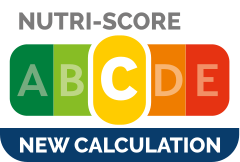 Average nutritional quality
Nutri-Score data warning
Nutrient levels
Fat in low quantity (2%)
Saturated fat in low quantity (0.3%)
Sugars in low quantity (4%)
Salt in moderate quantity (1.1%)
Nutrition label

Nutrition facts
| Nutrition facts | As sold for 100 g / 100 ml |
|---|---|
| Energy | 607 kcal (145 kcal) |
| Fat | 2 g |
| Saturated fat | 0.3 g |
| Carbohydrates | 26.8 g |
| Sugars | 4 g |
| Dietary fiber | ? |
| Proteins | 4.4 g |
| Salt | 1.1 g |
| Sodium | 0.44 g |
| Fruits, vegetables and legumes | ? |
Nutrition facts (Detailed data)
| Nutrition facts | As sold for 100 g / 100 ml | As sold Per serving (legacy) |
|---|---|---|
| Energy | 607 kcal (145 kcal) | 1470 kcal (351 kcal) |
| Fat | 2 g | 4.84 g |
| Saturated fat | 0.3 g | 0.726 g |
| Carbohydrates | 26.8 g | 64.8 g |
| Sugars | 4 g | 9.68 g |
| Dietary fiber | ? | ? |
| Proteins | 4.4 g | 10.6 g |
| Salt | 1.1 g | 2.66 g |
| Sodium | 0.44 g | 1.06 g |
| Fruits, vegetables and legumes | ? | ? |
Serving size
Ingredients
Ingredients image

Ingredients list
Ingredient information
Added sugars
Allergens
Traces
Ingredients analysis
Palm oil content unknown
Contains non-vegan ingredients.
Unrecognized: en:omelette, es:merluza-del-pacifico, es:la-trehalosa-es-una-fuente-de-glucosa, en:mustard, es:aceite-de-mostaza, es:preparado-de-jengibre
Contains non-vegetarian ingredients.
Unrecognized: en:omelette, es:merluza-del-pacifico, es:la-trehalosa-es-una-fuente-de-glucosa, en:mustard, es:aceite-de-mostaza, es:preparado-de-jengibre
Food Processing
NOVA group
 Ultra-processed food and drink products
Elements that indicate the product is in NOVA group 4
How NOVA works
Additives
E100 - CurcuminColour
No additive description is available yet.
E120 - CochinealColour
Cochineal extract or carmine (E120) is a natural red colorant derived from the dried bodies of the female cochineal insect.
It is widely used to impart a pink, red, or purple hue to various food and beverage products, including yogurts, ice creams, confectionery, and fruit juices.
Although it is a natural additive, E120 is known to cause severe allergic reactions, including anaphylaxis, in some individuals. It is also not suitable for vegetarians or vegans due to its insect origin.
E133 - Brilliant blue FCF EFSA overexposure risk: moderateColour
BRILLIANT BLUE FCF (Blue 1) is an organic compound classified as a blue triarylmethane dye, reflecting its chemical structure. Known under various commercial names, it is a colorant for foods and other substances.
E14XX - Modified StarchEmulsifierStabiliserThickener
No additive description is available yet.
E160c - Paprika extractColour
No additive description is available yet.
E202 - Potassium sorbate EFSA overexposure risk: highPreservative
Potassium sorbate (E202) is a synthetic food preservative commonly used to extend the shelf life of various food products.
It works by inhibiting the growth of molds, yeast, and some bacteria, preventing spoilage. When added to foods, it helps maintain their freshness and quality.
Some studies have shown that when combined with nitrites, potassium sorbate have genotoxic activity in vitro. However, potassium sorbate is generally recognized as safe (GRAS) by regulatory authorities.
E260 - Acetic acidPreservative
ACETIC ACID, systematically named ethanoic acid, is a colourless liquid organic compound with the chemical formula CH3COOH (also written as CH3CO2H or C2H4O2).
E301 - Sodium ascorbateAntioxidant
SODIUM ASCORBATE is one of a number of mineral salts of ascorbic acid (vitamin C).
E325 - sodium lactateAntioxidantEmulsifierHumectantThickener
SODIUM LACTATE is the sodium salt of lactic acid, and has a mild saline taste. It is produced by fermentation of a sugar source, such as corn or beets. It acts as a preservative, acidity regulator, and bulking agent.
E330 - Citric acidAntioxidantSequestrant
Citric acid is a natural organic acid found in citrus fruits such as lemons, oranges, and limes.
It is widely used in the food industry as a flavor enhancer, acidulant, and preservative due to its tart and refreshing taste.
Citric acid is safe for consumption when used in moderation and is considered a generally recognized as safe (GRAS) food additive by regulatory agencies worldwide.
E331 - Sodium citratesEmulsifierSequestrantStabiliser
DISODIUM CITRATE, more properly, disodium hydrogen citrate, is an acid salt of citric acid with the chemical formula Na2C6H6O7. It is used as an antioxidant in food and to improve the effects of other antioxidants. It is also used as an acidity regulator and sequestrant. Typical products include gelatin, jam, sweets, ice cream, carbonated beverages, milk powder, wine, and processed cheeses.
E415 - Xanthan gumEmulsifierStabiliserThickener
Xanthan gum (E415) is a natural polysaccharide derived from fermented sugars, often used in the food industry as a thickening and stabilizing agent.
This versatile food additive enhances texture and prevents ingredient separation in a wide range of products, including salad dressings, sauces, and gluten-free baked goods.
It is considered safe for consumption even at high intake amounts.
E420 - SorbitolHumectantSequestrantStabiliserSweetenerThickener
Sorbitol (), less commonly known as glucitol (), is a sugar alcohol with a sweet taste which the human body metabolizes slowly. It can be obtained by reduction of glucose, which changes the aldehyde group to a hydroxyl group. Most sorbitol is made from corn syrup, but it is also found in nature, for example in apples, pears, peaches, and prunes. It is converted to fructose by sorbitol-6-phosphate 2-dehydrogenase. Sorbitol is an isomer of mannitol, another sugar alcohol; the two differ only in the orientation of the hydroxyl group on carbon 2. While similar, the two sugar alcohols have very different sources in nature, melting points, and uses.
E472a - Acetic acid esters of mono- and diglycerides of fatty acidsEmulsifierSequestrantStabiliser
No additive description is available yet.
E951 - Aspartame EFSA overexposure risk: noSweetener
Aspartame (E951) is a low-calorie artificial sweetener composed of two amino acids.
It is used as a sugar substitute in thousands of "sugar-free" or "diet" products, such as carbonated soft drinks, chewing gum, yogurts, and tabletop sweeteners, to provide sweetness without the calories of sugar.
Despite being one of the most rigorously tested food additives, its safety remains controversial. While major regulatory bodies like the FDA and EFSA deem it safe for the general public, the IARC has classified it as "possibly carcinogenic to humans" (Group 2B). It must also be avoided by individuals with the genetic condition phenylketonuria (PKU).
E954 - saccharin and its saltsSweetener
Sodium saccharin (benzoic sulfimide) is an artificial sweetener with effectively no food energy. It is about 300–400 times as sweet as sucrose but has a bitter or metallic aftertaste, especially at high concentrations. Saccharin is used to sweeten products such as drinks, candies, cookies, and medicines.
E955 - SucraloseSweetener
Sucralose is an artificial sweetener and sugar substitute. The majority of ingested sucralose is not broken down by the body, so it is noncaloric. In the European Union, it is also known under the E number E955. It is produced by chlorination of sucrose. Sucralose is about 320 to 1,000 times sweeter than sucrose, three times as sweet as both aspartame and acesulfame potassium, and twice as sweet as sodium saccharin. Evidence of benefit is lacking for long-term weight loss with some data supporting weight gain and heart disease risks.It is stable under heat and over a broad range of pH conditions. Therefore, it can be used in baking or in products that require a long shelf life. The commercial success of sucralose-based products stems from its favorable comparison to other low-calorie sweeteners in terms of taste, stability, and safety. Common brand names of sucralose-based sweeteners are Splenda, Zerocal, Sukrana, SucraPlus, Candys, Cukren, and Nevella. Canderel Yellow also contains sucralose, but the original Canderel and Green Canderel do not.
Environment
Green-Score, origins bonus, and transportation impact are shown for Worldwide .
Green Score
Overall grade
 Unknown environmental impact
About Green-Score
Current scope
Green-Score availability
Bonuses and maluses
Declared origins
Packaging impact
Packaging
Packaging impact
Data precision
Transportation
Declared origins
Forest footprint
Forest footprint
Ingredients linked to forest pressure
| Ingredient | Type | Percent in product | Forest footprint |
|---|---|---|---|
| EGG | Oeufs Importés | 0.60 % | 0.00 |
| EGG White | Oeufs Importés | 0.14 % | 0.00 |
| EGG White | Oeufs Importés | 0.09 % | 0.00 |
| Free Range Eggs | Oeufs Importés | 0.55 % | 0.00 |
Data Source
Product data comes from Open Food Facts. Food Benchmark also adds translations, category comparisons and explanatory calculations.
The database is licensed under ODbL 1.0, individual contents under DbCL 1.0, and product photos under CC BY-SA 3.0.
Product added on June 10, 2019 at 1:39:57 PM UTC by elcoco .
Last edit on October 28, 2025 at 9:11:09 PM UTC by thaialagata .
Product page also edited by acuario, elcoco, elcoco.529b5c66c5425d4e0efa2370115003ea, gorgias, kiliweb, roboto-app, thaialagata, yuka.YWY0eUZLQUV2S01UZ2ZNRTR5cUxwOWhxMWFMMlpsT3NHZlFUSWc9PQ.