

Naan à l'ail
Health
Nutrition
Nutri-Score
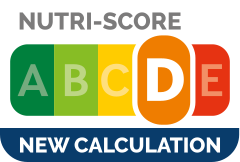 Lower nutritional quality
Nutri-Score data warning
Nutrient levels
Fat in moderate quantity (4.5%)
Saturated fat in low quantity (1%)
Sugars in low quantity (3%)
Salt in high quantity (1.88%)
Nutrition label

Nutrition facts
| Nutrition facts | As sold for 100 g / 100 ml | Compared to: Naans |
|---|---|---|
| Energy | ~ 1151.5 kJ (270 kcal) | 1,178.67 kJ (279 kcal) (-2%) |
| Fat | 4.5 g | 5.49 g (-18%) |
| Saturated fat | 1 g | 0.948 g (+5%) |
| Carbohydrates | 48 g | 47.468 g (+1%) |
| Sugars | 3 g | 3.227 g (-7%) |
| Dietary fiber | 2 g | ? |
| Proteins | 9 g | 8.204 g (+10%) |
| Salt | 1.875 g | 1.031 g (+82%) |
| Sodium | 0.75 g | 0.411 g (+82%) |
| Potassium | 0.125 g | 181.303 mg (-31%) |
| Calcium | 0.075 g | 53.356 mg (+41%) |
| Iron | 0.003 g | 2.014 mg (+49%) |
| Fruits, vegetables and legumes | ~ 0.018310546875 % | ? |
Nutrition facts (Detailed data)
| Nutrition facts | As sold for 100 g / 100 ml | As sold Per 100 g (estimate) | As sold Per serving (100 g) (packaging) |
|---|---|---|---|
| Energy | ~ 1151.5 kJ (270 kcal) | ? | ? (270 kcal) |
| Fat | 4.5 g | ? | 4.5 g |
| Saturated fat | 1 g | ? | 1 g |
| Carbohydrates | 48 g | ? | 48 g |
| Sugars | 3 g | ? | 3 g |
| Dietary fiber | 2 g | ? | 2 g |
| Proteins | 9 g | ? | 9 g |
| Salt | 1.875 g | ? | 1.875 g |
| Sodium | 0.75 g | ? | 0.75 g |
| Potassium | 0.125 g | ? | 0.125 g |
| Calcium | 0.075 g | ? | 0.075 g |
| Iron | 0.003 g | ? | 0.003 g |
| Fruits, vegetables and legumes | ~ 0.018310546875 % | ~ 0.018310546875 % | ? |
Serving size
Ingredients
Ingredients image

Ingredients list
Ingredient information
Added sugars
Allergens
Traces
Ingredients analysis
No ingredients containing palm oil.
Vegan status unknown
No non-vegetarian ingredients.
Food Processing
NOVA group
 Ultra-processed food and drink products
Elements that indicate the product is in NOVA group 4
How NOVA works
Additives
E202 - Potassium sorbate EFSA overexposure risk: highPreservative
Potassium sorbate (E202) is a synthetic food preservative commonly used to extend the shelf life of various food products.
It works by inhibiting the growth of molds, yeast, and some bacteria, preventing spoilage. When added to foods, it helps maintain their freshness and quality.
Some studies have shown that when combined with nitrites, potassium sorbate have genotoxic activity in vitro. However, potassium sorbate is generally recognized as safe (GRAS) by regulatory authorities.
E270 - Lactic acid
LACTIC ACID is an organic compound with the formula CH3CH(OH)CO2H. In the form of its conjugate base called lactate (this is thus different and kept as a separate ingredient). Lactic acid is chiral, consisting of two optical isomers. One is known as L-(+)-lactic acid or (S)-lactic acid and the other, its mirror image, is D-(−)-lactic acid or (R)-lactic acid in food the L-variant is used
E282 - calcium propionatePreservative
CALCIUM PROPIONATE has the formula Ca(C2H5COO)2. Calcium propionate is used as a preservative in a wide variety of products, including but not limited to:bread, other baked goods, processed meat, whey, and other dairy products.
E297 - Fumaric acid
Fumaric acid or trans-butenedioic acid is the chemical compound with the formula HO2CCH=CHCO2H. It is produced in eukaryotic organisms from succinate in complex 2 of the electron transport chain via the enzyme succinate dehydrogenase. It is one of two isomeric unsaturated dicarboxylic acids, the other being maleic acid. In fumaric acid the carboxylic acid groups are trans (E) and in maleic acid they are cis (Z). Fumaric acid has a fruit-like taste. The salts and esters are known as fumarates. Fumarate can also refer to the C4H2O2−4 ion (in solution).
E327 - calcium lactateThickener
Calcium lactate is a white crystalline salt with formula C6H10CaO6, consisting of two lactate anions H3C(CHOH)CO−2 for each calcium cation Ca2+. It forms several hydrates, the most common being the pentahydrate C6H10CaO6·5H2O. Calcium lactate is used in medicine, mainly to treat calcium deficiencies; and as a food additive with E number of E327. Some cheese crystals consist of calcium lactate.
Environment
Green-Score, origins bonus, and transportation impact are shown for Worldwide .
Green Score
Overall grade
 Unknown environmental impact
About Green-Score
Current scope
Green-Score availability
Bonuses and maluses
Declared origins
Packaging impact
Packaging
Packaging impact
Data precision
Transportation
Declared origins
Forest footprint
Forest footprint
Deforestation risk details
Data Source
Product data comes from Open Food Facts. Food Benchmark also adds translations, category comparisons and explanatory calculations.
The database is licensed under ODbL 1.0, individual contents under DbCL 1.0, and product photos under CC BY-SA 3.0.
Product added on September 8, 2018 at 4:37:51 PM UTC by kiliweb .
Last edit on March 3, 2026 at 9:54:29 AM UTC by new-nutrition-bot .
Product page also edited by bazcalou, inf, kiliweb, macrofactor, new-nutrition-bot, openfoodfacts-contributors, yuka.UnE4YUN2OHMvK1V4aTlnMHBSSC9vdEpQOXFDR1R6aTdDN0k3SVE9PQ.