

garden vegetable
Health
Nutrition
Nutri-Score
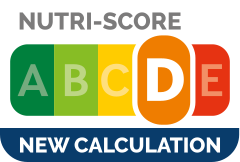 Lower nutritional quality
Nutri-Score data warning
Nutrient levels
Fat in high quantity (22.6%)
Saturated fat in high quantity (12.9%)
Sugars in low quantity (3.23%)
Salt in low quantity (0.0484%)
Nutrition label

Nutrition facts
| Nutrition facts | As sold for 100 g / 100 ml | Compared to: Cream cheeses |
|---|---|---|
| Energy | ~ 1054.83870967742 kJ (258 kcal) | 802.901 kJ (194 kcal) (+31%) |
| Fat | 22.5806451612903 g | 15.827 g (+43%) |
| Saturated fat | 12.9032258064516 g | 10.414 g (+24%) |
| Monounsaturated fat | 0 g | 3.849 g (-100%) |
| Polyunsaturated fat | 0 g | 0.448 g (-100%) |
| Trans fat | 0 g | 0.25 g (-100%) |
| Cholesterol | 0.0483870967741935 g | 61.759 mg (-22%) |
| Carbohydrates | 6.45161290322581 g | 4.378 g (+47%) |
| Sugars | 3.2258064516129 g | 3.895 g (-17%) |
| Added sugars | 0 g | 0.439 g (-100%) |
| Starch | 0 g | 0.063 g (-100%) |
| Dietary fiber | 0 g | ? |
| Proteins | 6.45161290322581 g | 7.332 g (-12%) |
| Salt | 0.0483870967741935 g | 0.517 g (-91%) |
| Sodium | 0.0193548387096774 g | 0.207 g (-91%) |
| Alcohol | 0 % vol | ? |
| Vitamin A | 0 g | 139.1 µg (-100%) |
| Vitamin D | 0 g | 0.241 µg (-100%) |
| Vitamin E | 0 g | 0.378 mg (-100%) |
| Vitamin K | 0 g | 0 µg |
| Vitamin C | 0 g | ? |
| Potassium | 0 g | 137.014 mg (-100%) |
| Calcium | 0.0967741935483871 g | 343.14 mg (-72%) |
| Phosphorus | 0 g | 251.64 mg (-100%) |
| Iron | 0 g | 0.201 mg (-100%) |
| Magnesium | 0 g | 19.338 mg (-100%) |
| Zinc | 0 g | 1.524 mg (-100%) |
| Copper | 0 g | 0.072 mg (-100%) |
| Manganese | 0 g | 0.038 mg (-100%) |
| Selenium | 0 g | 4.6 µg (-100%) |
| Caffeine | 0 g | 0 mg |
| Fruits, vegetables and legumes | ~ 5.91985294117647 % | ? |
| Choline | 0 g | 0 g |
Nutrition facts (Detailed data)
| Nutrition facts | As sold for 100 g / 100 ml | As sold Per 100 g (packaging) | As sold Per serving (31 g) (packaging) | As sold Per 100 g (estimate) |
|---|---|---|---|---|
| Energy | ~ 1054.83870967742 kJ (258 kcal) | ? (258 kcal) | ? (80 kcal) | ? |
| Fat | 22.5806451612903 g | ? | 7 g | ? |
| Saturated fat | 12.9032258064516 g | ? | 4 g | ? |
| Monounsaturated fat | 0 g | ? | 0 g | ? |
| Polyunsaturated fat | 0 g | ? | 0 g | ? |
| Trans fat | 0 g | ? | 0 g | ? |
| Cholesterol | 0.0483870967741935 g | ? | 0.015 g | ? |
| Carbohydrates | 6.45161290322581 g | ? | 2 g | ? |
| Sugars | 3.2258064516129 g | ? | 1 g | ? |
| Added sugars | 0 g | ? | 0 g | ~ 0 g |
| Starch | 0 g | ? | 0 g | ? |
| Dietary fiber | 0 g | ? | 0 g | ? |
| Proteins | 6.45161290322581 g | ? | 2 g | ? |
| Salt | 0.0483870967741935 g | ? | 0.015 g | ? |
| Sodium | 0.0193548387096774 g | ? | 0.006 g | ? |
| Alcohol | 0 % vol | ? | 0 % vol | ? |
| Vitamin A | 0 g | ? | 0 g | ? |
| Vitamin D | 0 g | ? | 0 g | ? |
| Vitamin E | 0 g | ? | 0 g | ? |
| Vitamin K | 0 g | ? | 0 g | ? |
| Vitamin C | 0 g | ? | 0 g | ? |
| Potassium | 0 g | ? | 0 g | ? |
| Calcium | 0.0967741935483871 g | ? | 0.03 g | ? |
| Phosphorus | 0 g | ? | 0 g | ? |
| Iron | 0 g | ? | 0 g | ? |
| Magnesium | 0 g | ? | 0 g | ? |
| Zinc | 0 g | ? | 0 g | ? |
| Copper | 0 g | ? | 0 g | ? |
| Manganese | 0 g | ? | 0 g | ? |
| Selenium | 0 g | ? | 0 g | ? |
| Caffeine | 0 g | ? | 0 g | ? |
| Fruits, vegetables and legumes | ~ 5.91985294117647 % | ? | ? | ~ 5.91985294117647 % |
| Choline | 0 g | ? | 0 g | ? |
Serving size
Ingredients
Ingredients list
Ingredient information
Allergens
Ingredients analysis
No ingredients containing palm oil.
Unrecognized: en:red-bell-peppers-green-bell-peppers, en:contai
Contains non-vegan ingredients.
Unrecognized: en:red-bell-peppers-green-bell-peppers, en:contai
Vegetarian status unknown
Unrecognized: en:red-bell-peppers-green-bell-peppers, en:contai
Food Processing
NOVA group
 Ultra-processed food and drink products
Elements that indicate the product is in NOVA group 4
How NOVA works
Additives
E270 - Lactic acid
LACTIC ACID is an organic compound with the formula CH3CH(OH)CO2H. In the form of its conjugate base called lactate (this is thus different and kept as a separate ingredient). Lactic acid is chiral, consisting of two optical isomers. One is known as L-(+)-lactic acid or (S)-lactic acid and the other, its mirror image, is D-(−)-lactic acid or (R)-lactic acid in food the L-variant is used
E410 - Locust bean gumEmulsifierStabiliserThickener
Locust bean gum (LBG, also known as carob gum, carob bean gum, carobin, E410) is a thickening agent and a gelling agent used in food technology.
E412 - Guar gumEmulsifierStabiliserThickener
Guar gum (E412) is a natural food additive derived from guar beans.
This white, odorless powder is valued for its remarkable thickening and stabilizing properties, making it a common ingredient in various food products, including sauces, dressings, and ice creams.
When used in moderation, guar gum is considered safe for consumption, with no known adverse health effects.
E415 - Xanthan gumEmulsifierStabiliserThickener
Xanthan gum (E415) is a natural polysaccharide derived from fermented sugars, often used in the food industry as a thickening and stabilizing agent.
This versatile food additive enhances texture and prevents ingredient separation in a wide range of products, including salad dressings, sauces, and gluten-free baked goods.
It is considered safe for consumption even at high intake amounts.
Environment
Green-Score, origins bonus, and transportation impact are shown for Worldwide .
Green Score
Overall grade
 High environmental impact
About Green-Score
Current scope
Life cycle analysis
Average impact of the category
 Camembert cheese, from cow's milk • Score: 54/100
Life-cycle reference
Overall environmental impact by stage (PEF)
The overall environmental impact figure (PEF) comes from ADEME's Agribalyse database, for the category: Camembert cheese, from cow's milk. Source: ADEME Agribalyse Database.
| Stage | Impact |
|---|---|
| Agriculture | 84.7 % |
| Processing | 5.0 % |
| Packaging | 4.0 % |
| Transportation | 3.7 % |
| Distribution | 1.9 % |
| Consumption | 0.5 % |
Bonuses and maluses
Declared origins
Packaging impact
Green-Score for this product
Green-Score for this product
Final score: 34/100Final score breakdown
Carbon footprint
Carbon footprint
Climate impact by stage (CO2e)
The carbon emission figure comes from ADEME's Agribalyse database, for the category: Camembert cheese, from cow's milk. Source: ADEME Agribalyse Database.
| Stage | Impact |
|---|---|
| Agriculture | 86.0 % |
| Processing | 4.3 % |
| Packaging | 4.1 % |
| Transportation | 4.8 % |
| Distribution | 0.7 % |
| Consumption | 0.1 % |
Packaging
Packaging impact
Data precision
Transportation
Declared origins
Forest footprint
Forest footprint
Deforestation risk details
Data Source
Product data comes from Open Food Facts. Food Benchmark also adds translations, category comparisons and explanatory calculations.
The database is licensed under ODbL 1.0, individual contents under DbCL 1.0, and product photos under CC BY-SA 3.0.
Product added on March 10, 2017 at 10:29:44 AM UTC by usda-ndb-import .
Last edit on March 16, 2026 at 4:07:36 PM UTC by municorn-calorie-counter-app .
Product page also edited by foodless, inf, kiliweb, municorn-calorie-counter-app, openfoodfacts-contributors, ryno, usda-ndb-import, yuka.SGY0OU9id0NvZVlxcWRvZW96enN3TngzM2FiekFIbVpLTm9ESWc9PQ, yuka.sY2b0xO6T85zoF3NwEKvlnROYciFuzebNT7jhFOX4omiHrbCPM1NuqrlNag.
Source List