ProductsSeattle Chocolate Company IncSeattle Chocolates, Assorted Chocolate Truffles
NO_IMAGE
Barcode 0081014090584
Seattle Chocolate Company Inc

Seattle Chocolates, Assorted Chocolate Truffles

BARCODE:0081014090584
BRAND OWNER:Seattle Chocolate Company, Inc
CATEGORIES:Snacks, Sweet Snacks, Cocoa And Its Products, Confectioneries, Chocolate Candies, Chocolates, Assorted Chocolates
COUNTRIES:United States

Health

Nutrition

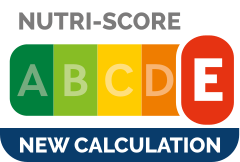
Nutri-Score

ELower nutritional quality

Nutri-Score data warning

Warning: the amount of fruits, vegetables and nuts is not specified on the label, it was estimated from the list of ingredients: 1

Nutrient levels

Fat in high quantity (42.1%)
What you need to know • A high consumption of fat, especially saturated fats, can raise cholesterol, which increases the risk of heart diseases. Recommendation: Limit the consumption of fat and saturated fat • Choose products with lower fat and saturated fat content. Source: National Health Service UK (NHS) - Fat: the facts
Saturated fat in high quantity (26.3%)
What you need to know • A high consumption of fat, especially saturated fats, can raise cholesterol, which increases the risk of heart diseases. Recommendation: Limit the consumption of fat and saturated fat • Choose products with lower fat and saturated fat content. Source: National Health Service UK (NHS) - Fat: the facts
Sugars in high quantity (39.5%)
What you need to know • A high consumption of sugar can cause weight gain and tooth decay. It also augments the risk of type 2 diabetes and cardio-vascular diseases. Recommendation: Limit the consumption of sugar and sugary drinks • Sugary drinks (such as sodas, fruit beverages, and fruit juices and nectars) should be limited as much as possible (no more than 1 glass a day). • Choose products with lower sugar content and reduce the consumption of products with added sugars. Source: National Health Service UK (NHS) - Sugar: the facts
Salt in low quantity (0.133%)
What you need to know • A high consumption of salt (or sodium) can cause raised blood pressure, which can increase the risk of heart disease and stroke. • Many people who have high blood pressure do not know it, as there are often no symptoms. • Most people consume too much salt (on average 9 to 12 grams per day), around twice the recommended maximum level of intake. Recommendation: Limit the consumption of salt and salted food • Reduce the quantity of salt used when cooking, and don't salt again at the table. • Limit the consumption of salty snacks and choose products with lower salt content. Source: World Health Organization (WHO) - Fact sheet - Salt reduction Source: National Health Service UK (NHS) - Salt: the facts

Nutrition facts

Nutrition factsAs sold for 100 g / 100 mlCompared to: Assorted chocolates
Energy2314 kcal (553 kcal)2,270.599 kJ (550 kcal)
Fat42.11 g35.92 g (+17%)
Saturated fat26.32 g20.563 g (+28%)
Trans fat0 g0.026 g (-100%)
Cholesterol0.013 mg12.49 mg (-100%)
Carbohydrates50 g47.903 g (+4%)
Sugars39.47 g43.328 g (-9%)
Dietary fiber5.3 g?
Proteins5.26 g6.993 g (-25%)
Salt0.1325 mg0.149 g (-100%)
Sodium0.053 mg0.059 g (-100%)
Vitamin A0 IU29.831 µg
Vitamin C0 mg?
Calcium0.053 mg134.515 mg (-100%)
Iron0.00947 mg2.387 mg (-100%)
Fruits, vegetables and legumes??

Nutrition facts (Detailed data)

Nutrition factsAs sold for 100 g / 100 mlAs sold Per serving (legacy)
Energy2314 kcal (553 kcal)879 kcal (210 kcal)
Fat42.11 g16 g
Saturated fat26.32 g10 g
Trans fat0 g0 g
Cholesterol0.013 mg0.00494 mg
Carbohydrates50 g19 g
Sugars39.47 g15 g
Dietary fiber5.3 g2.01 g
Proteins5.26 g2 g
Salt0.1325 mg0.0503 mg
Sodium0.053 mg0.0201 mg
Vitamin A0 IU0 IU
Vitamin C0 mg0 mg
Calcium0.053 mg0.0201 mg
Iron0.00947 mg0.0036 mg
Fruits, vegetables and legumes??

Serving size

4 PIECES (38 g)

Ingredients

Ingredients list

Dark chocolate (chocolate liquor, cane sugar, cocoa powder, cocoa butter, soya lecithin, natural vanilla), milk chocolate (cane sugar, cocoa butter, milk, chocolate liquor, soya lecithin, natural vanilla), natural toffee (cane sugar, butter, rice syrup, chocolate liquor, cocoa butter, salt, soya lecithin, natural flavor), non-hydrogenated coconut oil, glazed peanuts (peanuts, non-gmo corn syrup, rice bran oil, cane sugar, salt), cocoa nibs (roasted cocoa nibs, dark chocolate (cane sugar, cocoa mass, cocoa butter, soya lecithin, natural vanilla flavor], acacia gum), sea salt.

Ingredient information

Dark Chocolate
55.56% (estimate)
Cocoa Paste
28.7% (estimate)
Cane Sugar
13.43% (estimate)
Cocoa Powder
6.71% (estimate)
Cocoa Butter
3.36% (estimate)
Soya Lecithin
1.68% (estimate)
Natural Vanilla
1.68% (estimate)
Milk Chocolate
22.22% (estimate)
Cane Sugar
11.11% (estimate)
Cocoa Butter
5.56% (estimate)
Milk
2.78% (estimate)
Cocoa Paste
1.39% (estimate)
Soya Lecithin
0.69% (estimate)
Natural Vanilla
0.69% (estimate)
Natural Toffee
11.11% (estimate)
Cane Sugar
5.56% (estimate)
Butter
2.78% (estimate)
Rice Syrup
1.39% (estimate)
Cocoa Paste
0.69% (estimate)
Cocoa Butter
0.35% (estimate)
Salt
0.07% (estimate)
Soya Lecithin
0.07% (estimate)
Natural Flavouring
0.21% (estimate)
Coconut Oil
5.56% (estimate)
Glazed Peanuts
2.78% (estimate)
Peanut
1.39% (estimate)
Non Gmo Corn Syrup
0.69% (estimate)
Rice Bran Oil
0.35% (estimate)
Cane Sugar
0.17% (estimate)
Salt
0.17% (estimate)
Cocoa Nibs
1.39% (estimate)
Cocoa Nibs
0.69% (estimate)
Dark Chocolate
0.35% (estimate)
Cane Sugar
0.17% (estimate)
Cocoa Paste
0.09% (estimate)
Cocoa Butter
0.04% (estimate)
Soya Lecithin
0.02% (estimate)
Natural Vanilla Flavouring
0.01% (estimate)
E414
0.01% (estimate)
Sea Salt
0.35% (estimate)

Added sugars

Contains added sugars (~ 31%) Added sugars: cane sugar, rice syrup Estimated quantity of added sugars in ingredients: 31%

Allergens

MilkPeanutsSoybeans

Ingredients analysis

Palm oil free
Unknown

Palm oil content unknown

Unrecognized: en:natural-toffee, en:glazed-peanuts, en:non-gmo-corn-syrup

Vegan
No

Contains non-vegan ingredients.

Unrecognized: en:natural-toffee, en:glazed-peanuts, en:non-gmo-corn-syrup

Vegetarian
Unknown

Vegetarian status unknown

Unrecognized: en:natural-toffee, en:glazed-peanuts, en:non-gmo-corn-syrup


Food Processing

NOVA group

4Ultra-processed food and drink products

Elements that indicate the product is in NOVA group 4

Additives
E322 - Lecithins
Additives
E414 - Acacia gum
Ingredients
Flavouring

How NOVA works

The NOVA classification assigns food products into 4 groups based on their degree of processing: 1. Unprocessed or minimally processed foods 2. Processed culinary ingredients 3. Processed foods 4. Ultra-processed food and drink products

Additives

E322 - LecithinsAntioxidantEmulsifier

Lecithins are natural compounds commonly used in the food industry as emulsifiers and stabilizers.

Extracted from sources like soybeans and eggs, lecithins consist of phospholipids that enhance the mixing of oil and water, ensuring smooth textures in various products like chocolates, dressings, and baked goods.

They do not present any known health risks.

E322i - LecithinAntioxidantEmulsifier

Lecithins are natural compounds commonly used in the food industry as emulsifiers and stabilizers.

Extracted from sources like soybeans and eggs, lecithins consist of phospholipids that enhance the mixing of oil and water, ensuring smooth textures in various products like chocolates, dressings, and baked goods.

They do not present any known health risks.

E414 - Acacia gumCarrierEmulsifierStabiliserThickener

Gum arabic, also known as acacia gum, arabic gum, gum acacia, acacia, Senegal gum and Indian gum, and by other names, is a natural gum consisting of the hardened sap of various species of the acacia tree. Originally, gum arabic was collected from Acacia nilotica which was called the "gum arabic tree"; in the present day, gum arabic is collected from acacia species, predominantly Acacia senegal and Vachellia (Acacia) seyal; the term "gum arabic" does not indicate a particular botanical source. In a few cases so‐called "gum arabic" may not even have been collected from Acacia species, but may originate from Combretum, Albizia or some other genus. Producers harvest the gum commercially from wild trees, mostly in Sudan (80%) and throughout the Sahel, from Senegal to Somalia—though it is historically cultivated in Arabia and West Asia. Gum arabic is a complex mixture of glycoproteins and polysaccharides. It is the original source of the sugars arabinose and ribose, both of which were first discovered and isolated from it, and are named after it. Gum arabic is soluble in water. It is edible, and used primarily in the food industry as a stabilizer, with EU E number E414. Gum arabic is a key ingredient in traditional lithography and is used in printing, paint production, glue, cosmetics and various industrial applications, including viscosity control in inks and in textile industries, though less expensive materials compete with it for many of these roles. While gum arabic is now produced throughout the African Sahel, it is still harvested and used in the Middle East.

Environment

Green-Score, origins bonus, and transportation impact are shown for Worldwide .

Green Score

Overall grade

UnknownUnknown environmental impact

About Green-Score

The Green-Score is an experimental score that summarizes the environmental impacts of food products.

Current scope

The Green-Score was initially developed for France and it is being extended to other European countries. The Green-Score formula is subject to change as it is regularly improved to make it more precise and better suited to each country. Select a country to include the full impact of transportation in the final score.

Green-Score availability

We could not compute the Green-Score of this product because some data is missing. A more precise category, ingredients list, origins or packaging data can unlock the computation.

Bonuses and maluses

Declared origins

Origins of ingredients are missing for this product. Ingredients need to be completed before the transportation bonus can be computed precisely.

Packaging impact

Packaging with a high impact Malus: -15 The information about the packaging of this product is not filled in.

Packaging

Packaging impact

Packaging with a high impact Malus: -15 The information about the packaging of this product is not filled in.

Data precision

The packaging information is not sufficiently precise to compute the most accurate packaging impact. Exact shapes and materials of all packaging components help improve the Green-Score.

Transportation

Declared origins

Origins of ingredients are missing for this product. Ingredients need to be completed before the transportation bonus can be computed precisely.

Data Source

Product data comes from Open Food Facts. Food Benchmark also adds translations, category comparisons and explanatory calculations.

The database is licensed under ODbL 1.0, individual contents under DbCL 1.0, and product photos under CC BY-SA 3.0.

Product added on March 9, 2017 at 4:19:52 PM UTC by usda-ndb-import .

Last edit on April 22, 2020 at 8:45:23 PM UTC by org-database-usda .

Product page also edited by clockwerx, org-database-usda, usda-ndb-import.

Source List