

Hawaiian Sweet Mini Sub Rolls
Health
Nutrition
Nutri-Score
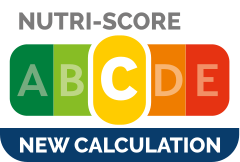 Average nutritional quality
Nutri-Score data warning
Nutrient levels
Fat in moderate quantity (5.4%)
Saturated fat in moderate quantity (3.04%)
Sugars in moderate quantity (10.9%)
Salt in low quantity (0.195%)
Nutrition facts
| Nutrition facts | As sold for 100 g / 100 ml | Compared to: Breads |
|---|---|---|
| Energy | ~ 1104.88177153269 kJ (261 kcal) | 1,245.598 kJ (294 kcal) (-11%) |
| Fat | ~ 5.40453418779373 g | 5.131 g (+5%) |
| Saturated fat | ~ 3.03591481938362 g | 0.904 g (+236%) |
| Trans fat | 0 g | 0 g |
| Carbohydrates | ~ 45.6283058077494 g | 50.54 g (-10%) |
| Sugars | ~ 10.8916770019531 g | 3.589 g (+203%) |
| Dietary fiber | ~ 3.64583947499593 g | ? |
| Proteins | ~ 5.83595013570786 g | 9.281 g (-37%) |
| Salt | ~ 0.194690420446401 g | 1.224 g (-84%) |
| Fruits, vegetables and legumes | ~ 0 % | ? |
| Choline | 0 g | 0 g |
Nutrition facts (Detailed data)
| Nutrition facts | As sold for 100 g / 100 ml | As sold Per 100 g (estimate) | As sold Per serving (57 g) (packaging) |
|---|---|---|---|
| Energy | ~ 1104.88177153269 kJ (261 kcal) | ~ 1104.88177153269 kJ (261 kcal) | ? (180 kcal) |
| Fat | ~ 5.40453418779373 g | ~ 5.40453418779373 g | 4 g |
| Saturated fat | ~ 3.03591481938362 g | ~ 3.03591481938362 g | 2.5 g |
| Trans fat | 0 g | ? | 0 g |
| Carbohydrates | ~ 45.6283058077494 g | ~ 45.6283058077494 g | 29 g |
| Sugars | ~ 10.8916770019531 g | ~ 10.8916770019531 g | 10 g |
| Dietary fiber | ~ 3.64583947499593 g | ~ 3.64583947499593 g | 1 g |
| Proteins | ~ 5.83595013570786 g | ~ 5.83595013570786 g | 5 g |
| Salt | ~ 0.194690420446401 g | ~ 0.194690420446401 g | 0.375 g |
| Fruits, vegetables and legumes | ~ 0 % | ~ 0 % | ? |
| Choline | 0 g | ? | 0 g |
Serving size
Ingredients
Ingredients list
Ingredient information
Added sugars
Allergens
Ingredients analysis
Palm oil content unknown
Contains non-vegan ingredients.
Unrecognized: en:reduced-iron, en:degerminated-yellow-corn-flour, en:inactive-yeast, en:sorbic-acid-preservative, en:ascorbic-acid-added-as-a-dough-conditioner
Vegetarian status unknown
Unrecognized: en:reduced-iron, en:degerminated-yellow-corn-flour, en:inactive-yeast, en:sorbic-acid-preservative, en:ascorbic-acid-added-as-a-dough-conditioner
Food Processing
NOVA group
 Ultra-processed food and drink products
Elements that indicate the product is in NOVA group 4
How NOVA works
Additives
E341 - Calcium phosphates EFSA overexposure risk: highEmulsifierHumectantSequestrantStabiliserThickener
Calcium phosphate is a family of materials and minerals containing calcium ions (Ca2+) together with inorganic phosphate anions. Some so-called calcium phosphates contain oxide and hydroxide as well. They are white solids of nutritious value.
E341i - Monocalcium phosphateEmulsifierHumectantSequestrantStabiliserThickener
No additive description is available yet.
E460 - CelluloseCarrierEmulsifierHumectantStabiliserThickener
CELLULOSE is an organic compound with the formula (C6H10O5)n, a polysaccharide consisting of a linear chain of several hundred to many thousands of linked D-glucose units. Cellulose is used as emulsifier, thickener and stabilizer in processed foods. Cellulose powder is, for example, used in processed cheese to prevent caking inside the package.
E460i - Microcrystalline celluloseCarrierEmulsifierHumectantStabiliserThickener
No additive description is available yet.
E471 - Mono- and diglycerides of fatty acidsEmulsifierStabiliser
Mono- and diglycerides of fatty acids (E471), are food additives commonly used as emulsifiers in various processed foods.
These compounds consist of glycerol molecules linked to one or two fatty acid chains, which help stabilize and blend water and oil-based ingredients. E471 enhances the texture and shelf life of products like margarine, baked goods, and ice cream, ensuring a smooth and consistent texture.
It is generally considered safe for consumption within established regulatory limits.
E472e - Mono- and diacetyltartaric acid esters of mono- and diglycerides of fatty acidsEmulsifierSequestrantStabiliser
No additive description is available yet.
E481 - Sodium stearoyl-2-lactylate EFSA overexposure risk: highEmulsifierStabiliser
Sodium stearoyl-2-lactylate (sodium stearoyl lactylate or SSL) is a versatile, FDA approved food additive used to improve the mix tolerance and volume of processed foods. It is one type of a commercially available lactylate. SSL is non-toxic, biodegradable, and typically manufactured using biorenewable feedstocks. Because SSL is a safe and highly effective food additive, it is used in a wide variety of products ranging from baked goods and desserts to pet foods.As described by the Food Chemicals Codex 7th edition, SSL is a cream-colored powder or brittle solid. SSL is currently manufactured by the esterification of stearic acid with lactic acid and partially neutralized with either food-grade soda ash (sodium carbonate) or caustic soda (concentrated sodium hydroxide). Commercial grade SSL is a mixture of sodium salts of stearoyl lactylic acids and minor proportions of other sodium salts of related acids. The HLB for SSL is 10-12. SSL is slightly hygroscopic, soluble in ethanol and in hot oil or fat, and dispersible in warm water. These properties are the reason that SSL is an excellent emulsifier for fat-in-water emulsions and can also function as a humectant.
E491 - Sorbitan monostearate EFSA overexposure risk: highEmulsifier
Sorbitan monostearate is an ester of sorbitan (a sorbitol derivative) and stearic acid and is sometimes referred to as a synthetic wax. It is primarily used as an emulsifier to keep water and oils mixed. Sorbitan monostearate is used in the manufacture of food and healthcare products and is a non-ionic surfactant with emulsifying, dispersing, and wetting properties. It is also employed to create synthetic fibers, metal machining fluid, and brighteners in the leather industry, and as an emulsifier in coatings, pesticides, and various applications in the plastics, food and cosmetics industries. Sorbitans are also known as "Spans". Sorbitan monostearate has been approved by the European Union for use as a food additive (emulsifier) (E number: E 491)
E517 - Ammonium sulphate
Ammonium sulfate (American English and international scientific usage; ammonium sulphate in British English); (NH4)2SO4, is an inorganic salt with a number of commercial uses. The most common use is as a soil fertilizer. It contains 21% nitrogen and 24% sulfur.
E552 - Calcium silicate
Calcium silicate is the chemical compound Ca2SiO4, also known as calcium orthosilicate and is sometimes formulated as 2CaO·SiO2. It is also referred to by the shortened trade name Cal-Sil or Calsil.
E554 - Sodium aluminium silicate
No additive description is available yet.
Environment
Green-Score, origins bonus, and transportation impact are shown for Worldwide .
Green Score
Overall grade
 Unknown environmental impact
About Green-Score
Current scope
Green-Score availability
Bonuses and maluses
Declared origins
Packaging impact
Packaging
Packaging impact
Data precision
Transportation
Declared origins
Forest footprint
Forest footprint
Ingredients linked to forest pressure
| Ingredient | Type | Percent in product | Forest footprint |
|---|---|---|---|
| EGG | Oeufs Importés | 4.58 % | 0.00 |
Data Source
Product data comes from Open Food Facts. Food Benchmark also adds translations, category comparisons and explanatory calculations.
The database is licensed under ODbL 1.0, individual contents under DbCL 1.0, and product photos under CC BY-SA 3.0.
Product added on March 9, 2017 at 11:04:48 AM UTC by usda-ndb-import .
Last edit on February 26, 2026 at 3:11:04 PM UTC by new-nutrition-bot .
Product page also edited by macrofactor, municorn-calorie-counter-app, new-nutrition-bot, org-database-usda, roboto-app, smoothie-app, usda-ndb-import.
Source List
- usda-ndb
- database-usda