

Whole Grains Oatnut Bread
Health
Nutrition
Nutri-Score
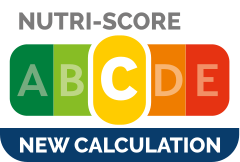 Average nutritional quality
Nutri-Score data warning
Nutrient levels
Fat in moderate quantity (4.65%)
Saturated fat in low quantity (0%)
Sugars in moderate quantity (6.98%)
Salt in moderate quantity (0.886%)
Nutrition label

Nutrition facts
| Nutrition facts | As sold for 100 g / 100 ml | Compared to: Breads |
|---|---|---|
| Energy | ~ 1197.63 kJ (279 kcal) | 1,245.587 kJ (294 kcal) (-4%) |
| Fat | 4.65 g | 5.131 g (-9%) |
| Saturated fat | 0 g | 0.904 g (-100%) |
| Monounsaturated fat | 2.33 g | 1.199 g (+94%) |
| Polyunsaturated fat | 2.33 g | 1.392 g (+67%) |
| Trans fat | 0 g | 0 g |
| Cholesterol | 0 g | 1.3 mg (-100%) |
| Carbohydrates | 48.84 g | 50.54 g (-3%) |
| Sugars | 6.98 g | 3.589 g (+94%) |
| Added sugars | 6.97674418604651 g | 1.655 g (+322%) |
| Starch | 0 g | 30.716 g (-100%) |
| Dietary fiber | 4.65 g | ? |
| Proteins | 9.3 g | 9.282 g (~0%) |
| Salt | 0.886 g | 1.224 g (-28%) |
| Sodium | 0.3544 g | 0.489 g (-28%) |
| Alcohol | 0 % vol | ? |
| Vitamin A | 0 g | 2.524 µg (-100%) |
| Vitamin E | 0 g | 1.263 mg (-100%) |
| Vitamin K | 0 g | 0 µg |
| Vitamin C | 0 g | ? |
| Potassium | 0.186 g | 216.126 mg (-14%) |
| Calcium | 0.116 g | 54.614 mg (+112%) |
| Phosphorus | 0 g | 175.52 mg (-100%) |
| Iron | 0.00255813953488372 g | 2.196 mg (+16%) |
| Magnesium | 0 g | 53.238 mg (-100%) |
| Zinc | 0 g | 1.461 mg (-100%) |
| Copper | 0 g | 0.202 mg (-100%) |
| Manganese | 0 g | 1.337 mg (-100%) |
| Selenium | 0 g | 6.406 µg (-100%) |
| Caffeine | 0 g | 0 mg |
| Fruits, vegetables and legumes | ~ 0 % | ? |
| Choline | 0 g | 0 g |
Nutrition facts (Detailed data)
| Nutrition facts | As sold for 100 g / 100 ml | As sold Per 100 g (packaging) | As sold Per 100 g (estimate) |
|---|---|---|---|
| Energy | ~ 1197.63 kJ (279 kcal) | ? (279 kcal) | ~ 1005.4520425415 kJ (237 kcal) |
| Fat | 4.65 g | 4.65 g | ~ 1.83130807876587 g |
| Saturated fat | 0 g | 0 g | ~ 0.2268 g |
| Monounsaturated fat | 2.33 g | 2.33 g | ? |
| Polyunsaturated fat | 2.33 g | 2.33 g | ? |
| Trans fat | 0 g | 0 g | ? |
| Cholesterol | 0 g | 0 g | ~ 0.00000259765625 g |
| Carbohydrates | 48.84 g | 48.84 g | ~ 50.6243347167969 g |
| Sugars | 6.98 g | 6.98 g | ~ 4.10202325248718 g |
| Added sugars | 6.97674418604651 g | 6.97674418604651 g | ~ 2.96875 g |
| Starch | 0 g | 0 g | ~ 41.3273916015625 g |
| Dietary fiber | 4.65 g | 4.65 g | ~ 5.2198828125 g |
| Proteins | 9.3 g | 9.3 g | ~ 7.55303778076172 g |
| Salt | 0.886 g | 0.886 g | ~ 0.136179414253235 g |
| Sodium | 0.3544 g | 0.3544 g | ~ 0.039696719959259 g |
| Alcohol | 0 % vol | 0 % vol | ~ 0.00000579833984375 % vol |
| Vitamin A | 0 g | 0 g | ~ 0.0000000779296875 g |
| Vitamin E | 0 g | 0 g | ~ 0.000665495705795288 g |
| Vitamin K | 0 g | 0 g | ? |
| Vitamin C | 0 g | 0 g | ~ 0.000164384613037109 g |
| Potassium | 0.186 g | 0.186 g | ~ 0.222395025791168 g |
| Calcium | 0.116 g | 0.116 g | ~ 0.0238559224815369 g |
| Phosphorus | 0 g | 0 g | ~ 0.182338126564026 g |
| Iron | 0.00255813953488372 g | 2.55813953488372 mg | ~ 0.00175010676078796 g |
| Magnesium | 0 g | 0 g | ~ 0.0596694209327698 g |
| Zinc | 0 g | 0 g | ~ 0.00153497777862549 g |
| Copper | 0 g | 0 g | ~ 0.000231902570953369 g |
| Manganese | 0 g | 0 g | ~ 0.00172865268273926 g |
| Selenium | 0 g | 0 g | ~ 0.0000068296608581543 g |
| Caffeine | 0 g | 0 g | ? |
| Fruits, vegetables and legumes | ~ 0 % | ? | ~ 0 % |
| Choline | 0 g | 0 g | ? |
Serving size
Ingredients
Ingredients image

Ingredients list
Ingredient information
Added sugars
Allergens
Ingredients analysis
Palm oil content unknown
Contains non-vegan ingredients.
Unrecognized: en:filberts, en:monoglycerides
Vegetarian status unknown
Unrecognized: en:filberts, en:monoglycerides
Food Processing
NOVA group
 Ultra-processed food and drink products
Elements that indicate the product is in NOVA group 4
How NOVA works
Additives
E200 - Sorbic acid EFSA overexposure risk: highPreservative
SORBIC ACID, or 2,4-hexadienoic acid, is a natural organic compound used as a food preservative. It has the chemical formula CH3(CH)4CO2H.
E282 - calcium propionatePreservative
CALCIUM PROPIONATE has the formula Ca(C2H5COO)2. Calcium propionate is used as a preservative in a wide variety of products, including but not limited to:bread, other baked goods, processed meat, whey, and other dairy products.
E322 - LecithinsAntioxidantEmulsifier
Lecithins are natural compounds commonly used in the food industry as emulsifiers and stabilizers.
Extracted from sources like soybeans and eggs, lecithins consist of phospholipids that enhance the mixing of oil and water, ensuring smooth textures in various products like chocolates, dressings, and baked goods.
They do not present any known health risks.
E322i - LecithinAntioxidantEmulsifier
Lecithins are natural compounds commonly used in the food industry as emulsifiers and stabilizers.
Extracted from sources like soybeans and eggs, lecithins consist of phospholipids that enhance the mixing of oil and water, ensuring smooth textures in various products like chocolates, dressings, and baked goods.
They do not present any known health risks.
E472e - Mono- and diacetyltartaric acid esters of mono- and diglycerides of fatty acidsEmulsifierSequestrantStabiliser
No additive description is available yet.
Environment
Green-Score, origins bonus, and transportation impact are shown for Worldwide .
Green Score
Overall grade
 Unknown environmental impact
About Green-Score
Current scope
Green-Score availability
Bonuses and maluses
Declared origins
Packaging impact
Packaging
Packaging impact
Data precision
Transportation
Declared origins
Data Source
Product data comes from Open Food Facts. Food Benchmark also adds translations, category comparisons and explanatory calculations.
The database is licensed under ODbL 1.0, individual contents under DbCL 1.0, and product photos under CC BY-SA 3.0.
Product added on June 6, 2019 at 4:11:47 AM UTC by openfoodfacts-contributors .
Last edit on March 12, 2026 at 4:19:08 PM UTC by municorn-calorie-counter-app .
Product page also edited by kiliweb, municorn-calorie-counter-app, new-nutrition-bot, openfoodfacts-contributors, org-database-usda, yuka.sY2b0xO6T85zoF3NwEKvlm1Ofev-8jvcBQP6gEC22OmsNI3mWf4uvbrWD6s.
Source List
- database-usda