

Instant Hot Cereal
Health
Nutrition
Nutri-Score
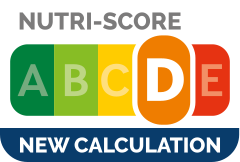 Lower nutritional quality
Nutri-Score data warning
Nutrient levels
Fat in moderate quantity (6.15%)
Saturated fat in low quantity (0.77%)
Sugars in high quantity (33.9%)
Salt in moderate quantity (1.37%)
Nutrition facts
| Nutrition facts | As sold for 100 g / 100 ml | Compared to: Breakfast cereals |
|---|---|---|
| Energy | ~ 1676.87 kJ (400 kcal) | 1,669.411 kJ (394 kcal) (~0%) |
| Fat | 6.15 g | 8.407 g (-27%) |
| Saturated fat | 0.77 g | 1.939 g (-60%) |
| Trans fat | 0 g | 0 g |
| Cholesterol | 0 g | 0.055 mg (-100%) |
| Carbohydrates | 78.46 g | 65.422 g (+20%) |
| Sugars | 33.85 g | 14.727 g (+130%) |
| Dietary fiber | 4.62 g | ? |
| Proteins | 4.62 g | 9.869 g (-53%) |
| Salt | 1.3677 g | 0.378 g (+262%) |
| Sodium | 0.54708 g | 0.151 g (+262%) |
| Vitamin A | 0.0006924 g | 16.465 µg (+4105%) |
| Vitamin C | 0.0018 g | ? |
| Vitamin PP | 0.013846 g | ? |
| Calcium | 0.385 g | 80.073 mg (+381%) |
| Iron | 0.01385 g | 5.35 mg (+159%) |
| Fruits, vegetables and legumes | ~ 7.67351190476191 % | ? |
Nutrition facts (Detailed data)
| Nutrition facts | As sold for 100 g / 100 ml | As sold Per 100 g (packaging) | As sold Per 100 g (estimate) |
|---|---|---|---|
| Energy | ~ 1676.87 kJ (400 kcal) | ? (400 kcal) | ? |
| Fat | 6.15 g | 6.15 g | ? |
| Saturated fat | 0.77 g | 0.77 g | ? |
| Trans fat | 0 g | 0 g | ? |
| Cholesterol | 0 g | 0 g | ? |
| Carbohydrates | 78.46 g | 78.46 g | ? |
| Sugars | 33.85 g | 33.85 g | ? |
| Dietary fiber | 4.62 g | 4.62 g | ? |
| Proteins | 4.62 g | 4.62 g | ? |
| Salt | 1.3677 g | 1.3677 g | ? |
| Sodium | 0.54708 g | 0.54708 g | ? |
| Vitamin A | 0.0006924 g | 0.0006924 g | ? |
| Vitamin C | 0.0018 g | 0.0018 g | ? |
| Vitamin PP | 0.013846 g | 0.013846 g | ? |
| Calcium | 0.385 g | 0.385 g | ? |
| Iron | 0.01385 g | 0.01385 g | ? |
| Fruits, vegetables and legumes | ~ 7.67351190476191 % | ? | ~ 7.67351190476191 % |
Serving size
Ingredients
Ingredients list
Ingredient information
Added sugars
Allergens
Ingredients analysis
No ingredients containing palm oil.
Unrecognized: en:wheat-farina, en:acetylated-monoglycerides, en:to-preserve-freshness
Vegan status unknown
Unrecognized: en:wheat-farina, en:acetylated-monoglycerides, en:to-preserve-freshness
Vegetarian status unknown
Unrecognized: en:wheat-farina, en:acetylated-monoglycerides, en:to-preserve-freshness
Food Processing
NOVA group
 Ultra-processed food and drink products
Elements that indicate the product is in NOVA group 4
How NOVA works
Additives
E321 - Butylated hydroxytolueneAntioxidant
Butylated hydroxytoluene (BHT), also known as dibutylhydroxytoluene, is a lipophilic organic compound, chemically a derivative of phenol, that is useful for its antioxidant properties. European and U.S. regulations allow small amounts to be used as a food additive. In addition to this use, BHT is widely used to prevent oxidation in fluids (e.g. fuel, oil) and other materials where free radicals must be controlled.
E330 - Citric acidAntioxidantSequestrant
Citric acid is a natural organic acid found in citrus fruits such as lemons, oranges, and limes.
It is widely used in the food industry as a flavor enhancer, acidulant, and preservative due to its tart and refreshing taste.
Citric acid is safe for consumption when used in moderation and is considered a generally recognized as safe (GRAS) food additive by regulatory agencies worldwide.
E412 - Guar gumEmulsifierStabiliserThickener
Guar gum (E412) is a natural food additive derived from guar beans.
This white, odorless powder is valued for its remarkable thickening and stabilizing properties, making it a common ingredient in various food products, including sauces, dressings, and ice creams.
When used in moderation, guar gum is considered safe for consumption, with no known adverse health effects.
Environment
Green-Score, origins bonus, and transportation impact are shown for Worldwide .
Green Score
Overall grade
 High environmental impact
About Green-Score
Current scope
Life cycle analysis
Average impact of the category
 Breakfast cereals, mix of puffed or extruded cereals, fortified with vitamins and chemical elements • Score: 61/100
Life-cycle reference
Overall environmental impact by stage (PEF)
The overall environmental impact figure (PEF) comes from ADEME's Agribalyse database, for the category: Breakfast cereals, mix of puffed or extruded cereals, fortified with vitamins and chemical elements. Source: ADEME Agribalyse Database.
| Stage | Impact |
|---|---|
| Agriculture | 72.1 % |
| Processing | 10.9 % |
| Packaging | 9.6 % |
| Transportation | 6.1 % |
| Distribution | 1.3 % |
| Consumption | 0.0 % |
Bonuses and maluses
Declared origins
Packaging impact
Green-Score for this product
Green-Score for this product
Final score: 41/100Final score breakdown
Carbon footprint
Carbon footprint
Climate impact by stage (CO2e)
The carbon emission figure comes from ADEME's Agribalyse database, for the category: Breakfast cereals, mix of puffed or extruded cereals, fortified with vitamins and chemical elements. Source: ADEME Agribalyse Database.
| Stage | Impact |
|---|---|
| Agriculture | 62.4 % |
| Processing | 9.7 % |
| Packaging | 18.5 % |
| Transportation | 8.4 % |
| Distribution | 0.8 % |
| Consumption | 0.0 % |
Packaging
Packaging impact
Data precision
Transportation
Declared origins
Data Source
Product data comes from Open Food Facts. Food Benchmark also adds translations, category comparisons and explanatory calculations.
The database is licensed under ODbL 1.0, individual contents under DbCL 1.0, and product photos under CC BY-SA 3.0.
Product added on March 9, 2017 at 11:29:00 AM UTC by usda-ndb-import .
Last edit on March 4, 2026 at 3:22:30 PM UTC by new-nutrition-bot .
Product page also edited by kiliweb, new-nutrition-bot, org-database-usda, usda-ndb-import, wanttoknow2, yuka.sY2b0xO6T85zoF3NwEKvlmBsCMHAqR_-Lw3jnhSr6emxf8LoPvwj2tP1Dqs.
Source List
- usda-ndb
- database-usda