
Cobblestone Bread Co, Brooklyn Rye Bread
Health
Nutrition
Nutri-Score
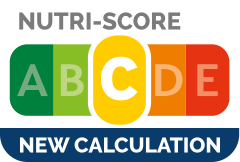 Average nutritional quality
Nutri-Score data warning
Nutrient levels
Fat in moderate quantity (3.26%)
Saturated fat in low quantity (0%)
Sugars in low quantity (4.35%)
Salt in high quantity (1.57%)
Nutrition facts
| Nutrition facts | As sold for 100 g / 100 ml | Compared to: Breads |
|---|---|---|
| Energy | ~ 1189.81 kJ (261 kcal) | 1,245.869 kJ (294 kcal) (-4%) |
| Fat | 3.26 g | 5.131 g (-36%) |
| Saturated fat | 0 g | 0.904 g (-100%) |
| Monounsaturated fat | 0 g | 1.195 g (-100%) |
| Polyunsaturated fat | 2.17 g | 1.391 g (+56%) |
| Trans fat | 0 g | 0 g |
| Cholesterol | 0 g | 1.312 mg (-100%) |
| Carbohydrates | 52.17 g | 50.554 g (+3%) |
| Sugars | 4.35 g | 3.59 g (+21%) |
| Dietary fiber | 4.3 g | ? |
| Proteins | 8.7 g | 9.282 g (-6%) |
| Salt | 1.575 g | 1.224 g (+29%) |
| Sodium | 0.63 g | 0.489 g (+29%) |
| Vitamin A | 0 g | 2.558 µg (-100%) |
| Vitamin C | 0 g | ? |
| Calcium | 0.043 g | 54.651 mg (-21%) |
| Iron | 0.00313 g | 2.196 mg (+43%) |
| Fruits, vegetables and legumes | ~ 0 % | ? |
Nutrition facts (Detailed data)
| Nutrition facts | As sold for 100 g / 100 ml | As sold Per 100 g (packaging) | As sold Per 100 g (estimate) |
|---|---|---|---|
| Energy | ~ 1189.81 kJ (261 kcal) | ? (261 kcal) | ~ 886.230160827637 kJ (209 kcal) |
| Fat | 3.26 g | 3.26 g | ~ 1.49176445770264 g |
| Saturated fat | 0 g | 0 g | ~ 0.223516651153564 g |
| Monounsaturated fat | 0 g | 0 g | ? |
| Polyunsaturated fat | 2.17 g | 2.17 g | ? |
| Trans fat | 0 g | 0 g | ? |
| Cholesterol | 0 g | 0 g | ~ 0.00002078125 g |
| Carbohydrates | 52.17 g | 52.17 g | ~ 47.8760062698364 g |
| Sugars | 4.35 g | 4.35 g | ~ 3.26958625640869 g |
| Dietary fiber | 4.3 g | 4.3 g | ~ 5.75504486083984 g |
| Proteins | 8.7 g | 8.7 g | ~ 8.40837296676636 g |
| Salt | 1.575 g | 1.575 g | ~ 0.0563863597595215 g |
| Sodium | 0.63 g | 0.63 g | ~ 0.0105472878625488 g |
| Vitamin A | 0 g | 0 g | ~ 0.0000006234375 g |
| Vitamin C | 0 g | 0 g | ~ 0.000146115779876709 g |
| Calcium | 0.043 g | 0.043 g | ~ 0.025513801918335 g |
| Iron | 0.00313 g | 0.00313 g | ~ 0.00152616160379028 g |
| Fruits, vegetables and legumes | ~ 0 % | ? | ~ 0 % |
Serving size
Ingredients
Ingredients list
Ingredient information
Added sugars
Allergens
Ingredients analysis
No ingredients containing palm oil.
Vegan status unknown
Unrecognized: en:reduced-iron, en:monoglycerides
Vegetarian status unknown
Unrecognized: en:reduced-iron, en:monoglycerides
Food Processing
NOVA group
 Ultra-processed food and drink products
Elements that indicate the product is in NOVA group 4
How NOVA works
Additives
E270 - Lactic acid
LACTIC ACID is an organic compound with the formula CH3CH(OH)CO2H. In the form of its conjugate base called lactate (this is thus different and kept as a separate ingredient). Lactic acid is chiral, consisting of two optical isomers. One is known as L-(+)-lactic acid or (S)-lactic acid and the other, its mirror image, is D-(−)-lactic acid or (R)-lactic acid in food the L-variant is used
E322 - LecithinsAntioxidantEmulsifier
Lecithins are natural compounds commonly used in the food industry as emulsifiers and stabilizers.
Extracted from sources like soybeans and eggs, lecithins consist of phospholipids that enhance the mixing of oil and water, ensuring smooth textures in various products like chocolates, dressings, and baked goods.
They do not present any known health risks.
E322i - LecithinAntioxidantEmulsifier
Lecithins are natural compounds commonly used in the food industry as emulsifiers and stabilizers.
Extracted from sources like soybeans and eggs, lecithins consist of phospholipids that enhance the mixing of oil and water, ensuring smooth textures in various products like chocolates, dressings, and baked goods.
They do not present any known health risks.
E341 - Calcium phosphates EFSA overexposure risk: highEmulsifierHumectantSequestrantStabiliserThickener
Calcium phosphate is a family of materials and minerals containing calcium ions (Ca2+) together with inorganic phosphate anions. Some so-called calcium phosphates contain oxide and hydroxide as well. They are white solids of nutritious value.
E341i - Monocalcium phosphateEmulsifierHumectantSequestrantStabiliserThickener
No additive description is available yet.
Environment
Green-Score, origins bonus, and transportation impact are shown for Worldwide .
Green Score
Overall grade
 Unknown environmental impact
About Green-Score
Current scope
Green-Score availability
Bonuses and maluses
Declared origins
Packaging impact
Packaging
Packaging impact
Data precision
Transportation
Declared origins
Data Source
Product data comes from Open Food Facts. Food Benchmark also adds translations, category comparisons and explanatory calculations.
The database is licensed under ODbL 1.0, individual contents under DbCL 1.0, and product photos under CC BY-SA 3.0.
Product added on March 9, 2017 at 5:02:47 PM UTC by usda-ndb-import .
Last edit on February 26, 2026 at 6:17:39 PM UTC by new-nutrition-bot .
Product page also edited by new-nutrition-bot, org-database-usda, usda-ndb-import.
Source List
- usda-ndb
- database-usda