
Schmidt, corn top kaiser sandwich rolls
Health
Nutrition
Nutri-Score
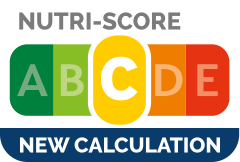 Average nutritional quality
Nutri-Score data warning
Nutrient levels
Fat in low quantity (2.82%)
Saturated fat in low quantity (0%)
Sugars in low quantity (4.23%)
Salt in moderate quantity (1.27%)
Nutrition facts
| Nutrition facts | As sold for 100 g / 100 ml | Compared to: Breads |
|---|---|---|
| Energy | ~ 1323.88 kJ (296 kcal) | 1,247.185 kJ (295 kcal) (+6%) |
| Fat | 2.82 g | 5.13 g (-45%) |
| Saturated fat | 0 g | 0.901 g (-100%) |
| Monounsaturated fat | 0 g | 1.058 g (-100%) |
| Polyunsaturated fat | 1.41 g | 1.341 g (+5%) |
| Trans fat | 0 g | 0 g |
| Cholesterol | 0 g | 1.566 mg (-100%) |
| Carbohydrates | 59.15 g | 50.645 g (+17%) |
| Sugars | 4.23 g | 3.597 g (+18%) |
| Dietary fiber | 2.8 g | ? |
| Proteins | 11.27 g | 9.28 g (+21%) |
| Salt | 1.2675 g | 1.226 g (+3%) |
| Sodium | 0.507 g | 0.49 g (+3%) |
| Vitamin A | 0 g | 3.481 µg (-100%) |
| Vitamin C | 0 g | ? |
| Vitamin PP | 0.004225 g | ? |
| Calcium | 0.085 g | 55.431 mg (+53%) |
| Iron | 0.00254 g | 2.199 mg (+16%) |
| Fruits, vegetables and legumes | ~ 0 % | ? |
Nutrition facts (Detailed data)
| Nutrition facts | As sold for 100 g / 100 ml | As sold Per 100 g (packaging) | As sold Per 100 g (estimate) |
|---|---|---|---|
| Energy | ~ 1323.88 kJ (296 kcal) | ? (296 kcal) | ? |
| Fat | 2.82 g | 2.82 g | ? |
| Saturated fat | 0 g | 0 g | ? |
| Monounsaturated fat | 0 g | 0 g | ? |
| Polyunsaturated fat | 1.41 g | 1.41 g | ? |
| Trans fat | 0 g | 0 g | ? |
| Cholesterol | 0 g | 0 g | ? |
| Carbohydrates | 59.15 g | 59.15 g | ? |
| Sugars | 4.23 g | 4.23 g | ? |
| Dietary fiber | 2.8 g | 2.8 g | ? |
| Proteins | 11.27 g | 11.27 g | ? |
| Salt | 1.2675 g | 1.2675 g | ? |
| Sodium | 0.507 g | 0.507 g | ? |
| Vitamin A | 0 g | 0 g | ? |
| Vitamin C | 0 g | 0 g | ? |
| Vitamin PP | 0.004225 g | 0.004225 g | ? |
| Calcium | 0.085 g | 0.085 g | ? |
| Iron | 0.00254 g | 0.00254 g | ? |
| Fruits, vegetables and legumes | ~ 0 % | ? | ~ 0 % |
Serving size
Ingredients
Ingredients list
Ingredient information
Added sugars
Allergens
Ingredients analysis
Palm oil content unknown
Vegan status unknown
Unrecognized: en:reduced-iron, en:white-rye-flour, en:degerminated-yellow-corn-meal, en:vital-wheat-gluten, en:ethoxylated-mono-and-diglycerides, en:azodicarbonamide-potassium-iodate
Vegetarian status unknown
Unrecognized: en:reduced-iron, en:white-rye-flour, en:degerminated-yellow-corn-meal, en:vital-wheat-gluten, en:ethoxylated-mono-and-diglycerides, en:azodicarbonamide-potassium-iodate
Food Processing
NOVA group
 Ultra-processed food and drink products
Elements that indicate the product is in NOVA group 4
How NOVA works
Additives
E260 - Acetic acidPreservative
ACETIC ACID, systematically named ethanoic acid, is a colourless liquid organic compound with the chemical formula CH3COOH (also written as CH3CO2H or C2H4O2).
E281 - Sodium propionatePreservative
Sodium propanoate or SODIUM PROPIONATE is the sodium salt of propionic acid.
E282 - calcium propionatePreservative
CALCIUM PROPIONATE has the formula Ca(C2H5COO)2. Calcium propionate is used as a preservative in a wide variety of products, including but not limited to:bread, other baked goods, processed meat, whey, and other dairy products.
E322 - LecithinsAntioxidantEmulsifier
Lecithins are natural compounds commonly used in the food industry as emulsifiers and stabilizers.
Extracted from sources like soybeans and eggs, lecithins consist of phospholipids that enhance the mixing of oil and water, ensuring smooth textures in various products like chocolates, dressings, and baked goods.
They do not present any known health risks.
E322i - LecithinAntioxidantEmulsifier
Lecithins are natural compounds commonly used in the food industry as emulsifiers and stabilizers.
Extracted from sources like soybeans and eggs, lecithins consist of phospholipids that enhance the mixing of oil and water, ensuring smooth textures in various products like chocolates, dressings, and baked goods.
They do not present any known health risks.
E338 - Phosphoric acid EFSA overexposure risk: highAntioxidantSequestrant
Phosphoric acid (also known as orthophosphoric acid or phosphoric(V) acid) is a weak acid with the chemical formula H3PO4. Orthophosphoric acid refers to phosphoric acid, which is the IUPAC name for this compound. The prefix ortho- is used to distinguish the acid from related phosphoric acids, called polyphosphoric acids. Orthophosphoric acid is a non-toxic acid, which, when pure, is a solid at room temperature and pressure. The conjugate base of phosphoric acid is the dihydrogen phosphate ion, H2PO−4, which in turn has a conjugate base of hydrogen phosphate, HPO2−4, which has a conjugate base of phosphate, PO3−4. Phosphates are essential for life.The most common source of phosphoric acid is an 85% aqueous solution; such solutions are colourless, odourless, and non-volatile. The 85% solution is a syrupy liquid, but still pourable. Although phosphoric acid does not meet the strict definition of a strong acid, the 85% solution is acidic enough to be corrosive. Because of the high percentage of phosphoric acid in this reagent, at least some of the orthophosphoric acid is condensed into polyphosphoric acids; for the sake of labeling and simplicity, the 85% represents H3PO4 as if it were all in the ortho form. Dilute aqueous solutions of phosphoric acid exist in the ortho form.
E435 - Polyoxyethylene sorbitan monostearate EFSA overexposure risk: moderateEmulsifierStabiliser
No additive description is available yet.
E471 - Mono- and diglycerides of fatty acidsEmulsifierStabiliser
Mono- and diglycerides of fatty acids (E471), are food additives commonly used as emulsifiers in various processed foods.
These compounds consist of glycerol molecules linked to one or two fatty acid chains, which help stabilize and blend water and oil-based ingredients. E471 enhances the texture and shelf life of products like margarine, baked goods, and ice cream, ensuring a smooth and consistent texture.
It is generally considered safe for consumption within established regulatory limits.
E472e - Mono- and diacetyltartaric acid esters of mono- and diglycerides of fatty acidsEmulsifierSequestrantStabiliser
No additive description is available yet.
E517 - Ammonium sulphate
Ammonium sulfate (American English and international scientific usage; ammonium sulphate in British English); (NH4)2SO4, is an inorganic salt with a number of commercial uses. The most common use is as a soil fertilizer. It contains 21% nitrogen and 24% sulfur.
E917 - potassium iodate
Potassium iodate (KIO3) is a chemical compound. It is ionic, made up of K+ ions and IO3− ions in a 1:1 ratio.
E920 - l-cysteine
Cysteine (symbol Cys or C; ) is a semi-essential proteinogenic amino acid with the formula HO2CCH(NH2)CH2SH. The thiol side chain in cysteine often participates in enzymatic reactions, as a nucleophile. The thiol is susceptible to oxidation to give the disulfide derivative cystine, which serves an important structural role in many proteins. When used as a food additive, it has the E number E920. It is encoded by the codons UGU and UGC. Cysteine has the same structure as serine, but with one of its oxygen atoms replaced by sulfur; replacing it with selenium gives selenocysteine. (Like other natural proteinogenic amino acids cysteine has (L) chirality in the older D/L notation based on homology to D and L glyceraldehyde. In the newer R/S system of designating chirality, based on the atomic numbers of atoms near the asymmetric carbon, cysteine (and selenocysteine) have R chirality, because of the presence of sulfur (resp. selenium) as a second neighbor to the asymmetric carbon. The remaining chiral amino acids, having lighter atoms in that position, have S chirality.)
Environment
Green-Score, origins bonus, and transportation impact are shown for Worldwide .
Green Score
Overall grade
 Unknown environmental impact
About Green-Score
Current scope
Green-Score availability
Bonuses and maluses
Declared origins
Packaging impact
Packaging
Packaging impact
Data precision
Transportation
Declared origins
Data Source
Product data comes from Open Food Facts. Food Benchmark also adds translations, category comparisons and explanatory calculations.
The database is licensed under ODbL 1.0, individual contents under DbCL 1.0, and product photos under CC BY-SA 3.0.
Product added on March 9, 2017 at 11:55:33 AM UTC by usda-ndb-import .
Last edit on February 26, 2026 at 6:29:09 PM UTC by new-nutrition-bot .
Product page also edited by new-nutrition-bot, org-database-usda, usda-ndb-import.
Source List
- usda-ndb
- database-usda