
Danimals smoothie max
Health
Nutrition
Nutri-Score
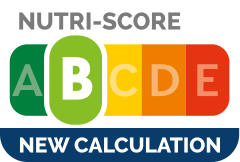 Good nutritional quality
Nutri-Score data warning
Nutrient levels
Fat in low quantity (0.72%)
Saturated fat in low quantity (0.48%)
Sugars in moderate quantity (10.6%)
Salt in low quantity (0.102%)
Nutrition facts
| Nutrition facts | As sold for 100 g / 100 ml | Compared to: Yogurts |
|---|---|---|
| Energy | ~ 256.65 kJ (58 kcal) | 362.643 kJ (86 kcal) (-29%) |
| Fat | 0.72 g | 2.734 g (-74%) |
| Saturated fat | 0.48 g | 1.718 g (-72%) |
| Trans fat | 0 g | 0 g |
| Cholesterol | 0.002 g | 8.38 mg (-76%) |
| Carbohydrates | 11.11 g | 10.375 g (+7%) |
| Sugars | 10.63 g | 9.171 g (+16%) |
| Dietary fiber | 0 g | ? |
| Proteins | 2.42 g | 4.348 g (-44%) |
| Salt | 0.1025 g | 0.115 g (-11%) |
| Sodium | 0.041 g | 0.046 g (-11%) |
| Vitamin A | 0 g | 26.789 µg (-100%) |
| Vitamin D | 0.0000012 g | 0.516 µg (+133%) |
| Vitamin C | 0 g | ? |
| Potassium | 0.111 g | 151.219 mg (-27%) |
| Calcium | 0.121 g | 119.798 mg (+1%) |
| Iron | 0 g | 0.097 mg (-100%) |
| Fruits, vegetables and legumes | ~ 0 % | ? |
Nutrition facts (Detailed data)
| Nutrition facts | As sold for 100 g / 100 ml | As sold Per 100 g (estimate) | As sold Per 100 ml (packaging) |
|---|---|---|---|
| Energy | ~ 256.65 kJ (58 kcal) | ? | ? (58 kcal) |
| Fat | 0.72 g | ? | 0.72 g |
| Saturated fat | 0.48 g | ? | 0.48 g |
| Trans fat | 0 g | ? | 0 g |
| Cholesterol | 0.002 g | ? | 0.002 g |
| Carbohydrates | 11.11 g | ? | 11.11 g |
| Sugars | 10.63 g | ? | 10.63 g |
| Dietary fiber | 0 g | ? | 0 g |
| Proteins | 2.42 g | ? | 2.42 g |
| Salt | 0.1025 g | ? | 0.1025 g |
| Sodium | 0.041 g | ? | 0.041 g |
| Vitamin A | 0 g | ? | 0 g |
| Vitamin D | 0.0000012 g | ? | 0.0000012 g |
| Vitamin C | 0 g | ? | 0 g |
| Potassium | 0.111 g | ? | 0.111 g |
| Calcium | 0.121 g | ? | 0.121 g |
| Iron | 0 g | ? | 0 g |
| Fruits, vegetables and legumes | ~ 0 % | ~ 0 % | ? |
Serving size
Ingredients
Ingredients list
Ingredient information
Added sugars
Ingredients analysis
No ingredients containing palm oil.
Vegan status unknown
Unrecognized: en:cultured-grade-a-low-fat-milk, en:whey-mineral-complex, en:sodium-citrate
Vegetarian status unknown
Unrecognized: en:cultured-grade-a-low-fat-milk, en:whey-mineral-complex, en:sodium-citrate
Food Processing
NOVA group
 Ultra-processed food and drink products
Elements that indicate the product is in NOVA group 4
How NOVA works
Additives
E160a - caroteneColour
β-Carotene is an organic, strongly colored red-orange pigment abundant in plants and fruits. It is a member of the carotenes, which are terpenoids (isoprenoids), synthesized biochemically from eight isoprene units and thus having 40 carbons. Among the carotenes, β-carotene is distinguished by having beta-rings at both ends of the molecule. β-Carotene is biosynthesized from geranylgeranyl pyrophosphate.β-Carotene is the most common form of carotene in plants. When used as a food coloring, it has the E number E160a. The structure was deduced by Karrer et al. in 1930. In nature, β-carotene is a precursor (inactive form) to vitamin A via the action of beta-carotene 15,15'-monooxygenase.Isolation of β-carotene from fruits abundant in carotenoids is commonly done using column chromatography. It can also be extracted from the beta-carotene rich algae, Dunaliella salina. The separation of β-carotene from the mixture of other carotenoids is based on the polarity of a compound. β-Carotene is a non-polar compound, so it is separated with a non-polar solvent such as hexane. Being highly conjugated, it is deeply colored, and as a hydrocarbon lacking functional groups, it is very lipophilic.
E160ai - Beta-caroteneColour
No additive description is available yet.
E202 - Potassium sorbate EFSA overexposure risk: highPreservative
Potassium sorbate (E202) is a synthetic food preservative commonly used to extend the shelf life of various food products.
It works by inhibiting the growth of molds, yeast, and some bacteria, preventing spoilage. When added to foods, it helps maintain their freshness and quality.
Some studies have shown that when combined with nitrites, potassium sorbate have genotoxic activity in vitro. However, potassium sorbate is generally recognized as safe (GRAS) by regulatory authorities.
E296 - Malic acid
MALIC ACID is an organic compound with the molecular formula C4H6O5. Malic acid has two stereoisomeric forms (L- and D-enantiomers), though only the L-isomer exists naturally.
E331 - Sodium citratesEmulsifierSequestrantStabiliser
DISODIUM CITRATE, more properly, disodium hydrogen citrate, is an acid salt of citric acid with the chemical formula Na2C6H6O7. It is used as an antioxidant in food and to improve the effects of other antioxidants. It is also used as an acidity regulator and sequestrant. Typical products include gelatin, jam, sweets, ice cream, carbonated beverages, milk powder, wine, and processed cheeses.
E406 - AgarCarrierEmulsifierHumectantStabiliserThickener
Agar (pronounced , sometimes ) or agar-agar is a jelly-like substance, obtained from red algae.Agar is a mixture of two components: the linear polysaccharide agarose, and a heterogeneous mixture of smaller molecules called agaropectin. It forms the supporting structure in the cell walls of certain species of algae, and is released on boiling. These algae are known as agarophytes, and belong to the Rhodophyta (red algae) phylum.Agar has been used as an ingredient in desserts throughout Asia, and also as a solid substrate to contain culture media for microbiological work. Agar can be used as a laxative, an appetite suppressant, a vegetarian substitute for gelatin, a thickener for soups, in fruit preserves, ice cream, and other desserts, as a clarifying agent in brewing, and for sizing paper and fabrics.The gelling agent in agar is an unbranched polysaccharide obtained from the cell walls of some species of red algae, primarily from tengusa (Gelidiaceae) and ogonori (Gracilaria). For commercial purposes, it is derived primarily from ogonori. In chemical terms, agar is a polymer made up of subunits of the sugar galactose.
E440 - PectinsEmulsifierStabiliserThickener
Pectins (E440) are natural carbohydrates, predominantly found in fruits, that act as gelling agents in the food industry, creating the desirable jelly-like texture in jams, jellies, and marmalades.
Pectins stabilize and thicken various food products, such as desserts, confectioneries, and beverages, ensuring a uniform consistency and quality.
Recognized as safe by various health authorities, pectins have been widely used without notable adverse effects when consumed in typical dietary amounts.
Environment
Green-Score, origins bonus, and transportation impact are shown for Worldwide .
Green Score
Overall grade
 Low environmental impact
About Green-Score
Current scope
Life cycle analysis
Average impact of the category
 Yogurt, fermented milk or dairy specialty, plain • Score: 91/100
Life-cycle reference
Overall environmental impact by stage (PEF)
The overall environmental impact figure (PEF) comes from ADEME's Agribalyse database, for the category: Yogurt, fermented milk or dairy specialty, plain. Source: ADEME Agribalyse Database.
| Stage | Impact |
|---|---|
| Agriculture | 51.4 % |
| Processing | 15.5 % |
| Packaging | 17.2 % |
| Transportation | 9.6 % |
| Distribution | 4.9 % |
| Consumption | 1.4 % |
Bonuses and maluses
Declared origins
Packaging impact
Green-Score for this product
Green-Score for this product
Final score: 71/100Final score breakdown
Carbon footprint
Carbon footprint
Climate impact by stage (CO2e)
The carbon emission figure comes from ADEME's Agribalyse database, for the category: Yogurt, fermented milk or dairy specialty, plain. Source: ADEME Agribalyse Database.
| Stage | Impact |
|---|---|
| Agriculture | 54.5 % |
| Processing | 8.0 % |
| Packaging | 22.3 % |
| Transportation | 13.1 % |
| Distribution | 2.0 % |
| Consumption | 0.4 % |
Packaging
Packaging impact
Data precision
Transportation
Declared origins
Data Source
Product data comes from Open Food Facts. Food Benchmark also adds translations, category comparisons and explanatory calculations.
The database is licensed under ODbL 1.0, individual contents under DbCL 1.0, and product photos under CC BY-SA 3.0.
Product added on March 9, 2017 at 2:32:31 PM UTC by usda-ndb-import .
Last edit on February 26, 2026 at 1:23:56 PM UTC by new-nutrition-bot .
Product page also edited by new-nutrition-bot, org-database-usda, usda-ndb-import.
Source List
- usda-ndb
- database-usda