

Sausage & Gravy Deep Dish
Health
Nutrition
Nutri-Score
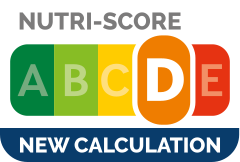 Lower nutritional quality
Nutri-Score data warning
Nutrient levels
Fat in moderate quantity (16.7%)
Saturated fat in high quantity (5.56%)
Sugars in low quantity (3.03%)
Salt in moderate quantity (1.3%)
Nutrition label

Nutrition facts
| Nutrition facts | As sold for 100 g / 100 ml | Compared to: Breads |
|---|---|---|
| Energy | ~ 1101.05 kJ (227 kcal) | 1,245.584 kJ (294 kcal) (-12%) |
| Fat | 16.67 g | 5.131 g (+225%) |
| Saturated fat | 5.56 g | 0.904 g (+515%) |
| Monounsaturated fat | 6.57 g | 1.201 g (+447%) |
| Polyunsaturated fat | 3.54 g | 1.393 g (+154%) |
| Trans fat | 0 g | 0 g |
| Cholesterol | 0.018 g | 1.297 mg (+1288%) |
| Carbohydrates | 22.22 g | 50.537 g (-56%) |
| Sugars | 3.03 g | 3.588 g (-16%) |
| Added sugars | 1.01010101010101 g | 1.655 g (-39%) |
| Starch | 0 g | 30.712 g (-100%) |
| Dietary fiber | 1.5 g | ? |
| Proteins | 5.56 g | 9.282 g (-40%) |
| Salt | 1.3 g | 1.224 g (+6%) |
| Sodium | 0.52 g | 0.489 g (+6%) |
| Vitamin A | 0 g | 2.523 µg (-100%) |
| Vitamin D | ? | 0.085 µg |
| Vitamin E | 0 g | 1.263 mg (-100%) |
| Vitamin K | 0 g | 0 µg |
| Vitamin C | 0 g | ? |
| Potassium | 0.121 g | 216.101 mg (-44%) |
| Calcium | 0.076 g | 54.609 mg (+39%) |
| Phosphorus | 0 g | 175.503 mg (-100%) |
| Iron | 0.000707070707070707 g | 2.196 mg (-68%) |
| Magnesium | 0 g | 53.229 mg (-100%) |
| Zinc | 0 g | 1.461 mg (-100%) |
| Copper | 0 g | 0.202 mg (-100%) |
| Manganese | 0 g | 1.337 mg (-100%) |
| Selenium | 0 g | 6.405 µg (-100%) |
| Caffeine | 0 g | 0 mg |
| Fruits, vegetables and legumes | ~ 0 % | ? |
| Choline | 0 g | 0 g |
Nutrition facts (Detailed data)
| Nutrition facts | As sold for 100 g / 100 ml | As sold Per 100 g (packaging) | As sold Per 100 g (estimate) |
|---|---|---|---|
| Energy | ~ 1101.05 kJ (227 kcal) | ? (227 kcal) | ? |
| Fat | 16.67 g | 16.67 g | ? |
| Saturated fat | 5.56 g | 5.56 g | ? |
| Monounsaturated fat | 6.57 g | 6.57 g | ? |
| Polyunsaturated fat | 3.54 g | 3.54 g | ? |
| Trans fat | 0 g | 0 g | ? |
| Cholesterol | 0.018 g | 0.018 g | ? |
| Carbohydrates | 22.22 g | 22.22 g | ? |
| Sugars | 3.03 g | 3.03 g | ? |
| Added sugars | 1.01010101010101 g | 1.01010101010101 g | ~ 0.314467366536459 g |
| Starch | 0 g | 0 g | ? |
| Dietary fiber | 1.5 g | 1.5 g | ? |
| Proteins | 5.56 g | 5.56 g | ? |
| Salt | 1.3 g | 1.3 g | ? |
| Sodium | 0.52 g | 0.52 g | ? |
| Vitamin A | 0 g | 0 g | ? |
| Vitamin D | ? | ? | ? |
| Vitamin E | 0 g | 0 g | ? |
| Vitamin K | 0 g | 0 g | ? |
| Vitamin C | 0 g | 0 g | ? |
| Potassium | 0.121 g | 0.121 g | ? |
| Calcium | 0.076 g | 0.076 g | ? |
| Phosphorus | 0 g | 0 g | ? |
| Iron | 0.000707070707070707 g | 0.000707070707070707 g | ? |
| Magnesium | 0 g | 0 g | ? |
| Zinc | 0 g | 0 g | ? |
| Copper | 0 g | 0 g | ? |
| Manganese | 0 g | 0 g | ? |
| Selenium | 0 g | 0 g | ? |
| Caffeine | 0 g | 0 g | ? |
| Fruits, vegetables and legumes | ~ 0 % | ? | ~ 0 % |
| Choline | 0 g | 0 g | ? |
Serving size
Ingredients
Ingredients image

Ingredients list
Ingredient information
Added sugars
Allergens
Ingredients analysis
No ingredients containing palm oil.
Contains non-vegan ingredients.
Unrecognized: en:sausage-crumble-made-with-pork, en:nonfat-dry-milk-fortified-with-vitamins, en:chicken-fat-with-bha
Contains non-vegetarian ingredients.
Unrecognized: en:sausage-crumble-made-with-pork, en:nonfat-dry-milk-fortified-with-vitamins, en:chicken-fat-with-bha
Food Processing
NOVA group
 Ultra-processed food and drink products
Elements that indicate the product is in NOVA group 4
How NOVA works
Additives
E150c - Ammonia caramel EFSA overexposure risk: moderateColour
No additive description is available yet.
E310 - Propyl gallateAntioxidant
Propyl gallate, or propyl 3,4,5-trihydroxybenzoate is an ester formed by the condensation of gallic acid and propanol. Since 1948, this antioxidant has been added to foods containing oils and fats to prevent oxidation. As a food additive, it is used under the E number E310.
E320 - Butylated hydroxyanisole (bha)Antioxidant
Butylated hydroxyanisole (BHA) is an antioxidant consisting of a mixture of two isomeric organic compounds, 2-tert-butyl-4-hydroxyanisole and 3-tert-butyl-4-hydroxyanisole. It is prepared from 4-methoxyphenol and isobutylene. It is a waxy solid used as a food additive with the E number E320. The primary use for BHA is as an antioxidant and preservative in food, food packaging, animal feed, cosmetics, rubber, and petroleum products. BHA also is commonly used in medicines, such as isotretinoin, lovastatin, and simvastatin, among others.
E321 - Butylated hydroxytolueneAntioxidant
Butylated hydroxytoluene (BHT), also known as dibutylhydroxytoluene, is a lipophilic organic compound, chemically a derivative of phenol, that is useful for its antioxidant properties. European and U.S. regulations allow small amounts to be used as a food additive. In addition to this use, BHT is widely used to prevent oxidation in fluids (e.g. fuel, oil) and other materials where free radicals must be controlled.
E330 - Citric acidAntioxidantSequestrant
Citric acid is a natural organic acid found in citrus fruits such as lemons, oranges, and limes.
It is widely used in the food industry as a flavor enhancer, acidulant, and preservative due to its tart and refreshing taste.
Citric acid is safe for consumption when used in moderation and is considered a generally recognized as safe (GRAS) food additive by regulatory agencies worldwide.
E412 - Guar gumEmulsifierStabiliserThickener
Guar gum (E412) is a natural food additive derived from guar beans.
This white, odorless powder is valued for its remarkable thickening and stabilizing properties, making it a common ingredient in various food products, including sauces, dressings, and ice creams.
When used in moderation, guar gum is considered safe for consumption, with no known adverse health effects.
E415 - Xanthan gumEmulsifierStabiliserThickener
Xanthan gum (E415) is a natural polysaccharide derived from fermented sugars, often used in the food industry as a thickening and stabilizing agent.
This versatile food additive enhances texture and prevents ingredient separation in a wide range of products, including salad dressings, sauces, and gluten-free baked goods.
It is considered safe for consumption even at high intake amounts.
Environment
Green-Score, origins bonus, and transportation impact are shown for Worldwide .
Green Score
Overall grade
 Unknown environmental impact
About Green-Score
Current scope
Green-Score availability
Bonuses and maluses
Declared origins
Packaging impact
Packaging
Packaging impact
Data precision
Transportation
Declared origins
Forest footprint
Forest footprint
Deforestation risk details
Data Source
Product data comes from Open Food Facts. Food Benchmark also adds translations, category comparisons and explanatory calculations.
The database is licensed under ODbL 1.0, individual contents under DbCL 1.0, and product photos under CC BY-SA 3.0.
Product added on August 9, 2019 at 4:11:15 PM UTC by waistline-app .
Last edit on February 26, 2026 at 3:28:19 PM UTC by new-nutrition-bot .
Product page also edited by foodless, municorn-calorie-counter-app, new-nutrition-bot, openfoodfacts-contributors, org-database-usda, roboto-app, waistline.fb7e084e-6c16-4bb3-91c1-e077293a7cff.
Source List
- database-usda