
Bill Knapp's, Iced Toaster Bread, Cranberry-Orange
Health
Nutrition
Nutri-Score
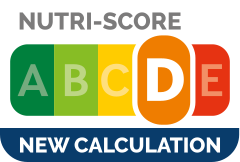 Lower nutritional quality
Nutri-Score data warning
Nutrient levels
Fat in moderate quantity (7.14%)
Saturated fat in low quantity (0%)
Sugars in high quantity (21.4%)
Salt in moderate quantity (0.938%)
Nutrition facts
| Nutrition facts | As sold for 100 g / 100 ml | Compared to: Breads |
|---|---|---|
| Energy | ~ 1356.94 kJ (321 kcal) | 1,247.652 kJ (295 kcal) (+9%) |
| Fat | 7.14 g | 5.125 g (+39%) |
| Saturated fat | 0 g | 0.9 g (-100%) |
| Trans fat | 0 g | 0 g |
| Cholesterol | 0 g | 1.604 mg (-100%) |
| Carbohydrates | 57.14 g | 50.678 g (+13%) |
| Sugars | 21.43 g | 3.604 g (+495%) |
| Dietary fiber | 0 g | ? |
| Proteins | 7.14 g | 9.281 g (-23%) |
| Salt | 0.9375 g | 1.227 g (-24%) |
| Sodium | 0.375 g | 0.49 g (-23%) |
| Vitamin A | 0 g | 3.768 µg (-100%) |
| Vitamin C | 0.0086 g | ? |
| Calcium | 0.143 g | 55.659 mg (+157%) |
| Iron | 0 g | 2.203 mg (-100%) |
| Fruits, vegetables and legumes | ~ 6.8892356806216 % | ? |
Nutrition facts (Detailed data)
| Nutrition facts | As sold for 100 g / 100 ml | As sold Per 100 g (packaging) | As sold Per 100 g (estimate) |
|---|---|---|---|
| Energy | ~ 1356.94 kJ (321 kcal) | ? (321 kcal) | ~ 985.308307211569 kJ (232 kcal) |
| Fat | 7.14 g | 7.14 g | ~ 0.887554614402439 g |
| Saturated fat | 0 g | 0 g | ~ 0.157396736081065 g |
| Trans fat | 0 g | 0 g | ? |
| Cholesterol | 0 g | 0 g | ~ 0.00000717328804347826 g |
| Carbohydrates | 57.14 g | 57.14 g | ~ 48.0481559610317 g |
| Sugars | 21.43 g | 21.43 g | ~ 12.4358969814612 g |
| Dietary fiber | 0 g | 0 g | ~ 4.36286968119215 g |
| Proteins | 7.14 g | 7.14 g | ~ 5.8939927031595 g |
| Salt | 0.9375 g | 0.9375 g | ~ 0.294466686219614 g |
| Sodium | 0.375 g | 0.375 g | ~ 0.105760223695559 g |
| Vitamin A | 0 g | 0 g | ~ 0.00000021519864130435 g |
| Vitamin C | 0.0086 g | 0.0086 g | ~ 0.00113103272282609 g |
| Calcium | 0.143 g | 0.143 g | ~ 0.0199537887669067 g |
| Iron | 0 g | 0 g | ~ 0.00127790022903389 g |
| Fruits, vegetables and legumes | ~ 6.8892356806216 % | ? | ~ 6.8892356806216 % |
Serving size
Ingredients
Ingredients list
Ingredient information
Added sugars
Allergens
Ingredients analysis
Palm oil content unknown
Vegan status unknown
Unrecognized: en:iron, en:sodium-citrate, en:natural-orange-oil, en:monodiglycerides-with-propionic-acid, en:monoglycerides
Vegetarian status unknown
Unrecognized: en:iron, en:sodium-citrate, en:natural-orange-oil, en:monodiglycerides-with-propionic-acid, en:monoglycerides
Food Processing
NOVA group
 Ultra-processed food and drink products
Elements that indicate the product is in NOVA group 4
How NOVA works
Additives
E110 - Sunset yellow FCFColour
Sunset Yellow FCF (also known as Orange Yellow S, or C.I. 15985) is a petroleum-derived orange azo dye with a pH dependent maximum absorption at about 480 nm at pH 1 and 443 nm at pH 13 with a shoulder at 500 nm. When added to foods sold in the US it is known as FD&C Yellow 6; when sold in Europe, it is denoted by E Number E110.
E171 - Titanium dioxideColour
Titanium dioxide, also known as titanium(IV) oxide or titania, is the naturally occurring oxide of titanium, chemical formula TiO2. When used as a pigment, it is called titanium white, Pigment White 6 (PW6), or CI 77891. Generally, it is sourced from ilmenite, rutile and anatase. It has a wide range of applications, including paint, sunscreen and food coloring. When used as a food coloring, it has E number E171. World production in 2014 exceeded 9 million metric tons. It has been estimated that titanium dioxide is used in two-thirds of all pigments, and the oxide has been valued at $13.2 billion.
E202 - Potassium sorbate EFSA overexposure risk: highPreservative
Potassium sorbate (E202) is a synthetic food preservative commonly used to extend the shelf life of various food products.
It works by inhibiting the growth of molds, yeast, and some bacteria, preventing spoilage. When added to foods, it helps maintain their freshness and quality.
Some studies have shown that when combined with nitrites, potassium sorbate have genotoxic activity in vitro. However, potassium sorbate is generally recognized as safe (GRAS) by regulatory authorities.
E282 - calcium propionatePreservative
CALCIUM PROPIONATE has the formula Ca(C2H5COO)2. Calcium propionate is used as a preservative in a wide variety of products, including but not limited to:bread, other baked goods, processed meat, whey, and other dairy products.
E330 - Citric acidAntioxidantSequestrant
Citric acid is a natural organic acid found in citrus fruits such as lemons, oranges, and limes.
It is widely used in the food industry as a flavor enhancer, acidulant, and preservative due to its tart and refreshing taste.
Citric acid is safe for consumption when used in moderation and is considered a generally recognized as safe (GRAS) food additive by regulatory agencies worldwide.
E338 - Phosphoric acid EFSA overexposure risk: highAntioxidantSequestrant
Phosphoric acid (also known as orthophosphoric acid or phosphoric(V) acid) is a weak acid with the chemical formula H3PO4. Orthophosphoric acid refers to phosphoric acid, which is the IUPAC name for this compound. The prefix ortho- is used to distinguish the acid from related phosphoric acids, called polyphosphoric acids. Orthophosphoric acid is a non-toxic acid, which, when pure, is a solid at room temperature and pressure. The conjugate base of phosphoric acid is the dihydrogen phosphate ion, H2PO−4, which in turn has a conjugate base of hydrogen phosphate, HPO2−4, which has a conjugate base of phosphate, PO3−4. Phosphates are essential for life.The most common source of phosphoric acid is an 85% aqueous solution; such solutions are colourless, odourless, and non-volatile. The 85% solution is a syrupy liquid, but still pourable. Although phosphoric acid does not meet the strict definition of a strong acid, the 85% solution is acidic enough to be corrosive. Because of the high percentage of phosphoric acid in this reagent, at least some of the orthophosphoric acid is condensed into polyphosphoric acids; for the sake of labeling and simplicity, the 85% represents H3PO4 as if it were all in the ortho form. Dilute aqueous solutions of phosphoric acid exist in the ortho form.
E406 - AgarCarrierEmulsifierHumectantStabiliserThickener
Agar (pronounced , sometimes ) or agar-agar is a jelly-like substance, obtained from red algae.Agar is a mixture of two components: the linear polysaccharide agarose, and a heterogeneous mixture of smaller molecules called agaropectin. It forms the supporting structure in the cell walls of certain species of algae, and is released on boiling. These algae are known as agarophytes, and belong to the Rhodophyta (red algae) phylum.Agar has been used as an ingredient in desserts throughout Asia, and also as a solid substrate to contain culture media for microbiological work. Agar can be used as a laxative, an appetite suppressant, a vegetarian substitute for gelatin, a thickener for soups, in fruit preserves, ice cream, and other desserts, as a clarifying agent in brewing, and for sizing paper and fabrics.The gelling agent in agar is an unbranched polysaccharide obtained from the cell walls of some species of red algae, primarily from tengusa (Gelidiaceae) and ogonori (Gracilaria). For commercial purposes, it is derived primarily from ogonori. In chemical terms, agar is a polymer made up of subunits of the sugar galactose.
E440 - PectinsEmulsifierStabiliserThickener
Pectins (E440) are natural carbohydrates, predominantly found in fruits, that act as gelling agents in the food industry, creating the desirable jelly-like texture in jams, jellies, and marmalades.
Pectins stabilize and thicken various food products, such as desserts, confectioneries, and beverages, ensuring a uniform consistency and quality.
Recognized as safe by various health authorities, pectins have been widely used without notable adverse effects when consumed in typical dietary amounts.
Environment
Green-Score, origins bonus, and transportation impact are shown for Worldwide .
Green Score
Overall grade
 Unknown environmental impact
About Green-Score
Current scope
Green-Score availability
Bonuses and maluses
Declared origins
Packaging impact
Packaging
Packaging impact
Data precision
Transportation
Declared origins
Data Source
Product data comes from Open Food Facts. Food Benchmark also adds translations, category comparisons and explanatory calculations.
The database is licensed under ODbL 1.0, individual contents under DbCL 1.0, and product photos under CC BY-SA 3.0.
Product added on March 9, 2017 at 4:43:22 PM UTC by usda-ndb-import .
Last edit on February 26, 2026 at 6:21:50 PM UTC by new-nutrition-bot .
Product page also edited by new-nutrition-bot, org-database-usda, usda-ndb-import.
Source List
- usda-ndb
- database-usda