

Jelly Fish
Health
Nutrition
Nutri-Score
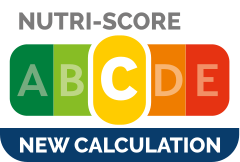 Average nutritional quality
Nutri-Score data warning
Nutrient levels
Fat in low quantity (0%)
Saturated fat in low quantity (0%)
Sugars in high quantity (24%)
Salt in low quantity (0.0762%)
Nutrition label

Nutrition facts
| Nutrition facts | As sold for 100 g / 100 ml | Compared to: Candies |
|---|---|---|
| Energy | ~ 578 kJ (140 kcal) | 1,498.382 kJ (350 kcal) (-61%) |
| Fat | 0 g | 1.558 g (-100%) |
| Saturated fat | 0 g | 0.873 g (-100%) |
| Carbohydrates | 34 g | 82.868 g (-59%) |
| Sugars | 24 g | 54.941 g (-56%) |
| Dietary fiber | 0 g | ? |
| Proteins | 0 g | 2.152 g (-100%) |
| Salt | 0.0762 g | 0.129 g (-41%) |
| Sodium | 0.03048 g | 0.051 g (-40%) |
| Fruits, vegetables and legumes | ~ 0 % | ? |
Nutrition facts (Detailed data)
| Nutrition facts | As sold for 100 g / 100 ml | As sold Per 100 g (packaging) | As sold Per 100 g (estimate) |
|---|---|---|---|
| Energy | ~ 578 kJ (140 kcal) | ? (140 kcal) | ? |
| Fat | 0 g | 0 g | ? |
| Saturated fat | 0 g | 0 g | ? |
| Carbohydrates | 34 g | 34 g | ? |
| Sugars | 24 g | 24 g | ? |
| Dietary fiber | 0 g | 0 g | ? |
| Proteins | 0 g | 0 g | ? |
| Salt | 0.0762 g | 0.0762 g | ? |
| Sodium | 0.03048 g | 0.03048 g | ? |
| Fruits, vegetables and legumes | ~ 0 % | ? | ~ 0 % |
Serving size
Ingredients
Ingredients image

Ingredients list
Ingredient information
Added sugars
Ingredients analysis
No ingredients containing palm oil.
Unrecognized: en:citrict-acid
Vegan status unknown
Unrecognized: en:citrict-acid
Vegetarian status unknown
Unrecognized: en:citrict-acid
Food Processing
NOVA group
 Ultra-processed food and drink products
Elements that indicate the product is in NOVA group 4
How NOVA works
Additives
E102 - TartrazineColour
Tartrazine (E102) is a synthetic lemon-yellow azo dye used as a food coloring.
It is found in a wide range of products such as soft drinks, desserts, candies, and snack foods to give them a vibrant yellow appearance.
While approved by many regulatory agencies, tartrazine has been linked to allergic reactions, such as hives, in a small portion of the population. Some studies have also suggested a link to increased hyperactivity in children, particularly when consumed with other additives like benzoates.
E110 - Sunset yellow FCFColour
Sunset Yellow FCF (also known as Orange Yellow S, or C.I. 15985) is a petroleum-derived orange azo dye with a pH dependent maximum absorption at about 480 nm at pH 1 and 443 nm at pH 13 with a shoulder at 500 nm. When added to foods sold in the US it is known as FD&C Yellow 6; when sold in Europe, it is denoted by E Number E110.
E129 - Allura red EFSA overexposure risk: noColour
Allura Red AC is a red azo dye that goes by several names, including FD&C Red 40. It is used as a food dye and has the E number E129. It is usually supplied as its red sodium salt, but can also be used as the calcium and potassium salts. These salts are soluble in water. In solution, its maximum absorbance lies at about 504 nm.
E133 - Brilliant blue FCF EFSA overexposure risk: moderateColour
BRILLIANT BLUE FCF (Blue 1) is an organic compound classified as a blue triarylmethane dye, reflecting its chemical structure. Known under various commercial names, it is a colorant for foods and other substances.
E331 - Sodium citratesEmulsifierSequestrantStabiliser
DISODIUM CITRATE, more properly, disodium hydrogen citrate, is an acid salt of citric acid with the chemical formula Na2C6H6O7. It is used as an antioxidant in food and to improve the effects of other antioxidants. It is also used as an acidity regulator and sequestrant. Typical products include gelatin, jam, sweets, ice cream, carbonated beverages, milk powder, wine, and processed cheeses.
E903 - Carnauba waxCarrier
Carnauba (; Portuguese: carnaúba [kaʁnɐˈubɐ]), also called Brazil wax and palm wax, is a wax of the leaves of the palm Copernicia prunifera (Synonym: Copernicia cerifera), a plant native to and grown only in the northeastern Brazilian states of Piauí, Ceará, Maranhão, Bahia, and Rio Grande do Norte. It is known as "queen of waxes" and in its pure state, usually comes in the form of hard yellow-brown flakes. It is obtained from the leaves of the carnauba palm by collecting and drying them, beating them to loosen the wax, then refining and bleaching the wax.
E905 - Synthetic wax
Microcrystalline waxes are a type of wax produced by de-oiling petrolatum, as part of the petroleum refining process. In contrast to the more familiar paraffin wax which contains mostly unbranched alkanes, microcrystalline wax contains a higher percentage of isoparaffinic (branched) hydrocarbons and naphthenic hydrocarbons. It is characterized by the fineness of its crystals in contrast to the larger crystal of paraffin wax. It consists of high molecular weight saturated aliphatic hydrocarbons. It is generally darker, more viscous, denser, tackier and more elastic than paraffin waxes, and has a higher molecular weight and melting point. The elastic and adhesive characteristics of microcrystalline waxes are related to the non-straight chain components which they contain. Typical microcrystalline wax crystal structure is small and thin, making them more flexible than paraffin wax. It is commonly used in cosmetic formulations. Microcrystalline waxes when produced by wax refiners are typically produced to meet a number of ASTM specifications. These include congeal point (ASTM D938), needle penetration (D1321), color (ASTM D6045), and viscosity (ASTM D445). Microcrystalline waxes can generally be put into two categories: "laminating" grades and "hardening" grades. The laminating grades typically have a melt point of 140-175 F (60 - 80 oC) and needle penetration of 25 or above. The hardening grades will range from about 175-200 F (80 - 93 oC), and have a needle penetration of 25 or below. Color in both grades can range from brown to white, depending on the degree of processing done at the refinery level. Microcrystalline waxes are derived from the refining of the heavy distillates from lubricant oil production. This by-product must then be de-oiled at a wax refinery. Depending on the end use and desired specification, the product may then have its odor removed and color removed (which typically starts as a brown or dark yellow). This is usually done by means of a filtration method or by hydro-treating the wax material.
E905a - mineral oil
Microcrystalline waxes are a type of wax produced by de-oiling petrolatum, as part of the petroleum refining process. In contrast to the more familiar paraffin wax which contains mostly unbranched alkanes, microcrystalline wax contains a higher percentage of isoparaffinic (branched) hydrocarbons and naphthenic hydrocarbons. It is characterized by the fineness of its crystals in contrast to the larger crystal of paraffin wax. It consists of high molecular weight saturated aliphatic hydrocarbons. It is generally darker, more viscous, denser, tackier and more elastic than paraffin waxes, and has a higher molecular weight and melting point. The elastic and adhesive characteristics of microcrystalline waxes are related to the non-straight chain components which they contain. Typical microcrystalline wax crystal structure is small and thin, making them more flexible than paraffin wax. It is commonly used in cosmetic formulations. Microcrystalline waxes when produced by wax refiners are typically produced to meet a number of ASTM specifications. These include congeal point (ASTM D938), needle penetration (D1321), color (ASTM D6045), and viscosity (ASTM D445). Microcrystalline waxes can generally be put into two categories: "laminating" grades and "hardening" grades. The laminating grades typically have a melt point of 140-175 F (60 - 80 oC) and needle penetration of 25 or above. The hardening grades will range from about 175-200 F (80 - 93 oC), and have a needle penetration of 25 or below. Color in both grades can range from brown to white, depending on the degree of processing done at the refinery level. Microcrystalline waxes are derived from the refining of the heavy distillates from lubricant oil production. This by-product must then be de-oiled at a wax refinery. Depending on the end use and desired specification, the product may then have its odor removed and color removed (which typically starts as a brown or dark yellow). This is usually done by means of a filtration method or by hydro-treating the wax material.
Environment
Green-Score, origins bonus, and transportation impact are shown for Worldwide .
Green Score
Overall grade
 Low environmental impact
About Green-Score
Current scope
Life cycle analysis
Average impact of the category
 Candies, all types • Score: 88/100
Life-cycle reference
Overall environmental impact by stage (PEF)
The overall environmental impact figure (PEF) comes from ADEME's Agribalyse database, for the category: Candies, all types. Source: ADEME Agribalyse Database.
| Stage | Impact |
|---|---|
| Agriculture | 47.6 % |
| Processing | 28.1 % |
| Packaging | 17.3 % |
| Transportation | 4.5 % |
| Distribution | 2.3 % |
| Consumption | 0.0 % |
Bonuses and maluses
Declared origins
Packaging impact
Green-Score for this product
Green-Score for this product
Final score: 73/100Final score breakdown
Carbon footprint
Carbon footprint
Climate impact by stage (CO2e)
The carbon emission figure comes from ADEME's Agribalyse database, for the category: Candies, all types. Source: ADEME Agribalyse Database.
| Stage | Impact |
|---|---|
| Agriculture | 46.7 % |
| Processing | 27.1 % |
| Packaging | 16.4 % |
| Transportation | 8.7 % |
| Distribution | 1.5 % |
| Consumption | 0.0 % |
Packaging
Packaging impact
Packaging components
| Shape | Material | Recycling | Impact |
|---|---|---|---|
| Unknown | Plastic | Unknown | High |
Declared packaging
Data precision
Transportation
Declared origins
Data Source
Product data comes from Open Food Facts. Food Benchmark also adds translations, category comparisons and explanatory calculations.
The database is licensed under ODbL 1.0, individual contents under DbCL 1.0, and product photos under CC BY-SA 3.0.
Product added on January 2, 2014 at 11:21:51 AM UTC by malikele .
Last edit on March 26, 2026 at 2:25:12 AM UTC by new-nutrition-bot .
Product page also edited by elttor, hangy, malikele, new-nutrition-bot, openfoodfacts-contributors, packbot, upcbot, utronicalo.