

BEEF LASAGNE
Health
Nutrition
Nutri-Score
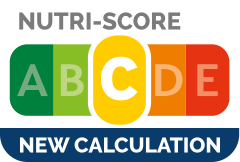 Average nutritional quality
Nutri-Score data warning
Nutrient levels
Fat in moderate quantity (4.5%)
Saturated fat in moderate quantity (1.96%)
Sugars in low quantity (2.12%)
Salt in moderate quantity (0.703%)
Nutrition label

Nutrition facts
| Nutrition facts | As sold for 100 g / 100 ml | Compared to: Frozen lasagne |
|---|---|---|
| Energy | ~ 445.692307692308 kJ (116 kcal) | 541.003 kJ (129 kcal) (-18%) |
| Fat | 4.5 g | 5.721 g (-21%) |
| Saturated fat | 1.96153846153846 g | 2.238 g (-12%) |
| Carbohydrates | 12.2307692307692 g | 13.143 g (-7%) |
| Sugars | 2.11538461538462 g | 2.612 g (-19%) |
| Added sugars | 0 g | ? |
| Starch | 0 g | 5.776 g (-100%) |
| Dietary fiber | ? | ? |
| Proteins | 4.19230769230769 g | 5.54 g (-24%) |
| Salt | 0.702884615384615 g | 0.753 g (-7%) |
| Sodium | 0.281153846153846 g | 0.301 g (-7%) |
| Vitamin A | 0 g | ? |
| Vitamin E | 0 g | ? |
| Vitamin K | 0 g | ? |
| Vitamin C | 0 g | ? |
| Phosphorus | 0 g | ? |
| Iron | 0 g | ? |
| Magnesium | 0 g | ? |
| Zinc | 0 g | ? |
| Copper | 0 g | ? |
| Manganese | 0 g | ? |
| Selenium | 0 g | ? |
| Caffeine | 0 g | ? |
| Fruits, vegetables and legumes | ~ 21.4988606770833 % | ? |
| Choline | 0 g | ? |
Nutrition facts (Detailed data)
| Nutrition facts | As sold for 100 g / 100 ml | As sold Per 100 g (packaging) | As sold Per serving (260 g) (packaging) | As sold Per 100 g (estimate) |
|---|---|---|---|---|
| Energy | ~ 445.692307692308 kJ (116 kcal) | ? (116 kcal) | ? (284 kcal) | ? |
| Fat | 4.5 g | ? | 11.7 g | ? |
| Saturated fat | 1.96153846153846 g | ? | 5.1 g | ? |
| Carbohydrates | 12.2307692307692 g | ? | 31.8 g | ? |
| Sugars | 2.11538461538462 g | ? | 5.5 g | ? |
| Added sugars | 0 g | ? | 0 g | ~ 0.483573717948719 g |
| Starch | 0 g | ? | 0 g | ? |
| Dietary fiber | ? | ? | ? | ? |
| Proteins | 4.19230769230769 g | ? | 10.9 g | ? |
| Salt | 0.702884615384615 g | ? | 1.8275 g | ? |
| Sodium | 0.281153846153846 g | ? | 0.731 g | ? |
| Vitamin A | 0 g | ? | 0 g | ? |
| Vitamin E | 0 g | ? | 0 g | ? |
| Vitamin K | 0 g | ? | 0 g | ? |
| Vitamin C | 0 g | ? | 0 g | ? |
| Phosphorus | 0 g | ? | 0 g | ? |
| Iron | 0 g | ? | 0 g | ? |
| Magnesium | 0 g | ? | 0 g | ? |
| Zinc | 0 g | ? | 0 g | ? |
| Copper | 0 g | ? | 0 g | ? |
| Manganese | 0 g | ? | 0 g | ? |
| Selenium | 0 g | ? | 0 g | ? |
| Caffeine | 0 g | ? | 0 g | ? |
| Fruits, vegetables and legumes | ~ 21.4988606770833 % | ? | ? | ~ 21.4988606770833 % |
| Choline | 0 g | ? | 0 g | ? |
Serving size
Ingredients
Ingredients image

Ingredients list
Ingredient information
Added sugars
Allergens
Traces
Ingredients analysis
No ingredients containing palm oil.
Contains non-vegan ingredients.
Unrecognized: en:330, en:509, en:1422, en:1422, en:220
Contains non-vegetarian ingredients.
Unrecognized: en:330, en:509, en:1422, en:1422, en:220
Food Processing
NOVA group
 Ultra-processed food and drink products
Elements that indicate the product is in NOVA group 4
How NOVA works
Additives
E1422 - Acetylated distarch adipateEmulsifierStabiliserThickener
Acetylated distarch adipate (E1422), is a starch that is treated with acetic anhydride and adipic acid anhydride to resist high temperatures. It is used in foods as a bulking agent, stabilizer and a thickener. No acceptable daily intake for human consumption has been determined.
E220 - Sulphur dioxide EFSA overexposure risk: highAntioxidantPreservative
SULPHUR DIOXIDE is the chemical compound with the formula SO2.
E330 - Citric acidAntioxidantSequestrant
Citric acid is a natural organic acid found in citrus fruits such as lemons, oranges, and limes.
It is widely used in the food industry as a flavor enhancer, acidulant, and preservative due to its tart and refreshing taste.
Citric acid is safe for consumption when used in moderation and is considered a generally recognized as safe (GRAS) food additive by regulatory agencies worldwide.
E509 - Calcium chloride EFSA overexposure risk: moderateStabiliserThickenerCoagulant
Calcium chloride is an inorganic compound, a salt with the chemical formula CaCl2. It is a colorless crystalline solid at room temperature, highly soluble in water. Calcium chloride is commonly encountered as a hydrated solid with generic formula CaCl2(H2O)x, where x = 0, 1, 2, 4, and 6. These compounds are mainly used for de-icing and dust control. Because the anhydrous salt is hygroscopic, it is used as a desiccant.
Environment
Green-Score, origins bonus, and transportation impact are shown for Worldwide .
Green Score
Overall grade
 High environmental impact
About Green-Score
Current scope
Life cycle analysis
Average impact of the category
Lasagna or cannelloni with meat (bolognese sauce) • Score: 44/100Life-cycle reference
Overall environmental impact by stage (PEF)
The overall environmental impact figure (PEF) comes from ADEME's Agribalyse database, for the category: Lasagna or cannelloni with meat (bolognese sauce). Source: ADEME Agribalyse Database.
| Stage | Impact |
|---|---|
| Agriculture | 64.8 % |
| Processing | 11.8 % |
| Packaging | 17.4 % |
| Transportation | 3.9 % |
| Distribution | 1.0 % |
| Consumption | 1.0 % |
Bonuses and maluses
Origins of ingredients
Packaging impact
Green-Score for this product
Green-Score for this product
Final score: 37/100Final score breakdown
Carbon footprint
Carbon footprint
Climate impact by stage (CO2e)
The carbon emission figure comes from ADEME's Agribalyse database, for the category: Lasagna or cannelloni with meat (bolognese sauce). Source: ADEME Agribalyse Database.
| Stage | Impact |
|---|---|
| Agriculture | 67.2 % |
| Processing | 11.5 % |
| Packaging | 15.0 % |
| Transportation | 5.6 % |
| Distribution | 0.4 % |
| Consumption | 0.3 % |
Packaging
Packaging impact
Packaging components
| Shape | Material | Recycling | Impact |
|---|---|---|---|
| BOX | Unknown | Unknown | High |
Declared packaging
Data precision
Transportation
Manufacturing locations
Origins of ingredients
Origins breakdown
| Origin | Percent of ingredients | Impact |
|---|---|---|
| Australia | 100 % | Medium |
Data Source
Product data comes from Open Food Facts. Food Benchmark also adds translations, category comparisons and explanatory calculations.
The database is licensed under ODbL 1.0, individual contents under DbCL 1.0, and product photos under CC BY-SA 3.0.
Product added on May 28, 2016 at 9:23:12 AM UTC by clockwerx .
Last edit on March 7, 2026 at 9:12:30 AM UTC by municorn-calorie-counter-app .
Product page also edited by akitainu, archanox, clockwerx, ecoscore-impact-estimator, foodorigins, kiliweb, macrofactor, moon-rabbit, municorn-calorie-counter-app, packbot, roboto-app, yuka.sY2b0xO6T85zoF3NwEKvlnBJQef4shLhD0zkp1Db-tqzFLHWT99gya_xLqg.