

Aceitunas con salsa mojopicón
Health
Nutrition
Nutri-Score
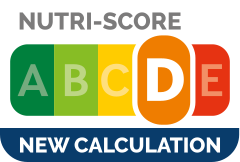 Lower nutritional quality
Nutri-Score data warning
Nutrient levels
Fat in high quantity (20.4%)
Saturated fat in moderate quantity (2.8%)
Sugars in low quantity (2%)
Salt in high quantity (1.78%)
Nutrition facts
| Nutrition facts | As sold for 100 g / 100 ml |
|---|---|
| Energy | 849.72 kJ (203 kcal) |
| Fat | 20.4 g |
| Saturated fat | 2.8 g |
| Carbohydrates | 3.5 g |
| Sugars | 2 g |
| Dietary fiber | ? |
| Proteins | 1.3 g |
| Salt | 1.78 g |
| Sodium | 0.712 g |
| Fruits, vegetables and legumes | ? |
Nutrition facts (Detailed data)
| Nutrition facts | As sold for 100 g / 100 ml | As sold Per serving (legacy) |
|---|---|---|
| Energy | 849.72 kJ (203 kcal) | ? |
| Fat | 20.4 g | ? |
| Saturated fat | 2.8 g | ? |
| Carbohydrates | 3.5 g | ? |
| Sugars | 2 g | ? |
| Dietary fiber | ? | ? |
| Proteins | 1.3 g | ? |
| Salt | 1.78 g | ? |
| Sodium | 0.712 g | ? |
| Fruits, vegetables and legumes | ? | ? |
Ingredients
Ingredients list
Ingredient information
Allergens
Ingredients analysis
No ingredients containing palm oil.
Unrecognized: es:aceitunas-manzanilla-deshuesadas
Vegan status unknown
Unrecognized: es:aceitunas-manzanilla-deshuesadas
Vegetarian status unknown
Unrecognized: es:aceitunas-manzanilla-deshuesadas
Food Processing
NOVA group
 Ultra-processed food and drink products
Elements that indicate the product is in NOVA group 4
How NOVA works
Additives
E906 - Benzoin resin
Benzoin or benjamin (corrupted pronunciation) is a balsamic resin obtained from the bark of several species of trees in the genus Styrax. It is used in perfumes, some kinds of incense, as a flavoring, and medicine (see tincture of benzoin). It is distinct from the chemical compound benzoin, which is ultimately derived from benzoin resin; the resin, however, does not contain this compound. Benzoin is sometimes called gum benzoin or gum benjamin, and in India as loban, though loban is, via Arabic lubān, a generic term for frankincense-type incense, e.g., fragrant tree resin. Benzoin is also called storax, not to be confused with the balsam of the same name obtained from the Hamamelidaceae family. Benzoin is a common ingredient in incense-making and perfumery because of its sweet vanilla-like aroma and fixative properties. Gum benzoin is a major component of the type of church incense used in Russia and some other Orthodox Christian societies, as well as Western Catholic Churches. Most benzoin is used in the Arab states of the Persian Gulf and India, where it is burned on charcoal as an incense. It is also used in the production of Bakhoor (Arabic بخور - scented wood chips) as well as various mixed resin incense in the Arab countries and the Horn of Africa. Benzoin is also used in blended types of Japanese incense, Indian incense, Chinese incense (known as Anxi xiang; 安息香), and Papier d'Arménie as well as incense sticks. There are two common kinds of benzoin, benzoin Siam and benzoin Sumatra. Benzoin Siam is obtained from Styrax tonkinensis, found across Thailand, Laos, Cambodia, and Vietnam. Benzoin Sumatra is obtained from Styrax benzoin, which grows predominantly on the island of Sumatra. Unlike Siamese benzoin, Sumatran benzoin contains cinnamic acid in addition to benzoic acid. In the United States, Sumatra benzoin (Styrax benzoin and Styrax paralleoneurus) is more customarily used in pharmaceutical preparations, Siam benzoin (Styrax tonkinensis et al.) in the flavor and fragrance industries.In perfumery, benzoin is used as a fixative, slowing the dispersion of essential oils and other fragrance materials into the air. Benzoin is used in cosmetics, veterinary medicine, and scented candles. It is used as a flavoring in alcoholic and nonalcoholic beverages, baked goods, chewing gum, frozen dairy, gelatins, puddings, and soft candy.
Environment
Green-Score, origins bonus, and transportation impact are shown for Worldwide .
Green Score
Overall grade
 Unknown environmental impact
About Green-Score
Current scope
Green-Score availability
Bonuses and maluses
Declared origins
Packaging impact
Packaging
Packaging impact
Declared packaging
Data precision
Transportation
Declared origins
Data Source
Product data comes from Open Food Facts. Food Benchmark also adds translations, category comparisons and explanatory calculations.
The database is licensed under ODbL 1.0, individual contents under DbCL 1.0, and product photos under CC BY-SA 3.0.
Product added on July 11, 2019 at 6:40:04 PM UTC by elcoco .
Last edit on October 27, 2021 at 7:01:15 PM UTC by kiliweb .
Product page also edited by alia, elcoco, yuka.sY2b0xO6T85zoF3NwEKvlnFpSf_x-y7FaQXtxX-o98qOIMTtavdt4qjjKag, kiliweb, thaialagata, yuka.UzRNdk1Za25tc0Fuc2NjNC9pS0syc01xMnFieEJYcTVMTlZNSVE9PQ, elcoco.8f3b891780f6b8e882253a0b098e80d7, yuka.sY2b0xO6T85zoF3NwEKvlh1VcMv_uw_gLxH5unKE2I-TcpjFYdV45pLnIqs, yuka.sY2b0xO6T85zoF3NwEKvlnB5b4rvgy2ZLSzTgHS5mv6hJJn1Z_BLx7bQPqs.