

Renutryl Booster saveur Chocolat
Health
Nutrition
Nutri-Score
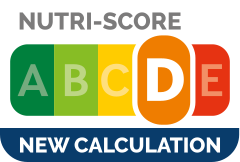 Lower nutritional quality
Nutri-Score data warning
Nutrient levels
Fat in moderate quantity (7.1%)
Saturated fat in moderate quantity (0.9%)
Sugars in high quantity (6.4%)
Salt in moderate quantity (0.21%)
Nutrition label

Nutrition facts
| Nutrition facts | As sold for 100 ml | Compared to: Unsweetened beverages |
|---|---|---|
| Energy | ~ 844.7 kJ (201 kcal) | 165.182 kJ (39 kcal) (+411%) |
| Fat | 7.1 g | 0.209 g (+3297%) |
| Saturated fat | 0.9 g | 0.04 g (+2150%) |
| Carbohydrates | 24 g | 8.36 g (+187%) |
| Sugars | 6.4 g | 7.338 g (-13%) |
| Dietary fiber | 0.5 g | ? |
| Proteins | 10 g | 0.289 g (+3360%) |
| Salt | 0.21 g | 0.024 g (+775%) |
| Sodium | 0.084 g | 0.01 g (+740%) |
| Vitamin A | 0.00018 g | 0.003 µg (+5999900%) |
| Vitamin D | 0.0000025 g | 0.002 µg (+124900%) |
| Vitamin E | 0.0034 g | 0.251 mg (+1255%) |
| Vitamin K | 0.000013 g | 2.011 µg (+546%) |
| Vitamin C | 0.02 g | ? |
| Vitamin PP | 0.0013 g | ? |
| Biotin | 0.00001 g | 10.063 µg (-1%) |
| Pantothenic acid | 0.0015 g | ? |
| Potassium | 0.225 g | 149.071 mg (+51%) |
| Chloride | 0.085 g | 36.873 mg (+131%) |
| Calcium | 0.205 g | 21.308 mg (+862%) |
| Phosphorus | 0.12 g | 17.323 mg (+593%) |
| Iron | 0.0014 g | 0.431 mg (+225%) |
| Magnesium | 0.021 g | 14.122 mg (+49%) |
| Zinc | 0.0014 g | 0.111 mg (+1161%) |
| Copper | 0.00033 g | 0.08 mg (+313%) |
| Manganese | 0.00045 g | 0.199 mg (+126%) |
| Fluoride | 0.00025 g | 0.126 mg (+98%) |
| Selenium | 0.000012 g | 1.029 µg (+1066%) |
| Chromium | 0.00002 g | ? |
| Molybdenum | 0.000015 g | ? |
| Iodine | 0.000038 g | 1.654 µg (+2197%) |
| Fruits, vegetables and legumes | ~ 0 % | ? |
| Water | 67 g | 85.567 g (-22%) |
Nutrition facts (Detailed data)
| Nutrition facts | As sold for 100 ml | As sold Per 100 ml (packaging) | As sold Per 100 g (estimate) |
|---|---|---|---|
| Energy | ~ 844.7 kJ (201 kcal) | ? (201 kcal) | ? |
| Fat | 7.1 g | 7.1 g | ? |
| Saturated fat | 0.9 g | 0.9 g | ? |
| Carbohydrates | 24 g | 24 g | ? |
| Sugars | 6.4 g | 6.4 g | ? |
| Dietary fiber | 0.5 g | 0.5 g | ? |
| Proteins | 10 g | 10 g | ? |
| Salt | 0.21 g | 0.21 g | ? |
| Sodium | 0.084 g | 0.084 g | ? |
| Vitamin A | 0.00018 g | 0.00018 g | ? |
| Vitamin D | 0.0000025 g | 0.0000025 g | ? |
| Vitamin E | 0.0034 g | 0.0034 g | ? |
| Vitamin K | 0.000013 g | 0.000013 g | ? |
| Vitamin C | 0.02 g | 0.02 g | ? |
| Vitamin PP | 0.0013 g | 0.0013 g | ? |
| Biotin | 0.00001 g | 0.00001 g | ? |
| Pantothenic acid | 0.0015 g | 0.0015 g | ? |
| Potassium | 0.225 g | 0.225 g | ? |
| Chloride | 0.085 g | 0.085 g | ? |
| Calcium | 0.205 g | 0.205 g | ? |
| Phosphorus | 0.12 g | 0.12 g | ? |
| Iron | 0.0014 g | 0.0014 g | ? |
| Magnesium | 0.021 g | 0.021 g | ? |
| Zinc | 0.0014 g | 0.0014 g | ? |
| Copper | 0.00033 g | 0.00033 g | ? |
| Manganese | 0.00045 g | 0.00045 g | ? |
| Fluoride | 0.00025 g | 0.00025 g | ? |
| Selenium | 0.000012 g | 0.000012 g | ? |
| Chromium | 0.00002 g | 0.00002 g | ? |
| Molybdenum | 0.000015 g | 0.000015 g | ? |
| Iodine | 0.000038 g | 0.000038 g | ? |
| Fruits, vegetables and legumes | ~ 0 % | ? | ~ 0 % |
| Water | 67 g | 67 g | ? |
Ingredients
Ingredients image

Ingredients list
Ingredient information
Added sugars
Allergens
Ingredients analysis
Palm oil content unknown
Contains non-vegan ingredients.
Vegetarian status unknown
Food Processing
NOVA group
 Ultra-processed food and drink products
Elements that indicate the product is in NOVA group 4
How NOVA works
Additives
E330 - Citric acidAntioxidantSequestrant
Citric acid is a natural organic acid found in citrus fruits such as lemons, oranges, and limes.
It is widely used in the food industry as a flavor enhancer, acidulant, and preservative due to its tart and refreshing taste.
Citric acid is safe for consumption when used in moderation and is considered a generally recognized as safe (GRAS) food additive by regulatory agencies worldwide.
E407 - Carrageenan EFSA overexposure risk: highCarrierEmulsifierHumectantStabiliserThickener
Carrageenan (E407), derived from red seaweed, is widely employed in the food industry as a gelling, thickening, and stabilizing agent, notably in dairy and meat products.
It can exist in various forms, each imparting distinct textural properties to food.
However, its degraded form, often referred to as poligeenan, has raised health concerns due to its potential inflammatory effects and its classification as a possible human carcinogen (Group 2B) by the International Agency for Research on Cancer (IARC).
Nevertheless, food-grade carrageenan has been deemed safe by various regulatory bodies when consumed in amounts typically found in food.
E471 - Mono- and diglycerides of fatty acidsEmulsifierStabiliser
Mono- and diglycerides of fatty acids (E471), are food additives commonly used as emulsifiers in various processed foods.
These compounds consist of glycerol molecules linked to one or two fatty acid chains, which help stabilize and blend water and oil-based ingredients. E471 enhances the texture and shelf life of products like margarine, baked goods, and ice cream, ensuring a smooth and consistent texture.
It is generally considered safe for consumption within established regulatory limits.
E525 - Potassium hydroxide
Potassium hydroxide is an inorganic compound with the formula KOH, and is commonly called caustic potash. Along with sodium hydroxide (NaOH), this colorless solid is a prototypical strong base. It has many industrial and niche applications, most of which exploit its corrosive nature and its reactivity toward acids. An estimated 700,000 to 800,000 tonnes were produced in 2005. About 100 times more NaOH than KOH is produced annually. KOH is noteworthy as the precursor to most soft and liquid soaps, as well as numerous potassium-containing chemicals.
Environment
Green-Score, origins bonus, and transportation impact are shown for Worldwide .
Green Score
Overall grade
 Unknown environmental impact
About Green-Score
Current scope
Green-Score availability
Bonuses and maluses
Declared origins
Packaging impact
Packaging
Packaging impact
Packaging components
| Shape | Material | Recycling | Impact |
|---|---|---|---|
| Bottle CAP | Plastic | Unknown | High |
| Seal | Metal | Unknown | High |
| Sleeve | Cardboard | Unknown | Low |
Declared packaging
Data precision
Transportation
Declared origins
Forest footprint
Forest footprint
Deforestation risk details
Data Source
Product data comes from Open Food Facts. Food Benchmark also adds translations, category comparisons and explanatory calculations.
The database is licensed under ODbL 1.0, individual contents under DbCL 1.0, and product photos under CC BY-SA 3.0.
Product added on October 10, 2018 at 12:37:32 PM UTC by kiliweb .
Last edit on March 13, 2026 at 9:12:51 PM UTC by new-nutrition-bot .
Product page also edited by anais1234, date-limite-app, ecoscore-impact-estimator, fly, kiliweb, mbe, new-nutrition-bot, openfoodfacts-contributors, packbot, roboto-app, yuka.V0tjL0c0a1BwZk1vdHNGbjVqMzJwZjVYL3NlRFFUdTVKdE1JSWc9PQ, yuka.sY2b0xO6T85zoF3NwEKvlnFDY_vzuQOUGTDWnHSQ9-nQf57OROBtyazRHqs.