

Pirulo cool cola
Health
Nutrition
Nutri-Score
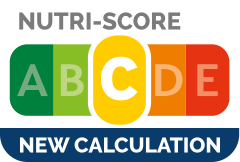 Average nutritional quality
Nutri-Score data warning
Nutrient levels
Fat in low quantity (0%)
Saturated fat in low quantity (0%)
Sugars in moderate quantity (10.7%)
Salt in low quantity (0%)
Nutrition facts
| Nutrition facts | As sold for 100 g / 100 ml | Compared to: Ice pops |
|---|---|---|
| Energy | ~ 306.8 kJ (72 kcal) | 363.982 kJ (86 kcal) (-16%) |
| Fat | 0 g | 0.485 g (-100%) |
| Saturated fat | 0 g | 0.298 g (-100%) |
| Carbohydrates | 18 g | 19.845 g (-9%) |
| Sugars | 10.7 g | 17.66 g (-39%) |
| Dietary fiber | 0.1 g | ? |
| Proteins | 0 g | 0.288 g (-100%) |
| Salt | 0 g | 0.022 g (-100%) |
| Sodium | 0 g | 0.009 g (-100%) |
| Fruits, vegetables and legumes | ~ 5.35 % | ? |
Nutrition facts (Detailed data)
| Nutrition facts | As sold for 100 g / 100 ml | As sold Per 100 g (packaging) | As sold Per 100 g (estimate) |
|---|---|---|---|
| Energy | ~ 306.8 kJ (72 kcal) | ? (72 kcal) | ? |
| Fat | 0 g | 0 g | ? |
| Saturated fat | 0 g | 0 g | ? |
| Carbohydrates | 18 g | 18 g | ? |
| Sugars | 10.7 g | 10.7 g | ? |
| Dietary fiber | 0.1 g | 0.1 g | ? |
| Proteins | 0 g | 0 g | ? |
| Salt | 0 g | 0 g | ? |
| Sodium | 0 g | 0 g | ? |
| Fruits, vegetables and legumes | ~ 5.35 % | ? | ~ 5.35 % |
Ingredients
Ingredients image

Ingredients list
Ingredient information
Added sugars
Ingredients analysis
No ingredients containing palm oil.
Vegan status unknown
Vegetarian status unknown
Food Processing
NOVA group
 Ultra-processed food and drink products
Elements that indicate the product is in NOVA group 4
How NOVA works
Additives
E150a - Plain caramel EFSA overexposure risk: noColour
Caramel color or caramel coloring is a water-soluble food coloring.
E330 - Citric acidAntioxidantSequestrant
Citric acid is a natural organic acid found in citrus fruits such as lemons, oranges, and limes.
It is widely used in the food industry as a flavor enhancer, acidulant, and preservative due to its tart and refreshing taste.
Citric acid is safe for consumption when used in moderation and is considered a generally recognized as safe (GRAS) food additive by regulatory agencies worldwide.
E407a - Processed eucheuma seaweed EFSA overexposure risk: highCarrierEmulsifierHumectantStabiliserThickener
Carrageenans or carrageenins ( karr-ə-gee-nənz, from Irish carraigín, "little rock") are a family of linear sulfated polysaccharides that are extracted from red edible seaweeds. They are widely used in the food industry, for their gelling, thickening, and stabilizing properties. Their main application is in dairy and meat products, due to their strong binding to food proteins. There are three main varieties of carrageenan, which differ in their degree of sulfation. Kappa-carrageenan has one sulfate group per disaccharide, iota-carrageenan has two, and lambda-carrageenan has three. Gelatinous extracts of the Chondrus crispus (Irish moss) seaweed have been used as food additives since approximately the fifteenth century. Carrageenan is a vegetarian and vegan alternative to gelatin in some applications or may be used to replace gelatin in confectionery.
E410 - Locust bean gumEmulsifierStabiliserThickener
Locust bean gum (LBG, also known as carob gum, carob bean gum, carobin, E410) is a thickening agent and a gelling agent used in food technology.
E412 - Guar gumEmulsifierStabiliserThickener
Guar gum (E412) is a natural food additive derived from guar beans.
This white, odorless powder is valued for its remarkable thickening and stabilizing properties, making it a common ingredient in various food products, including sauces, dressings, and ice creams.
When used in moderation, guar gum is considered safe for consumption, with no known adverse health effects.
E422 - GlycerolHumectantThickener
Glycerol (; also called glycerine or glycerin; see spelling differences) is a simple polyol compound. It is a colorless, odorless, viscous liquid that is sweet-tasting and non-toxic. The glycerol backbone is found in all lipids known as triglycerides. It is widely used in the food industry as a sweetener and humectant and in pharmaceutical formulations. Glycerol has three hydroxyl groups that are responsible for its solubility in water and its hygroscopic nature.
Environment
Green-Score, origins bonus, and transportation impact are shown for Worldwide .
Green Score
Overall grade
 Low environmental impact
About Green-Score
Current scope
Life cycle analysis
Average impact of the category
 Ice lolly • Score: 91/100
Life-cycle reference
Overall environmental impact by stage (PEF)
The overall environmental impact figure (PEF) comes from ADEME's Agribalyse database, for the category: Ice lolly. Source: ADEME Agribalyse Database.
| Stage | Impact |
|---|---|
| Agriculture | 31.4 % |
| Processing | 17.3 % |
| Packaging | 25.8 % |
| Transportation | 10.6 % |
| Distribution | 9.3 % |
| Consumption | 5.4 % |
Bonuses and maluses
Declared origins
Packaging impact
Green-Score for this product
Green-Score for this product
Final score: 71/100Final score breakdown
Carbon footprint
Carbon footprint
Climate impact by stage (CO2e)
The carbon emission figure comes from ADEME's Agribalyse database, for the category: Ice lolly. Source: ADEME Agribalyse Database.
| Stage | Impact |
|---|---|
| Agriculture | 18.4 % |
| Processing | 11.0 % |
| Packaging | 47.7 % |
| Transportation | 16.6 % |
| Distribution | 4.3 % |
| Consumption | 1.7 % |
Packaging
Packaging impact
Data precision
Transportation
Declared origins
Forest footprint
Forest footprint
Deforestation risk details
Data Source
Product data comes from Open Food Facts. Food Benchmark also adds translations, category comparisons and explanatory calculations.
The database is licensed under ODbL 1.0, individual contents under DbCL 1.0, and product photos under CC BY-SA 3.0.
Product added on April 22, 2016 at 12:49:18 PM UTC by openfoodfacts-contributors .
Last edit on March 17, 2026 at 4:40:14 PM UTC by new-nutrition-bot .
Product page also edited by acuario, elcoco, fix-missing-lang-bot, kiliweb, moon-rabbit, musarana, new-nutrition-bot, openfoodfacts-contributors, roboto-app, yuka.ZnEwN05vZzlnOVl1djhJbHh3N3NvTkZaNXE2Z2ZqMldJY2hLSUE9PQ.