

Powerade Zero Ion4 sabor uva
Health
Nutrition
Nutri-Score
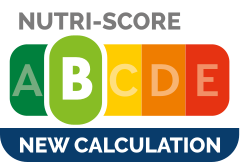 Good nutritional quality
Nutri-Score data warning
Nutrient levels
Fat in low quantity (0%)
Saturated fat in low quantity (0%)
Sugars in low quantity (0%)
Salt in low quantity (0.107%)
Nutrition facts
| Nutrition facts | As sold for 100 g / 100 ml | Compared to: Artificially sweetened beverages |
|---|---|---|
| Energy | 0 kJ (0 kcal) | 44.619 kJ (11 kcal) (-100%) |
| Fat | 0 g | 0.037 g (-100%) |
| Saturated fat | 0 g | 0.009 g (-100%) |
| Carbohydrates | 0 g | 2.269 g (-100%) |
| Sugars | 0 g | 2.011 g (-100%) |
| Dietary fiber | 0 g | ? |
| Proteins | 0 g | 0.062 g (-100%) |
| Salt | 0.107 mg | 0.043 g (-100%) |
| Sodium | 0.0427 mg | 0.017 g (-100%) |
| Alcohol | 0 % vol | ? |
| Vitamin PP | 0.00015 mg | ? |
| Vitamin B6 | 0.0002 mg | ? |
| Vitamin B12 | 0.00000105 µg | ? |
| Potassium | 0.011 mg | 27.114 mg (-100%) |
| Calcium | 0.00125 mg | 19.627 mg (-100%) |
| Magnesium | 0.0004 mg | 5.182 mg (-100%) |
| Fruits, vegetables and legumes | ? | ? |
Nutrition facts (Detailed data)
| Nutrition facts | As sold for 100 g / 100 ml | As sold Per serving (legacy) |
|---|---|---|
| Energy | 0 kJ (0 kcal) | 0 kJ (0 kcal) |
| Fat | 0 g | 0 g |
| Saturated fat | 0 g | 0 g |
| Carbohydrates | 0 g | 0 g |
| Sugars | 0 g | 0 g |
| Dietary fiber | 0 g | 0 g |
| Proteins | 0 g | 0 g |
| Salt | 0.107 mg | 0.21336 mg |
| Sodium | 0.0427 mg | 0.085344 mg |
| Alcohol | 0 % vol | 0 % vol |
| Vitamin PP | 0.00015 mg | 0.0003 mg |
| Vitamin B6 | 0.0002 mg | 0.0004 mg |
| Vitamin B12 | 0.00000105 µg | 0.0000021 µg |
| Potassium | 0.011 mg | 0.022 mg |
| Calcium | 0.00125 mg | 0.0025 mg |
| Magnesium | 0.0004 mg | 0.0008 mg |
| Fruits, vegetables and legumes | ? | ? |
Serving size
Ingredients
Ingredients list
Ingredient information
Traces
Ingredients analysis
No ingredients containing palm oil.
Unrecognized: es:concentrado-powerade-zero-ion4-uva, es:niacinamida, es:azul-1
Vegan status unknown
Unrecognized: es:concentrado-powerade-zero-ion4-uva, en:sodium-chloride, en:vitamin-c, es:niacinamida, es:azul-1, en:cyanocobalamin, en:vitamin-b12
Vegetarian status unknown
Unrecognized: es:concentrado-powerade-zero-ion4-uva, en:sodium-chloride, en:vitamin-c, es:niacinamida, es:azul-1, en:cyanocobalamin, en:vitamin-b12
Food Processing
NOVA group
 Ultra-processed food and drink products
Elements that indicate the product is in NOVA group 4
How NOVA works
Additives
E129 - Allura red EFSA overexposure risk: noColour
Allura Red AC is a red azo dye that goes by several names, including FD&C Red 40. It is used as a food dye and has the E number E129. It is usually supplied as its red sodium salt, but can also be used as the calcium and potassium salts. These salts are soluble in water. In solution, its maximum absorbance lies at about 504 nm.
E330 - Citric acidAntioxidantSequestrant
Citric acid is a natural organic acid found in citrus fruits such as lemons, oranges, and limes.
It is widely used in the food industry as a flavor enhancer, acidulant, and preservative due to its tart and refreshing taste.
Citric acid is safe for consumption when used in moderation and is considered a generally recognized as safe (GRAS) food additive by regulatory agencies worldwide.
E340 - Potassium phosphates EFSA overexposure risk: highEmulsifierHumectantSequestrantStabiliserThickener
Potassium phosphate is a generic term for the salts of potassium and phosphate ions including: Monopotassium phosphate (KH2PO4) (Molar mass approx: 136 g/mol) Dipotassium phosphate (K2HPO4) (Molar mass approx: 174 g/mol) Tripotassium phosphate (K3PO4) (Molar mass approx: 212.27 g/mol)As food additives, potassium phosphates have the E number E340.
E340i - Monopotassium phosphateEmulsifierHumectantSequestrantStabiliserThickener
No additive description is available yet.
Environment
Green-Score, origins bonus, and transportation impact are shown for Worldwide .
Green Score
Overall grade
 Unknown environmental impact
About Green-Score
Current scope
Green-Score availability
Bonuses and maluses
Origins of ingredients
Packaging impact
Packaging
Packaging impact
Packaging components
| Shape | Material | Recycling | Impact |
|---|---|---|---|
| Bottle | Unknown | Unknown | Unknown |
Declared packaging
Data precision
Transportation
Manufacturing locations
Origins of ingredients
Origins breakdown
| Origin | Percent of ingredients | Impact |
|---|---|---|
| Mexico | 100 % | High |
Data Source
Product data comes from Open Food Facts. Food Benchmark also adds translations, category comparisons and explanatory calculations.
The database is licensed under ODbL 1.0, individual contents under DbCL 1.0, and product photos under CC BY-SA 3.0.
Product added on August 21, 2018 at 4:52:06 PM UTC by openfoodfactsmx5 .
Last edit on February 10, 2022 at 5:01:16 PM UTC by packbot .
Product page also edited by mxbot, younescontrib, openfoodfactsmx5, packbot, openfoodfactsmx.