

Queso Panela reducido en grasa
Health
Nutrition
Nutri-Score
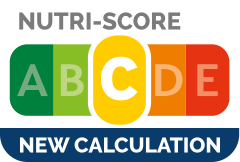 Average nutritional quality
Nutri-Score data warning
Nutrient levels
Fat in moderate quantity (9%)
Saturated fat in high quantity (5.67%)
Sugars in low quantity (4%)
Salt in high quantity (1.52%)
Nutrition label

Nutrition facts
| Nutrition facts | As sold for 100 g / 100 ml | Compared to: Panela cheeses |
|---|---|---|
| Energy | 723.333333333333 kJ (173 kcal) | 1,024.861 kJ (248 kcal) (-29%) |
| Fat | 9 g | 18.388 g (-51%) |
| Saturated fat | 5.66666666666667 g | 11.41 g (-50%) |
| Carbohydrates | 4 g | 3.026 g (+32%) |
| Sugars | 4 g | 2.438 g (+64%) |
| Added sugars | ~ 0 g | 0 g |
| Starch | 0 g | ? |
| Dietary fiber | 0 g | ? |
| Proteins | 19 g | 16.801 g (+13%) |
| Salt | 1.524 g | 1.263 g (+21%) |
| Sodium | 0.6096 g | 0.49 g (+24%) |
| Vitamin A | 0 g | ? |
| Vitamin E | 0 g | ? |
| Vitamin K | 0 g | ? |
| Vitamin C | 0 g | ? |
| Phosphorus | 0 g | ? |
| Iron | 0 g | ? |
| Magnesium | 0 g | ? |
| Zinc | 0 g | ? |
| Copper | 0 g | ? |
| Manganese | 0 g | ? |
| Selenium | 0 g | ? |
| Caffeine | 0 g | ? |
| Fruits, vegetables and legumes | ~ 0 % | ? |
| Choline | 0 g | ? |
Nutrition facts (Detailed data)
| Nutrition facts | As sold for 100 g / 100 ml | As sold Per 100 g (estimate) | As sold Per serving (30 g) (packaging) |
|---|---|---|---|
| Energy | 723.333333333333 kJ (173 kcal) | ? | 217 kJ (51 kcal) |
| Fat | 9 g | ? | 2.7 g |
| Saturated fat | 5.66666666666667 g | ? | 1.7 g |
| Carbohydrates | 4 g | ? | 1.2 g |
| Sugars | 4 g | ? | 1.2 g |
| Added sugars | ~ 0 g | ~ 0 g | 0 g |
| Starch | 0 g | ? | 0 g |
| Dietary fiber | 0 g | ? | 0 g |
| Proteins | 19 g | ? | 5.7 g |
| Salt | 1.524 g | ? | 0.4572 g |
| Sodium | 0.6096 g | ? | 0.18288 g |
| Vitamin A | 0 g | ? | 0 g |
| Vitamin E | 0 g | ? | 0 g |
| Vitamin K | 0 g | ? | 0 g |
| Vitamin C | 0 g | ? | 0 g |
| Phosphorus | 0 g | ? | 0 g |
| Iron | 0 g | ? | 0 g |
| Magnesium | 0 g | ? | 0 g |
| Zinc | 0 g | ? | 0 g |
| Copper | 0 g | ? | 0 g |
| Manganese | 0 g | ? | 0 g |
| Selenium | 0 g | ? | 0 g |
| Caffeine | 0 g | ? | 0 g |
| Fruits, vegetables and legumes | ~ 0 % | ~ 0 % | ? |
| Choline | 0 g | ? | 0 g |
Serving size
Ingredients
Ingredients image

Ingredients list
Ingredient information
Allergens
Traces
Ingredients analysis
No ingredients containing palm oil.
Contains non-vegan ingredients.
Vegetarian status unknown
Food Processing
NOVA group
 Ultra-processed food and drink products
Elements that indicate the product is in NOVA group 4
How NOVA works
Additives
E234 - NisinPreservative
Nisin is a polycyclic antibacterial peptide produced by the bacterium Lactococcus lactis that is used as a food preservative. It has 34 amino acid residues, including the uncommon amino acids lanthionine (Lan), methyllanthionine (MeLan), didehydroalanine (Dha), and didehydroaminobutyric acid (Dhb). These unusual amino acids are introduced by posttranslational modification of the precursor peptide. In these reactions a ribosomally synthesized 57-mer is converted to the final peptide. The unsaturated amino acids originate from serine and threonine, and the enzyme-catalysed addition of cysteine residues to the didehydro amino acids result in the multiple (5) thioether bridges. Subtilin and epidermin are related to nisin. All are members of a class of molecules known as lantibiotics. In the food industry, nisin is obtained from the culturing of L. lactis on natural substrates, such as milk or dextrose, and it is not chemically synthesized. It was originally isolated in the late 1930s, and produced since the 1950s as Nisaplin from naturally occurring sources by Aplin and Barrett in laboratories in Beaminster in Dorset, and approved as an additive for food use in the USA in the late 1960s, although the Beaminster factory now is owned by DuPont.
E235 - NatamycinPreservative
NATAMYCIN is used in the food industry as a preservative.
Environment
Green-Score, origins bonus, and transportation impact are shown for Worldwide .
Green Score
Overall grade
 High environmental impact
About Green-Score
Current scope
Life cycle analysis
Average impact of the category
 Camembert cheese, from cow's milk • Score: 54/100
Life-cycle reference
Overall environmental impact by stage (PEF)
The overall environmental impact figure (PEF) comes from ADEME's Agribalyse database, for the category: Camembert cheese, from cow's milk. Source: ADEME Agribalyse Database.
| Stage | Impact |
|---|---|
| Agriculture | 84.7 % |
| Processing | 5.0 % |
| Packaging | 4.0 % |
| Transportation | 3.7 % |
| Distribution | 1.9 % |
| Consumption | 0.5 % |
Bonuses and maluses
Origins of ingredients
Packaging impact
Green-Score for this product
Green-Score for this product
Final score: 41/100Final score breakdown
Carbon footprint
Carbon footprint
Climate impact by stage (CO2e)
The carbon emission figure comes from ADEME's Agribalyse database, for the category: Camembert cheese, from cow's milk. Source: ADEME Agribalyse Database.
| Stage | Impact |
|---|---|
| Agriculture | 86.0 % |
| Processing | 4.3 % |
| Packaging | 4.1 % |
| Transportation | 4.8 % |
| Distribution | 0.7 % |
| Consumption | 0.1 % |
Packaging

Packaging impact
Packaging components
| Shape | Material | Recycling | Impact |
|---|---|---|---|
| Unknown | Plastic | Unknown | High |
Declared packaging
Data precision
Transportation
Manufacturing locations
Origins of ingredients
Origins breakdown
| Origin | Percent of ingredients | Impact |
|---|---|---|
| Mexico | 100 % | High |
Data Source
Product data comes from Open Food Facts. Food Benchmark also adds translations, category comparisons and explanatory calculations.
The database is licensed under ODbL 1.0, individual contents under DbCL 1.0, and product photos under CC BY-SA 3.0.
Product added on August 24, 2018 at 7:56:29 PM UTC by openfoodfactsmx6 .
Last edit on March 1, 2026 at 8:46:28 PM UTC by cojor .
Product page also edited by angiehk, cojor, municorn-calorie-counter-app, openfoodfactsmx, openfoodfactsmx6, packbot, younescontrib.