

Hydrate - Rhabarber-Erdbeergeschmack
Health
Nutrition
Nutri-Score
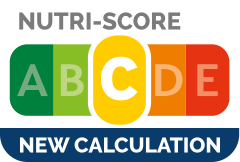 Average nutritional quality
Nutri-Score data warning
Nutrient levels
Fat in low quantity (0%)
Saturated fat in low quantity (0%)
Sugars in moderate quantity (4.2%)
Salt in low quantity (0.03%)
Nutrition facts
| Nutrition facts | As sold for 100 g / 100 ml | Compared to: Flavored waters |
|---|---|---|
| Energy | 71 kJ (17 kcal) | 31.212 kJ (7 kcal) (+127%) |
| Fat | 0 g | 0.042 g (-100%) |
| Saturated fat | 0 g | 0.005 g (-100%) |
| Carbohydrates | 4.2 g | 1.661 g (+153%) |
| Sugars | 4.2 g | 1.585 g (+165%) |
| Dietary fiber | ? | ? |
| Proteins | 0 g | 0.049 g (-100%) |
| Salt | 0.03 g | 0.011 g (+173%) |
| Sodium | 0.012 g | 0.005 g (+140%) |
| Vitamin D | 0.0000008 g | 0.024 µg (+3233%) |
| Vitamin E | 0.0012 g | 0.147 mg (+716%) |
| Vitamin C | 0.011 g | ? |
| Vitamin PP | 0.0016 g | ? |
| Vitamin B12 | 0.00000025 g | ? |
| Biotin | 0.000005 g | 6.866 µg (-27%) |
| Pantothenic acid | 0.00048 g | ? |
| Fruits, vegetables and legumes | ? | ? |
Nutrition facts (Detailed data)
| Nutrition facts | As sold for 100 g / 100 ml | As sold Per serving (legacy) |
|---|---|---|
| Energy | 71 kJ (17 kcal) | ? |
| Fat | 0 g | ? |
| Saturated fat | 0 g | ? |
| Carbohydrates | 4.2 g | ? |
| Sugars | 4.2 g | ? |
| Dietary fiber | ? | ? |
| Proteins | 0 g | ? |
| Salt | 0.03 g | ? |
| Sodium | 0.012 g | ? |
| Vitamin D | 0.0000008 g | ? |
| Vitamin E | 0.0012 g | ? |
| Vitamin C | 0.011 g | ? |
| Vitamin PP | 0.0016 g | ? |
| Vitamin B12 | 0.00000025 g | ? |
| Biotin | 0.000005 g | ? |
| Pantothenic acid | 0.00048 g | ? |
| Fruits, vegetables and legumes | ? | ? |
Ingredients
Ingredients image

Ingredients list
Ingredient information
Added sugars
Ingredients analysis
No ingredients containing palm oil.
Vegan status unknown
Vegetarian status unknown
Food Processing
NOVA group
 Ultra-processed food and drink products
Elements that indicate the product is in NOVA group 4
How NOVA works
Additives
E160d - LycopeneColour
Lycopene (from the neo-Latin Lycopersicum, the tomato species) is a bright red carotene and carotenoid pigment and phytochemical found in tomatoes and other red fruits and vegetables, such as red carrots, watermelons, gac, and papayas, but it is not in strawberries or cherries. Although lycopene is chemically a carotene, it has no vitamin A activity. Foods that are not red may also contain lycopene, such as asparagus and parsley.In plants, algae, and other photosynthetic organisms, lycopene is an intermediate in the biosynthesis of many carotenoids, including beta-carotene, which is responsible for yellow, orange, or red pigmentation, photosynthesis, and photoprotection. Like all carotenoids, lycopene is a tetraterpene. It is insoluble in water. Eleven conjugated double bonds give lycopene its deep red color. Owing to the strong color, lycopene is useful as a food coloring (registered as E160d) and is approved for use in the USA, Australia and New Zealand (registered as 160d) and the European Union.
E170 - Calcium carbonates EFSA overexposure risk: no
CALCIUM CARBONATE is a chemical compound with the formula CaCO3.
E170i - Calcium carbonate EFSA overexposure risk: noColourStabiliser
No additive description is available yet.
E330 - Citric acidAntioxidantSequestrant
Citric acid is a natural organic acid found in citrus fruits such as lemons, oranges, and limes.
It is widely used in the food industry as a flavor enhancer, acidulant, and preservative due to its tart and refreshing taste.
Citric acid is safe for consumption when used in moderation and is considered a generally recognized as safe (GRAS) food additive by regulatory agencies worldwide.
E440 - PectinsEmulsifierStabiliserThickener
Pectins (E440) are natural carbohydrates, predominantly found in fruits, that act as gelling agents in the food industry, creating the desirable jelly-like texture in jams, jellies, and marmalades.
Pectins stabilize and thicken various food products, such as desserts, confectioneries, and beverages, ensuring a uniform consistency and quality.
Recognized as safe by various health authorities, pectins have been widely used without notable adverse effects when consumed in typical dietary amounts.
Environment
Green-Score, origins bonus, and transportation impact are shown for Worldwide .
Green Score
Overall grade
About Green-Score
Current scope
Green-Score availability
Bonuses and maluses
Origins of ingredients
Packaging impact
Packaging

Packaging impact
Packaging materials
| Material | % | Packaging weight | Packaging weight per 100 g of product |
|---|---|---|---|
| Plastic | 100 % | 30 g | 6 g |
| Total | 100 % | 30 g | 6 g |
Packaging components
| Shape | Material | Recycling | Impact |
|---|---|---|---|
| 1 Bottle | PET Transparent | Recycle | Medium |
Transportation
Origins of ingredients
Origins breakdown
| Origin | Percent of ingredients | Impact |
|---|---|---|
| Sweden | 100 % | Medium |
Data Source
Product data comes from Open Food Facts. Food Benchmark also adds translations, category comparisons and explanatory calculations.
The database is licensed under ODbL 1.0, individual contents under DbCL 1.0, and product photos under CC BY-SA 3.0.
Product added on January 27, 2018 at 8:27:57 AM UTC by kiliweb .
Last edit on January 23, 2026 at 8:15:31 AM UTC by echo-app .
Product page also edited by compisyndrome, echo-app, ecoscore-impact-estimator, kiliweb, lwt2, openfoodfacts-contributors, prepperapp, professordoc, yuka.Zi9vSkYvazhpdG9qeHNNTzlEM1BxNDVSNk02aUEwYW9jZVFRSWc9PQ, yuka.sY2b0xO6T85zoF3NwEKvlmhAVNzHomOeLj_Vq3OM7O-Vcp_OSMFpw4LYN6s.