

Bread bites
Health
Nutrition
Nutri-Score
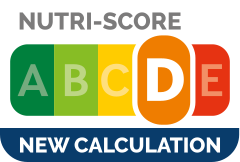 Lower nutritional quality
Nutri-Score data warning
Nutrient levels
Fat in moderate quantity (15.7%)
Saturated fat in high quantity (6.67%)
Sugars in low quantity (3.67%)
Salt in moderate quantity (0.543%)
Nutrition label

Nutrition facts
| Nutrition facts | As sold for 100 g / 100 ml | Compared to: Croutons |
|---|---|---|
| Energy | 1880 kJ (450 kcal) | 1,914.349 kJ (460 kcal) (-2%) |
| Fat | 15.7 g | 18.356 g (-14%) |
| Saturated fat | 6.67 g | 2.437 g (+174%) |
| Carbohydrates | 66.7 g | 60.527 g (+10%) |
| Sugars | 3.67 g | 3.217 g (+14%) |
| Added sugars | 2.67 g | 0.444 g (+501%) |
| Dietary fiber | 5.33 g | ? |
| Proteins | 10.3 g | 10.128 g (+2%) |
| Salt | 0.543 g | 1.924 g (-72%) |
| Sodium | 0.217 g | 0.768 g (-72%) |
| Alcohol | 0 % vol | ? |
| Fruits, vegetables and legumes | ? | ? |
Nutrition facts (Detailed data)
| Nutrition facts | As sold for 100 g / 100 ml | As sold Per serving (legacy) |
|---|---|---|
| Energy | 1880 kJ (450 kcal) | 565 kJ (135 kcal) |
| Fat | 15.7 g | 4.7 g |
| Saturated fat | 6.67 g | 2 g |
| Carbohydrates | 66.7 g | 20 g |
| Sugars | 3.67 g | 1.1 g |
| Added sugars | 2.67 g | 0.8 g |
| Dietary fiber | 5.33 g | 1.6 g |
| Proteins | 10.3 g | 3.1 g |
| Salt | 0.543 g | 0.163 g |
| Sodium | 0.217 g | 0.0652 g |
| Alcohol | 0 % vol | 0 % vol |
| Fruits, vegetables and legumes | ? | ? |
Serving size
Ingredients
Ingredients image

Ingredients list
Ingredient information
Allergens
Ingredients analysis
Palm oil content unknown
Unrecognized: fr:wheat-flour, fr:vegetable-oils, fr:palm-olein, fr:olive-and-oregano-seasoning, fr:maltodextrin, fr:maize, fr:bread-powder, fr:salt, fr:parsley, fr:sugar, fr:flavor-enhancers, fr:vegetable-oil, fr:palm, fr:acidity-regulator, fr:anti-caking-agents, fr:natural-color, fr:natural-et-nature-identical-olive-et-oregano-flavor, fr:carrier, fr:natural-colors, fr:e160ɑ, fr:ii, fr:baking-powder, fr:allergen, fr:contains-wheat, fr:cereal-contains-gluten, fr:trace-of-celery
Vegan status unknown
Unrecognized: fr:wheat-flour, fr:vegetable-oils, fr:palm-olein, fr:olive-and-oregano-seasoning, fr:maize, fr:bread-powder, fr:salt, fr:parsley, fr:sugar, fr:palm, fr:natural-et-nature-identical-olive-et-oregano-flavor, fr:ii, fr:baking-powder, fr:cereal-contains-gluten, fr:trace-of-celery
Vegetarian status unknown
Unrecognized: fr:wheat-flour, fr:vegetable-oils, fr:palm-olein, fr:olive-and-oregano-seasoning, fr:maize, fr:bread-powder, fr:salt, fr:parsley, fr:sugar, fr:palm, fr:natural-et-nature-identical-olive-et-oregano-flavor, fr:ii, fr:baking-powder, fr:cereal-contains-gluten, fr:trace-of-celery
Food Processing
NOVA group
 Ultra-processed food and drink products
Elements that indicate the product is in NOVA group 4
How NOVA works
Additives
E141 - Copper complexes of chlorophylls and chlorophyllinsColour
No additive description is available yet.
E141i - Copper complexes of chlorophyllsColour
No additive description is available yet.
E160c - Paprika extractColour
No additive description is available yet.
E330 - Citric acidAntioxidantSequestrant
Citric acid is a natural organic acid found in citrus fruits such as lemons, oranges, and limes.
It is widely used in the food industry as a flavor enhancer, acidulant, and preservative due to its tart and refreshing taste.
Citric acid is safe for consumption when used in moderation and is considered a generally recognized as safe (GRAS) food additive by regulatory agencies worldwide.
E341 - Calcium phosphates EFSA overexposure risk: highEmulsifierHumectantSequestrantStabiliserThickener
Calcium phosphate is a family of materials and minerals containing calcium ions (Ca2+) together with inorganic phosphate anions. Some so-called calcium phosphates contain oxide and hydroxide as well. They are white solids of nutritious value.
E341iii - Tricalcium phosphateEmulsifierHumectantSequestrantStabiliserThickener
No additive description is available yet.
E414 - Acacia gumCarrierEmulsifierStabiliserThickener
Gum arabic, also known as acacia gum, arabic gum, gum acacia, acacia, Senegal gum and Indian gum, and by other names, is a natural gum consisting of the hardened sap of various species of the acacia tree. Originally, gum arabic was collected from Acacia nilotica which was called the "gum arabic tree"; in the present day, gum arabic is collected from acacia species, predominantly Acacia senegal and Vachellia (Acacia) seyal; the term "gum arabic" does not indicate a particular botanical source. In a few cases so‐called "gum arabic" may not even have been collected from Acacia species, but may originate from Combretum, Albizia or some other genus. Producers harvest the gum commercially from wild trees, mostly in Sudan (80%) and throughout the Sahel, from Senegal to Somalia—though it is historically cultivated in Arabia and West Asia. Gum arabic is a complex mixture of glycoproteins and polysaccharides. It is the original source of the sugars arabinose and ribose, both of which were first discovered and isolated from it, and are named after it. Gum arabic is soluble in water. It is edible, and used primarily in the food industry as a stabilizer, with EU E number E414. Gum arabic is a key ingredient in traditional lithography and is used in printing, paint production, glue, cosmetics and various industrial applications, including viscosity control in inks and in textile industries, though less expensive materials compete with it for many of these roles. While gum arabic is now produced throughout the African Sahel, it is still harvested and used in the Middle East.
E508 - Potassium chloride EFSA overexposure risk: moderateStabiliserThickenerPreservative
Potassium chloride (KCl) is a metal halide salt composed of potassium and chlorine. It is odorless and has a white or colorless vitreous crystal appearance. The solid dissolves readily in water and its solutions have a salt-like taste. KCl is used as a fertilizer, in medicine, in scientific applications, and in food processing. In a few states of the United States it is used to cause cardiac arrest as the third drug in the "three drug cocktail" for executions by lethal injection. It occurs naturally as the mineral sylvite, and in combination with sodium chloride as sylvinite.The version for injection is on the World Health Organization's List of Essential Medicines, the most important medications needed in a basic health system.
E551 - Silicon dioxideCarrier
Silicon dioxide, also known as silica, silicic acid or silicic acid anydride is an oxide of silicon with the chemical formula SiO2, most commonly found in nature as quartz and in various living organisms. In many parts of the world, silica is the major constituent of sand. Silica is one of the most complex and most abundant families of materials, existing as a compound of several minerals and as synthetic product. Notable examples include fused quartz, fumed silica, silica gel, and aerogels. It is used in structural materials, microelectronics (as an electrical insulator), and as components in the food and pharmaceutical industries. Inhaling finely divided crystalline silica is toxic and can lead to severe inflammation of the lung tissue, silicosis, bronchitis, lung cancer, and systemic autoimmune diseases, such as lupus and rheumatoid arthritis. Uptake of amorphous silicon dioxide, in high doses, leads to non-permanent short-term inflammation, where all effects heal.
E627 - Disodium guanylate
Disodium guanylate, also known as sodium 5'-guanylate and disodium 5'-guanylate, is a natural sodium salt of the flavor enhancing nucleotide guanosine monophosphate (GMP). Disodium guanylate is a food additive with the E number E627. It is commonly used in conjunction with glutamic acid. As it is a fairly expensive additive, it is not used independently of glutamic acid; if disodium guanylate is present in a list of ingredients but MSG does not appear to be, it is likely that glutamic acid is provided as part of another ingredient such as a processed soy protein complex. It is often added to foods in conjunction with disodium inosinate; the combination is known as disodium 5'-ribonucleotides. Disodium guanylate is produced from dried seaweed and is often added to instant noodles, potato chips and other snacks, savory rice, tinned vegetables, cured meats, and packaged soup.
E631 - Disodium inosinate
Disodium inosinate (E631) is the disodium salt of inosinic acid with the chemical formula C10H11N4Na2O8P. It is used as a food additive and often found in instant noodles, potato chips, and a variety of other snacks. Although it can be obtained from bacterial fermentation of sugars, it is often commercially prepared from animal sources.
Environment
Green-Score, origins bonus, and transportation impact are shown for Worldwide .
Green Score
Overall grade
 Unknown environmental impact
About Green-Score
Current scope
Green-Score availability
Bonuses and maluses
Declared origins
Packaging impact
Packaging
Packaging impact
Data precision
Transportation
Declared origins
Data Source
Product data comes from Open Food Facts. Food Benchmark also adds translations, category comparisons and explanatory calculations.
The database is licensed under ODbL 1.0, individual contents under DbCL 1.0, and product photos under CC BY-SA 3.0.
Product added on September 18, 2018 at 10:19:42 AM UTC by openfoodfacts-contributors .
Last edit on February 17, 2026 at 8:34:30 AM UTC by foodless .
Product page also edited by cabrille, foodless, kiliweb, openfoodfacts-contributors, roboto-app, yuka.sY2b0xO6T85zoF3NwEKvlmBWTN7_jm_FJg7vpVDW1PKfMqLpYPdqxavEY6s.