

CocoWhey
Health
Nutrition
Nutri-Score
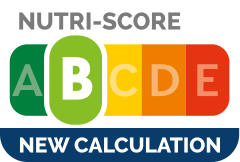 Good nutritional quality
Nutri-Score data warning
Nutrient levels
Fat in low quantity (0%)
Saturated fat in low quantity (0%)
Sugars in low quantity (1.8%)
Salt in low quantity (0.04%)
Nutrition label

Nutrition facts
| Nutrition facts | As sold for 100 ml | Compared to: Plant-based beverages |
|---|---|---|
| Energy | ~ 141.1 kJ (33 kcal) | 159.612 kJ (38 kcal) (-12%) |
| Fat | 0 g | 0.364 g (-100%) |
| Saturated fat | 0 g | 0.074 g (-100%) |
| Carbohydrates | 2.2 g | 7.45 g (-70%) |
| Sugars | 1.8 g | 6.44 g (-72%) |
| Dietary fiber | ? | ? |
| Proteins | 6.1 g | 0.412 g (+1381%) |
| Salt | 0.04 g | 0.03 g (+33%) |
| Sodium | 0.016 g | 0.012 g (+33%) |
| Fruits, vegetables and legumes | ~ 0 % | ? |
Nutrition facts (Detailed data)
| Nutrition facts | As sold for 100 ml | As sold Per 100 ml (packaging) | As sold Per 100 g (estimate) |
|---|---|---|---|
| Energy | ~ 141.1 kJ (33 kcal) | ? (33 kcal) | ? |
| Fat | 0 g | 0 g | ? |
| Saturated fat | 0 g | 0 g | ? |
| Carbohydrates | 2.2 g | 2.2 g | ? |
| Sugars | 1.8 g | 1.8 g | ? |
| Dietary fiber | ? | ? | ? |
| Proteins | 6.1 g | 6.1 g | ? |
| Salt | 0.04 g | 0.04 g | ? |
| Sodium | 0.016 g | 0.016 g | ? |
| Fruits, vegetables and legumes | ~ 0 % | ? | ~ 0 % |
Serving size
Ingredients
Ingredients image

Ingredients list
Ingredient information
Ingredients analysis
Palm oil content unknown
Unrecognized: fr:cocconut-water, fr:water, fr:whey-protein-isola, fr:te, fr:acidifier, fr:phosphoric-acid, fr:sweeteners, fr:steviol-glycosides-from-ste, fr:via-leaves
Vegan status unknown
Unrecognized: fr:cocconut-water, fr:water, fr:whey-protein-isola, fr:te, fr:phosphoric-acid, fr:steviol-glycosides-from-ste, fr:via-leaves
Vegetarian status unknown
Unrecognized: fr:cocconut-water, fr:water, fr:whey-protein-isola, fr:te, fr:phosphoric-acid, fr:steviol-glycosides-from-ste, fr:via-leaves
Food Processing
NOVA group
 Ultra-processed food and drink products
Elements that indicate the product is in NOVA group 4
How NOVA works
Additives
E338 - Phosphoric acid EFSA overexposure risk: highAntioxidantSequestrant
Phosphoric acid (also known as orthophosphoric acid or phosphoric(V) acid) is a weak acid with the chemical formula H3PO4. Orthophosphoric acid refers to phosphoric acid, which is the IUPAC name for this compound. The prefix ortho- is used to distinguish the acid from related phosphoric acids, called polyphosphoric acids. Orthophosphoric acid is a non-toxic acid, which, when pure, is a solid at room temperature and pressure. The conjugate base of phosphoric acid is the dihydrogen phosphate ion, H2PO−4, which in turn has a conjugate base of hydrogen phosphate, HPO2−4, which has a conjugate base of phosphate, PO3−4. Phosphates are essential for life.The most common source of phosphoric acid is an 85% aqueous solution; such solutions are colourless, odourless, and non-volatile. The 85% solution is a syrupy liquid, but still pourable. Although phosphoric acid does not meet the strict definition of a strong acid, the 85% solution is acidic enough to be corrosive. Because of the high percentage of phosphoric acid in this reagent, at least some of the orthophosphoric acid is condensed into polyphosphoric acids; for the sake of labeling and simplicity, the 85% represents H3PO4 as if it were all in the ortho form. Dilute aqueous solutions of phosphoric acid exist in the ortho form.
E955 - SucraloseSweetener
Sucralose is an artificial sweetener and sugar substitute. The majority of ingested sucralose is not broken down by the body, so it is noncaloric. In the European Union, it is also known under the E number E955. It is produced by chlorination of sucrose. Sucralose is about 320 to 1,000 times sweeter than sucrose, three times as sweet as both aspartame and acesulfame potassium, and twice as sweet as sodium saccharin. Evidence of benefit is lacking for long-term weight loss with some data supporting weight gain and heart disease risks.It is stable under heat and over a broad range of pH conditions. Therefore, it can be used in baking or in products that require a long shelf life. The commercial success of sucralose-based products stems from its favorable comparison to other low-calorie sweeteners in terms of taste, stability, and safety. Common brand names of sucralose-based sweeteners are Splenda, Zerocal, Sukrana, SucraPlus, Candys, Cukren, and Nevella. Canderel Yellow also contains sucralose, but the original Canderel and Green Canderel do not.
E960 - Steviol glycosides EFSA overexposure risk: moderateSweetener
Steviol glycosides are the chemical compounds responsible for the sweet taste of the leaves of the South American plant Stevia rebaudiana (Asteraceae) and the main ingredients (or precursors) of many sweeteners marketed under the generic name stevia and several trade names. They also occur in the related species Stevia phlebophylla (but in no other species of Stevia) and in the plant Rubus chingii (Rosaceae).Steviol glycosides from Stevia rebaudiana have been reported to be between 30 and 320 times sweeter than sucrose, although there is some disagreement in the technical literature about these numbers. They are heat-stable, pH-stable, and do not ferment. Additionally, they do not induce a glycemic response when ingested, because humans can not metabolize stevia. This makes them attractive as natural sugar substitutes for diabetics and other people on carbohydrate-controlled diets. Steviol glycosides stimulate the insulin secretion through potentiation of the β-cell, preventing high blood glucose after a meal. The acceptable daily intake (ADI) for steviol glycosides, expressed as steviol equivalents, has been established to be 4 mg/kg body weight/day, and is based on no observed effects of a 100 fold higher dose in a rat study.
Environment
Green-Score, origins bonus, and transportation impact are shown for Worldwide .
Green Score
Overall grade
 Unknown environmental impact
About Green-Score
Current scope
Green-Score availability
Bonuses and maluses
Declared origins
Packaging impact
Packaging
Packaging impact
Packaging components
| Shape | Material | Recycling | Impact |
|---|---|---|---|
| Brick | Tetra PAK | Unknown | Medium |
Declared packaging
Transportation
Declared origins
Forest footprint
Forest footprint
Deforestation risk details
Data Source
Product data comes from Open Food Facts. Food Benchmark also adds translations, category comparisons and explanatory calculations.
The database is licensed under ODbL 1.0, individual contents under DbCL 1.0, and product photos under CC BY-SA 3.0.
Product added on March 22, 2018 at 1:31:33 PM UTC by kiliweb .
Last edit on March 13, 2026 at 12:39:41 PM UTC by new-nutrition-bot .
Product page also edited by benson, davidecuomo, davidepio, ecoscore-impact-estimator, kiliweb, maria33, new-nutrition-bot, openfoodfacts-contributors, packbot, yuka.SDZ0YVAvMWRqT01Tb2MwUS9RajY0STkybWJ2eERFeVlPOEFNSWc9PQ, yuka.ZHJnTElwVU5udjhCc3ZaaTF5M3g0UHR6eGJDWVJsS3FMK3cvSUE9PQ, yuka.sY2b0xO6T85zoF3NwEKvlmxlUNnQomvjOU3Sxk2Ow_7QILWxYsx5w5LlKas.