

Rockstar Energy - Guava Pineapple
Health
Nutrition
Nutri-Score
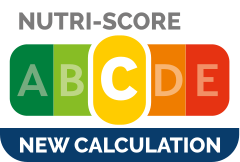 Average nutritional quality
Nutri-Score data warning
Nutrient levels
Fat in low quantity (0%)
Saturated fat in low quantity (0%)
Sugars in low quantity (0.6%)
Salt in low quantity (0.06%)
Nutrition facts
| Nutrition facts | As sold for 100 g / 100 ml | Compared to: Functional drinks |
|---|---|---|
| Energy | 20 kJ (5 kcal) | 104.645 kJ (25 kcal) (-81%) |
| Fat | 0 g | 0.024 g (-100%) |
| Saturated fat | 0 g | 0.007 g (-100%) |
| Carbohydrates | 1.3 g | 5.763 g (-77%) |
| Sugars | 0.6 g | 5.323 g (-89%) |
| Dietary fiber | ? | ? |
| Proteins | 0 g | 0.073 g (-100%) |
| Salt | 0.06 g | 0.107 g (-44%) |
| Sodium | 0.024 g | 0.043 g (-44%) |
| Vitamin PP | 0.0032 mg | ? |
| Vitamin B6 | 0.00028 mg | ? |
| Pantothenic acid | 0.0012 mg | ? |
| Fruits, vegetables and legumes | ? | ? |
Nutrition facts (Detailed data)
| Nutrition facts | As sold for 100 g / 100 ml | As sold Per serving (legacy) |
|---|---|---|
| Energy | 20 kJ (5 kcal) | 100 kJ (25 kcal) |
| Fat | 0 g | 0 g |
| Saturated fat | 0 g | 0 g |
| Carbohydrates | 1.3 g | 6.5 g |
| Sugars | 0.6 g | 3 g |
| Dietary fiber | ? | ? |
| Proteins | 0 g | 0 g |
| Salt | 0.06 g | 0.3 g |
| Sodium | 0.024 g | 0.12 g |
| Vitamin PP | 0.0032 mg | 0.016 mg |
| Vitamin B6 | 0.00028 mg | 0.0014 mg |
| Pantothenic acid | 0.0012 mg | 0.006 mg |
| Fruits, vegetables and legumes | ? | ? |
Serving size
Ingredients
Ingredients list
Ingredient information
Ingredients analysis
No ingredients containing palm oil.
Unrecognized: de:koffein-aus-grünen-kaffeebohnen, de:pantothemat
Vegan status unknown
Unrecognized: de:koffein-aus-grünen-kaffeebohnen, de:pantothemat
Vegetarian status unknown
Unrecognized: de:koffein-aus-grünen-kaffeebohnen, de:pantothemat
Food Processing
NOVA group
 Ultra-processed food and drink products
Elements that indicate the product is in NOVA group 4
How NOVA works
Additives
E150c - Ammonia caramel EFSA overexposure risk: moderateColour
No additive description is available yet.
E290 - Carbon dioxidePreservativePropellent Gas
CARBON DIOXIDE chemical formula CO2) is a colorless gas with a density about 60% higher than that of dry air.
E330 - Citric acidAntioxidantSequestrant
Citric acid is a natural organic acid found in citrus fruits such as lemons, oranges, and limes.
It is widely used in the food industry as a flavor enhancer, acidulant, and preservative due to its tart and refreshing taste.
Citric acid is safe for consumption when used in moderation and is considered a generally recognized as safe (GRAS) food additive by regulatory agencies worldwide.
E331 - Sodium citratesEmulsifierSequestrantStabiliser
DISODIUM CITRATE, more properly, disodium hydrogen citrate, is an acid salt of citric acid with the chemical formula Na2C6H6O7. It is used as an antioxidant in food and to improve the effects of other antioxidants. It is also used as an acidity regulator and sequestrant. Typical products include gelatin, jam, sweets, ice cream, carbonated beverages, milk powder, wine, and processed cheeses.
E340 - Potassium phosphates EFSA overexposure risk: highEmulsifierHumectantSequestrantStabiliserThickener
Potassium phosphate is a generic term for the salts of potassium and phosphate ions including: Monopotassium phosphate (KH2PO4) (Molar mass approx: 136 g/mol) Dipotassium phosphate (K2HPO4) (Molar mass approx: 174 g/mol) Tripotassium phosphate (K3PO4) (Molar mass approx: 212.27 g/mol)As food additives, potassium phosphates have the E number E340.
E440 - PectinsEmulsifierStabiliserThickener
Pectins (E440) are natural carbohydrates, predominantly found in fruits, that act as gelling agents in the food industry, creating the desirable jelly-like texture in jams, jellies, and marmalades.
Pectins stabilize and thicken various food products, such as desserts, confectioneries, and beverages, ensuring a uniform consistency and quality.
Recognized as safe by various health authorities, pectins have been widely used without notable adverse effects when consumed in typical dietary amounts.
E950 - Acesulfame kSweetener
Acesulfame potassium ( AY-see-SUL-faym), also known as acesulfame K (K is the symbol for potassium) or Ace K, is a calorie-free sugar substitute (artificial sweetener) often marketed under the trade names Sunett and Sweet One. In the European Union, it is known under the E number (additive code) E950. It was discovered accidentally in 1967 by German chemist Karl Clauss at Hoechst AG (now Nutrinova). In chemical structure, acesulfame potassium is the potassium salt of 6-methyl-1,2,3-oxathiazine-4(3H)-one 2,2-dioxide. It is a white crystalline powder with molecular formula C4H4KNO4S and a molecular weight of 201.24 g/mol.
E955 - SucraloseSweetener
Sucralose is an artificial sweetener and sugar substitute. The majority of ingested sucralose is not broken down by the body, so it is noncaloric. In the European Union, it is also known under the E number E955. It is produced by chlorination of sucrose. Sucralose is about 320 to 1,000 times sweeter than sucrose, three times as sweet as both aspartame and acesulfame potassium, and twice as sweet as sodium saccharin. Evidence of benefit is lacking for long-term weight loss with some data supporting weight gain and heart disease risks.It is stable under heat and over a broad range of pH conditions. Therefore, it can be used in baking or in products that require a long shelf life. The commercial success of sucralose-based products stems from its favorable comparison to other low-calorie sweeteners in terms of taste, stability, and safety. Common brand names of sucralose-based sweeteners are Splenda, Zerocal, Sukrana, SucraPlus, Candys, Cukren, and Nevella. Canderel Yellow also contains sucralose, but the original Canderel and Green Canderel do not.
E968 - ErythritolHumectantSweetener
Erythritol ((2R,3S)-butane-1,2,3,4-tetrol) is a sugar alcohol (or polyol) that has been approved for use as a food additive in the United States and throughout much of the world. It was discovered in 1848 by Scottish chemist John Stenhouse. It occurs naturally in some fruit and fermented foods. At the industrial level, it is produced from glucose by fermentation with a yeast, Moniliella pollinis. Erythritol is 60–70% as sweet as sucrose (table sugar) yet it is almost noncaloric, does not affect blood sugar, does not cause tooth decay, and is partially absorbed by the body, excreted in urine and feces. Under U.S. Food and Drug Administration (FDA) labeling requirements, it has a caloric value of 0.2 kilocalories per gram (95% less than sugar and other carbohydrates), though nutritional labeling varies from country to country. Some countries, such as Japan and the United States, label it as zero-calorie; the European Union labels it 0 kcal/g.
Environment
Green-Score, origins bonus, and transportation impact are shown for Worldwide .
Green Score
Overall grade
About Green-Score
Current scope
Green-Score availability
Bonuses and maluses
Declared origins
Packaging impact
Packaging
Packaging impact
Packaging components
| Shape | Material | Recycling | Impact |
|---|---|---|---|
| Unknown | Heavy Aluminium | Unknown | Medium |
Declared packaging
Data precision
Transportation
Declared origins
Forest footprint
Forest footprint
Deforestation risk details
Data Source
Product data comes from Open Food Facts. Food Benchmark also adds translations, category comparisons and explanatory calculations.
The database is licensed under ODbL 1.0, individual contents under DbCL 1.0, and product photos under CC BY-SA 3.0.
Product added on July 13, 2019 at 9:38:30 AM UTC by webfreak .
Last edit on February 11, 2022 at 8:20:29 AM UTC by packbot .
Product page also edited by cjk, mboi, openfoodfacts-contributors, yuka.YTdrUkhvNC9ndWtOaGZRL29qakV5SWhlbjdDbGRHbXFkY3d4SUE9PQ, webfreak, kiliweb, packbot.