ProductsAvitaGemüse-Schnitzel
Gemüse-Schnitzel
Barcode 4006934885108
Avita

Gemüse-Schnitzel

300g
BARCODE:4006934885108
CATEGORIES:Plant Based Foods And Beverages, Plant Based Foods, Fruits And Vegetables Based Foods, Vegetables Based Foods, Meat Alternatives, Meat Analogues, GemüSe Schnitzel, Gesund, Tk, Tiefgefroren, Veggie
LABELS:Vegetarian, Vegan, European Vegetarian Union, European Vegetarian Union Vegan, Fsc, Fsc Mix
PACKAGING:Cardboard, Paperboard, Faltschachtel
COUNTRIES:France, Germany

Health

Nutrition

Nutri-Score

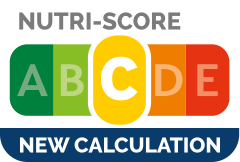
CAverage nutritional quality

Nutri-Score data warning

Warning: the amount of fruits, vegetables and nuts is not specified on the label, it was estimated from the list of ingredients: 52

Nutrient levels

Fat in moderate quantity (8.2%)
What you need to know • A high consumption of fat, especially saturated fats, can raise cholesterol, which increases the risk of heart diseases. Recommendation: Limit the consumption of fat and saturated fat • Choose products with lower fat and saturated fat content. Source: National Health Service UK (NHS) - Fat: the facts
Saturated fat in low quantity (0.7%)
What you need to know • A high consumption of fat, especially saturated fats, can raise cholesterol, which increases the risk of heart diseases. Recommendation: Limit the consumption of fat and saturated fat • Choose products with lower fat and saturated fat content. Source: National Health Service UK (NHS) - Fat: the facts
Sugars in low quantity (2.5%)
What you need to know • A high consumption of sugar can cause weight gain and tooth decay. It also augments the risk of type 2 diabetes and cardio-vascular diseases. Recommendation: Limit the consumption of sugar and sugary drinks • Sugary drinks (such as sodas, fruit beverages, and fruit juices and nectars) should be limited as much as possible (no more than 1 glass a day). • Choose products with lower sugar content and reduce the consumption of products with added sugars. Source: National Health Service UK (NHS) - Sugar: the facts
Salt in moderate quantity (1.1%)
What you need to know • A high consumption of salt (or sodium) can cause raised blood pressure, which can increase the risk of heart disease and stroke. • Many people who have high blood pressure do not know it, as there are often no symptoms. • Most people consume too much salt (on average 9 to 12 grams per day), around twice the recommended maximum level of intake. Recommendation: Limit the consumption of salt and salted food • Reduce the quantity of salt used when cooking, and don't salt again at the table. • Limit the consumption of salty snacks and choose products with lower salt content. Source: World Health Organization (WHO) - Fact sheet - Salt reduction Source: National Health Service UK (NHS) - Salt: the facts

Nutrition label

Gemüse-Schnitzel nutrition label

Nutrition facts

Nutrition factsAs sold for 100 g / 100 mlCompared to: Meat analogues
Energy773 kJ (185 kcal)835.548 kJ (201 kcal) (-7%)
Fat8.2 g9.817 g (-16%)
Saturated fat0.7 g1.429 g (-51%)
Carbohydrates23 g10.144 g (+127%)
Sugars2.5 g1.669 g (+50%)
Dietary fiber??
Proteins2.9 g14.296 g (-80%)
Salt1.1 g1.316 g (-16%)
Sodium0.44 g0.525 g (-16%)
Fruits, vegetables and legumes~ 39.875 %?

Nutrition facts (Detailed data)

Nutrition factsAs sold for 100 g / 100 mlAs sold Per 100 g (packaging)As sold Per 100 g (estimate)
Energy773 kJ (185 kcal)773 kJ (185 kcal)?
Fat8.2 g8.2 g?
Saturated fat0.7 g0.7 g?
Carbohydrates23 g23 g?
Sugars2.5 g2.5 g?
Dietary fiber???
Proteins2.9 g2.9 g?
Salt1.1 g1.1 g?
Sodium0.44 g0.44 g?
Fruits, vegetables and legumes~ 39.875 %?~ 39.875 %

Ingredients

Ingredients image

Gemüse-Schnitzel ingredients image

Ingredients list

Légumes 44 % (carottes, chou-fleur, petits pois, maïs), chapelure (farine de BLE, épices, sel, levure), pommes de terre, huile de colza, flocons de maïs (maïs, sel, extrait de malt d'ORGE), flocons de pommes de terre, amidon modifié (pommes de terre, maïs), amidon (maïs, pommes de terre), sel, farine de riz, sucre, épices, dextrine, maltodextrine, épaississant: xanthane, stabilisant méthylcellulose.

Ingredient information

Vegetable
44.0%
Carrot
27.5% (estimate)
Cauliflower
8.25% (estimate)
Garden Peas
4.13% (estimate)
Corn
4.13% (estimate)
Breadcrumbs
23.87% (estimate)
Wheat Flour
12.4% (estimate)
Spice
5.73% (estimate)
Salt
0.55% (estimate)
Yeast
5.18% (estimate)
Potato
16.5% (estimate)
Colza Oil
7.82% (estimate)
Corn Flakes
3.91% (estimate)
Corn
1.95% (estimate)
Salt
0.55% (estimate)
Barley Malt Extract
1.4% (estimate)
Potato Flakes
1.95% (estimate)
Modified Starch
0.98% (estimate)
Modified Potato Starch
0.49% (estimate)
Modified Corn Starch
0.49% (estimate)
Starch
0.49% (estimate)
Corn Starch
0.24% (estimate)
Potato Starch
0.24% (estimate)
Salt
0.24% (estimate)
Rice Flour
0.12% (estimate)
Sugar
0.06% (estimate)
Spice
0.03% (estimate)
E1400
0.02% (estimate)
Maltodextrin
0.01% (estimate)
Thickener
0% (estimate)
E415
0% (estimate)
Stabiliser
0% (estimate)
E461
0% (estimate)

Added sugars

Contains added sugars (0%) Added sugars: sugar Quantity of added sugars: 0%

Allergens

Gluten

Ingredients analysis

Palm oil free
Yes

No ingredients containing palm oil.

Vegan
Yes

No non-vegan ingredients.

Vegetarian
Yes

No non-vegetarian ingredients.


Food Processing

NOVA group

4Ultra-processed food and drink products

Elements that indicate the product is in NOVA group 4

Additives
E1400 - Dextrin
Additives
E14XX - Modified Starch
Additives
E415 - Xanthan gum
Additives
E461 - methyl cellulose
Ingredients
Maltodextrin
Ingredients
Thickener
Ingredients
Modified Starch

How NOVA works

The NOVA classification assigns food products into 4 groups based on their degree of processing: 1. Unprocessed or minimally processed foods 2. Processed culinary ingredients 3. Processed foods 4. Ultra-processed food and drink products

Additives

E1400 - DextrinCarrierEmulsifierStabiliserThickener

Dextrins are a group of low-molecular-weight carbohydrates produced by the hydrolysis of starch or glycogen. Dextrins are mixtures of polymers of D-glucose units linked by α-(1→4) or α-(1→6) glycosidic bonds. Dextrins can be produced from starch using enzymes like amylases, as during digestion in the human body and during malting and mashing, or by applying dry heat under acidic conditions (pyrolysis or roasting). The latter process is used industrially, and also occurs on the surface of bread during the baking process, contributing to flavor, color and crispness. Dextrins produced by heat are also known as pyrodextrins. The starch hydrolyses during roasting under acidic conditions, and short-chained starch parts partially rebranch with α-(1,6) bonds to the degraded starch molecule. See also Maillard Reaction. Dextrins are white, yellow, or brown powders that are partially or fully water-soluble, yielding optically active solutions of low viscosity. Most of them can be detected with iodine solution, giving a red coloration; one distinguishes erythrodextrin (dextrin that colours red) and achrodextrin (giving no colour). White and yellow dextrins from starch roasted with little or no acid are called British gum.

E14XX - Modified StarchEmulsifierStabiliserThickener

No additive description is available yet.

E415 - Xanthan gumEmulsifierStabiliserThickener

Xanthan gum (E415) is a natural polysaccharide derived from fermented sugars, often used in the food industry as a thickening and stabilizing agent.

This versatile food additive enhances texture and prevents ingredient separation in a wide range of products, including salad dressings, sauces, and gluten-free baked goods.

It is considered safe for consumption even at high intake amounts.

E461 - methyl celluloseEmulsifierStabiliserThickener

METHYL CELLULOSE is a chemical compound derived from cellulose. Methyl cellulose is added to food products, to generate their characteristic thick consistency, for example ice cream or croquette.

Environment

Green-Score, origins bonus, and transportation impact are shown for Worldwide .

Green Score

Overall grade

UnknownUnknown environmental impact

About Green-Score

The Green-Score is an experimental score that summarizes the environmental impacts of food products.

Current scope

The Green-Score was initially developed for France and it is being extended to other European countries. The Green-Score formula is subject to change as it is regularly improved to make it more precise and better suited to each country. Select a country to include the full impact of transportation in the final score.

Green-Score availability

We could not compute the Green-Score of this product because some data is missing. A more precise category, ingredients list, origins or packaging data can unlock the computation.

Bonuses and maluses

Declared origins

Origins of ingredients are missing for this product. Ingredients need to be completed before the transportation bonus can be computed precisely.

Packaging impact

Packaging with a low impact Malus: -1 Packaging score: +92

Packaging

Packaging impact

Packaging with a low impact Malus: -1 Packaging score: +92

Packaging components

ShapeMaterialRecyclingImpact
UnknownPaperboardUnknownLow

Declared packaging

Cardboard, Paperboard, Faltschachtel

Data precision

The packaging information is not sufficiently precise to compute the most accurate packaging impact. Exact shapes and materials of all packaging components help improve the Green-Score.

Transportation

Declared origins

Origins of ingredients are missing for this product. Ingredients need to be completed before the transportation bonus can be computed precisely.

Forest footprint

Forest footprint

Forest Footprint not computed Potential deforestation risk but not yet computed. Forest Footprint The Forest Footprint is a methodology developed by the association Envol Vert to estimate the risk of deforestation related to our consumption. → More information on the methodology Forest Footprint not computed Potential deforestation risk but not yet computed.

Deforestation risk details

Other risky ingredients These ingredients are not yet assessed for deforestation risk: corn flakes rice flour corn corn

Data Source

Product data comes from Open Food Facts. Food Benchmark also adds translations, category comparisons and explanatory calculations.

The database is licensed under ODbL 1.0, individual contents under DbCL 1.0, and product photos under CC BY-SA 3.0.

Product added on March 11, 2017 at 5:34:03 PM UTC by date-limite-app .

Last edit on March 17, 2026 at 2:36:41 PM UTC by new-nutrition-bot .

Product page also edited by anonymous-h4fe4z22fq, autorotate-bot, date-limite-app, jusdekiwi, kiliweb, new-nutrition-bot, openfoodfacts-contributors, packbot, phrogg, potato-king, prepperapp, roboto-app, tacite-mass-editor, yuka.R0k0ZE01MGNuc013aHRzNnp6SC9xK3RwOThhc0RWS1NCOE1PSWc9PQ, yuka.sY2b0xO6T85zoF3NwEKvlmZNbcXe_ALrZhbRhHeVmtGMEbrHZskju9feb6s.